
Annuals vs. Perennials: Planning a Garden That Works Year After Year
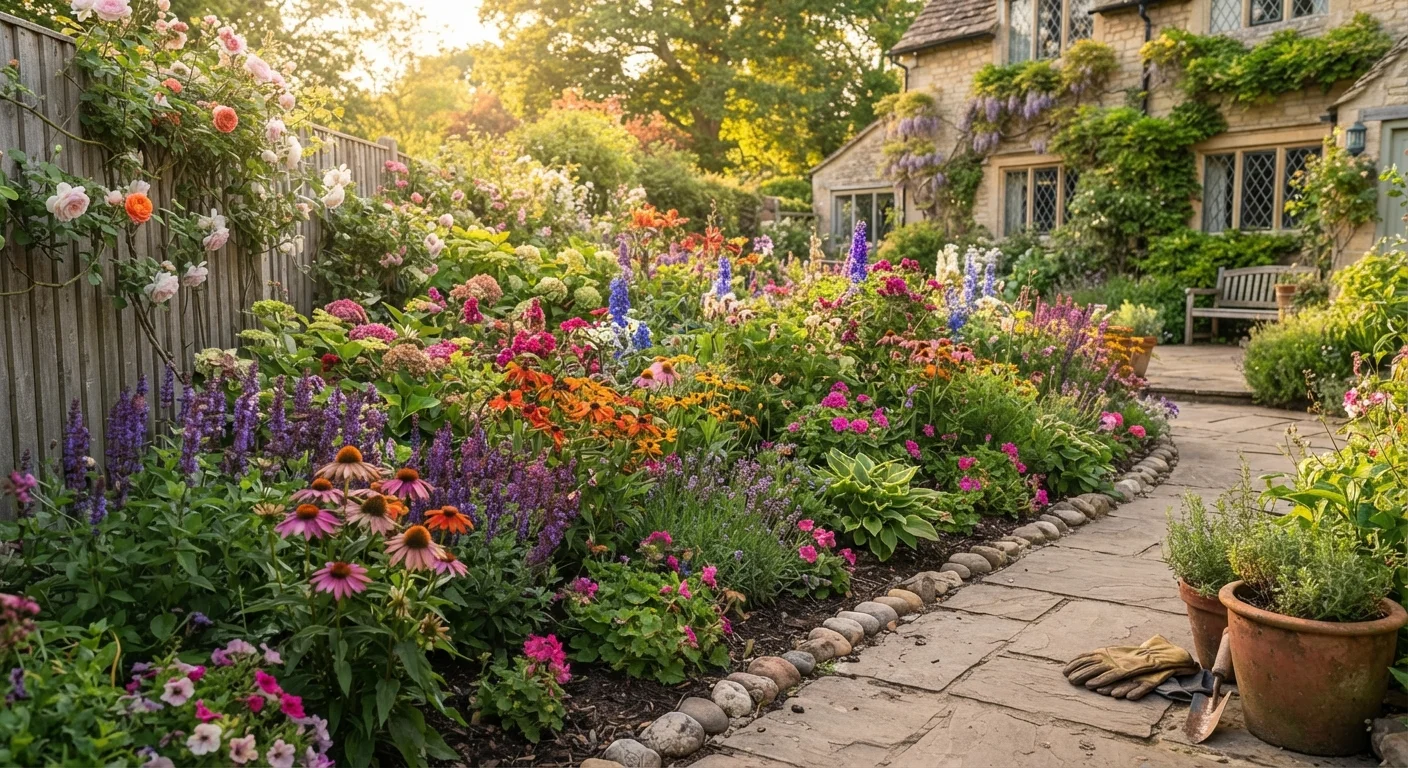
Photo credit: PrimeFaqs.com | Trending And Accurate Content
In this article
Understand the real difference between annuals and perennials and how mixing both leads to a low-effort, high-impact garden each season.
Key Takeaways
- Annuals complete their full life cycle in one growing season and must be replanted each year.
- Perennials return year after year from the same root system, reducing replanting effort over time.
- Mixing both types gives you structural consistency from perennials and flexible color from annuals.
- Annuals typically demand more water and fertilizer but deliver the longest uninterrupted bloom period.
- Perennials generally require less annual investment but may have shorter individual bloom windows.
- Your climate zone, budget, and maintenance availability should guide how you balance the two.
What Actually Makes a Plant Annual or Perennial
The terms annual and perennial describe a plant's natural life cycle - not its toughness or how much care it needs. An annual germinates, flowers, sets seed, and dies all within a single growing season. A perennial completes its above-ground cycle each year but survives winter through its root system, re-emerging the following spring.
There's also a middle category worth knowing: biennials (plants that take two growing seasons to complete their cycle, like foxglove) and tender perennials - plants that are technically perennial in warm climates but treated as annuals in colder U.S. regions. Impatiens and coleus fall into this group. Understanding where your plants fall helps you make smarter choices for your specific USDA hardiness zone.
Before committing to a planting plan, review our seasonal garden prep checklist to make sure your beds are ready to support whichever combination you choose.
Head-to-Head: How Annuals and Perennials Compare
Choosing between annuals and perennials isn't purely about aesthetics - it involves practical trade-offs across cost, labor, bloom duration, and long-term garden structure. The table below breaks down the key differences.
| Criterion | Annuals | Perennials |
|---|---|---|
| Life cycle | One growing season | Returns year after year |
| Bloom duration | Continuous until frost | 2-6 weeks per season (varies) |
| Upfront cost | Lower per plant | Higher per plant |
| Long-term cost | Recurring annual expense | Lower - no yearly replanting |
| Maintenance level | Higher (watering, feeding) | Lower once established |
| Design flexibility | Full redesign each season | Fixed structure, less change |
| Root system depth | Shallow, temporary | Deep, improves over time |
| Soil improvement | Minimal contribution | Gradual improvement with age |
One factor the table doesn't capture is bloom timing. Many perennials flower for only two to six weeks per season, while annuals typically bloom continuously until frost. This is a critical planning consideration: a garden planted entirely with perennials may have long stretches where very little color shows.
The Case for Annuals: Flexibility and Unbroken Color
Annuals deliver something perennials simply can't match: relentless, season-long bloom with the option to reinvent your garden's look every single year. Popular choices like zinnias, marigolds, petunias, and cosmos bloom from early summer through first frost, providing consistent color in beds, containers, and borders.
Because you're starting fresh each year, annuals also give you freedom to experiment - trying new color palettes, switching to plants that attract pollinators, or responding to changes in your yard's light conditions. For gardeners who enjoy the process of planning and planting, this flexibility is a genuine advantage.
The trade-off is ongoing investment. Annuals need to be purchased or started from seed each season, and they typically require more regular watering and fertilizing than established perennials. If you're working with containers or a compact outdoor area, our guide to keeping small outdoor spaces functional covers how to make the most of annual plantings in tighter settings.
~2-6 weeks
Typical perennial bloom window per season
Most herbaceous perennials have a defined flowering period, making succession planting important for continuous color.
3+ years
Time for perennials to reach full maturity
University extension programs commonly note the 'sleep, creep, leap' pattern - perennials grow modestly in years one and two before expanding significantly.
The Case for Perennials: Long-Term Value and Garden Structure
Perennials are often described as the backbone of a well-designed garden - and for good reason. Plants like coneflowers (Echinacea), black-eyed Susans, daylilies, and ornamental grasses return each spring, gradually expanding their footprint and requiring less intervention as they mature. The general rule of thumb among gardeners is: sleep, creep, leap - perennials take time to establish but reward patience with increasingly impressive displays.
Beyond aesthetics, perennials tend to develop deeper, more extensive root systems that improve soil structure over time and support local ecosystems. Many native perennials in particular are well-adapted to regional rainfall and soil conditions, reducing the need for supplemental watering or fertilizer. For more on the ecological benefits of plant selection, see our article on native plants and their garden benefits.
The main limitation is bloom window. Most perennials flower for a relatively short period, so a perennial-only garden can look sparse at certain points in the season. Strategic planting - choosing perennials with staggered bloom times - helps, but most gardeners find that a mix is the most satisfying solution.
Building a Garden That Uses Both Effectively
The most productive approach for most American home gardens is a deliberate combination: use perennials to create a stable, seasonal structure, then fill gaps with annuals for continuous color and visual interest. Think of perennials as the foundation and annuals as the finishing details.
A practical layering strategy looks like this:
- Back of the border: Tall perennials like rudbeckia or ornamental grasses anchor the space and return reliably each year.
- Middle ground: Mid-height perennials (coneflowers, salvia, catmint) provide repeating structure with rotating bloom periods.
- Front and gaps: Annuals like impatiens, lobelia, or alyssum fill in spaces and keep color going between perennial bloom cycles.
This layered method also simplifies your seasonal maintenance calendar. For a structured month-by-month guide to what to do and when, the seasonal garden maintenance reference is a useful companion resource. And if you're also thinking about food production alongside your ornamental beds, our guide on starting a vegetable garden from zero covers how to integrate edibles into a mixed planting plan.
Don't Overlook Watering Strategy
Annuals and perennials often have different watering needs, especially during establishment. Annuals with shallow roots dry out faster and may need daily attention during dry spells, while mature perennials can often go longer between waterings. Planning your irrigation approach alongside your planting mix can save significant effort. Our comparison of drip vs. sprinkler irrigation breaks down which system suits mixed garden beds.

Author
Home & Garden Editorial Team
Home & Garden Editorial Team is the collective byline for our editorial team and contributor network. Articles published under this byline or an editorial pen name are researched, written, and reviewed according to our editorial standards for clarity, consistency, and independence before publication.
View all articles →