
Cabin Air Filter vs. Engine Air Filter: One Affects Your Comfort, One Affects Your Engine
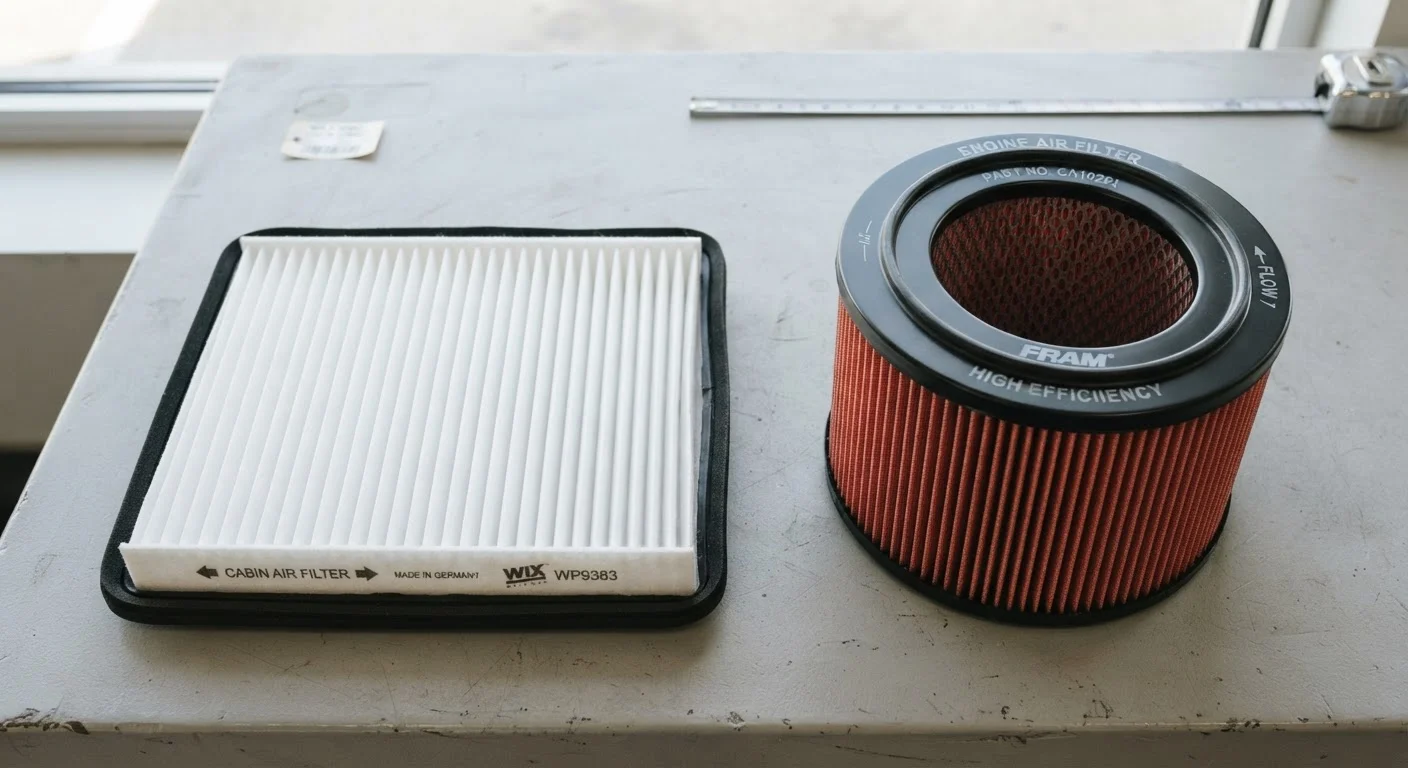
Photo credit: PrimeFaqs.com | Trending And Accurate Content
In this article
These two filters serve completely different purposes. Learn what each one does, where it's located, and how to tell when it needs replacing.
Key Takeaways
- The cabin air filter cleans air entering the passenger compartment; the engine air filter protects the engine from debris.
- A clogged cabin filter reduces HVAC airflow and air quality, while a clogged engine filter can hurt performance and fuel economy.
- Both filters are typically inspected every 12,000-15,000 miles, though driving conditions affect replacement intervals.
- Engine air filter replacement is often a straightforward DIY task; cabin filter access varies by vehicle.
- Neglecting either filter can lead to bigger, more expensive problems down the road.
Two Filters, Two Completely Different Jobs
Most drivers know their car has air filters, but many assume there's just one. In reality, your vehicle almost certainly has two - and they serve entirely separate purposes with no overlap.
The cabin air filter sits inside your HVAC system, typically behind the glove box or under the dashboard. Its entire job is filtering the air that flows through your vents before it reaches the passenger compartment. It catches pollen, dust, mold spores, and other particulates, meaning its condition directly affects what you and your passengers breathe.
The engine air filter is located in the engine bay, inside the air intake housing. It prevents dirt, insects, debris, and abrasive particles from entering the engine's combustion chamber. Clean combustion requires a precise ratio of air to fuel - a dirty engine filter disrupts that balance and can degrade performance over time.
In short: one filter protects people, the other protects machinery. Letting either one go too long without attention leads to different but real consequences.
| Criterion | Cabin Air Filter | Engine Air Filter |
|---|---|---|
| Primary function | Filters air entering passenger cabin | Filters air entering engine combustion |
| Location | Behind glove box or under dash | Engine bay air intake housing |
| Affects | In-cabin air quality and HVAC flow | Engine performance and fuel economy |
| Warning signs when clogged | Weak airflow, musty odors | Sluggish acceleration, poor MPG |
| Typical inspection interval | Every 12,000-15,000 miles | Every 12,000-15,000 miles |
| DIY accessibility | Varies by vehicle model | Generally straightforward |
How to Tell When Each Filter Needs Replacing
The signs of a failing cabin filter are usually felt before they're seen. Reduced airflow from your vents - even when the fan is set to high - is the clearest signal. Musty or stale odors when running the heat or AC are another common indicator. Allergy sufferers may notice symptoms worsening during commutes.
A failing engine air filter presents differently. You might notice a drop in fuel economy, rough idling, or sluggish acceleration. In some vehicles, a heavily clogged filter can trigger the check engine light due to airflow sensor interference. Visually, a filter that was once white or light gray but is now grey-brown and packed with debris is ready to be replaced.
General guidance from most vehicle manufacturers suggests inspecting both filters roughly every 12,000 to 15,000 miles, but this is a starting point - not a rule. Driving on unpaved roads, in heavy traffic, or in areas with high pollen counts can shorten replacement intervals significantly. Always consult your owner's manual for your vehicle's specific recommendations.
Your Owner's Manual Is the Final Word
Mileage-based replacement intervals vary across makes and models. Some manufacturers recommend engine air filter changes as infrequently as every 30,000 miles under normal conditions; others suggest sooner. Your vehicle's owner's manual provides the intervals specific to your car's engine and intake design - general guidelines are useful starting points, but the manual overrides them.
Replacing Each Filter: What to Expect
The engine air filter is one of the most accessible maintenance items on most vehicles. On many models, it involves opening a few clips on the air box in the engine bay and swapping the old filter for a new one - no specialized tools required. If you're comfortable opening the hood and following your owner's manual, this is a reasonable DIY task. When in doubt, a mechanic can handle it quickly during a routine service visit.
Cabin filter access varies more by vehicle. Some are easily reached by opening the glove box and pressing in the sides to release it. Others are tucked beneath the dashboard in a less obvious location. If you're unsure where yours is, your owner's manual will show you - or a quick check at an oil change appointment can reveal its condition.
Just like the relationship between filter maintenance and system health in home HVAC - as explored in this guide on HVAC filter schedules - skipping regular filter checks in your car creates cumulative strain. Neither filter is expensive to replace. The costs of ignoring them can be considerably higher.

Author
Automotive Basics Editorial Team
Automotive Basics Editorial Team is the collective byline for our editorial team and contributor network. Articles published under this byline or an editorial pen name are researched, written, and reviewed according to our editorial standards for clarity, consistency, and independence before publication.
View all articles →