
Why Your HVAC Filter Schedule Matters More Than You Think
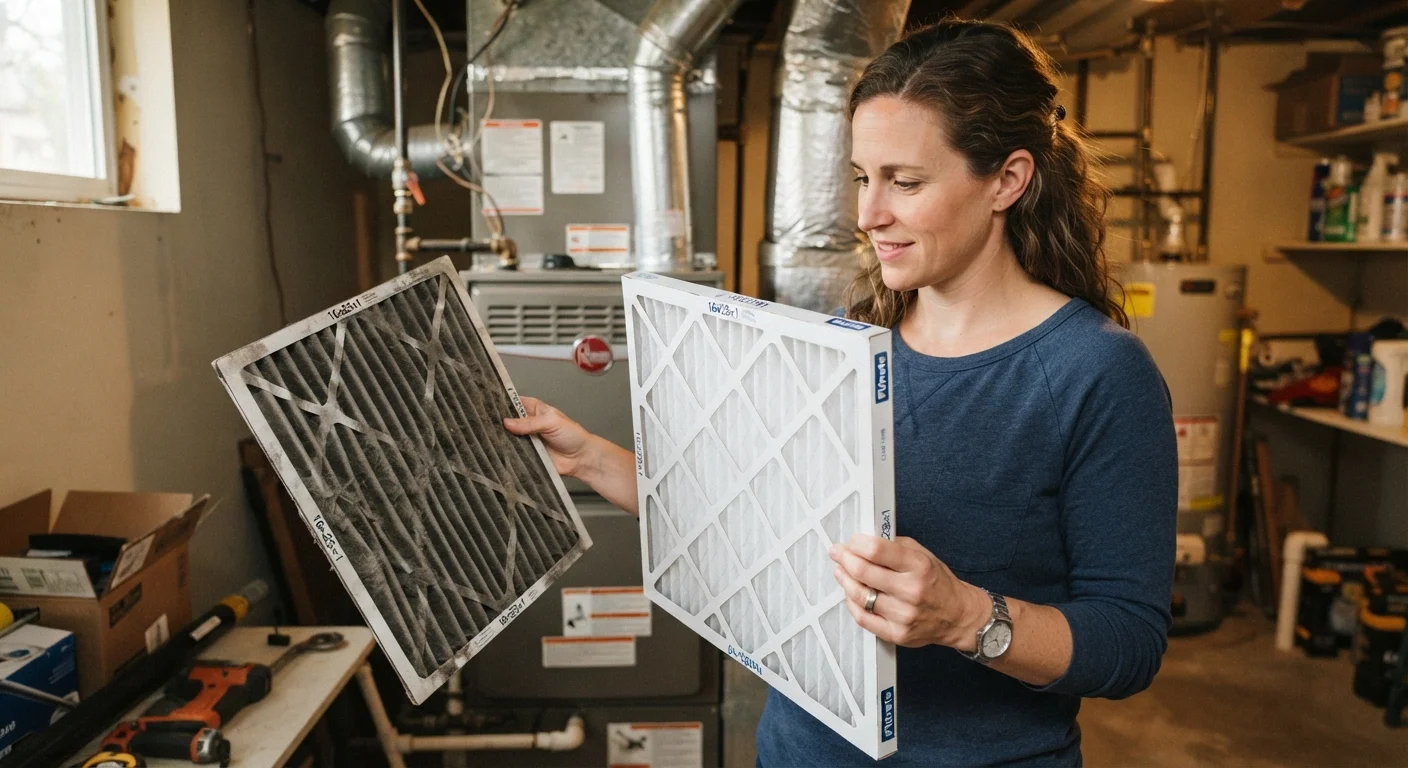
Photo credit: PrimeFaqs.com | Trending And Accurate Content
In this article
A clogged air filter doesn't just hurt air quality — it strains your whole HVAC system. Here's what the replacement schedule actually depends on.
Key Takeaways
- A clogged HVAC filter forces the system to work harder, raising energy use and wear.
- Replacement frequency depends on filter type, home size, pets, and indoor air quality.
- Most households should check filters monthly and replace every 1-3 months.
- Higher MERV filters improve filtration but may need more frequent changes in dusty homes.
- Skipping filter changes can shorten the lifespan of your entire HVAC system.
What Your Air Filter Actually Does
Your HVAC system constantly pulls air from inside your home, conditions it, and pushes it back through ducts into every room. The air filter sits at the intake point of this cycle and catches airborne particles - dust, pet hair, mold spores, pollen, and microscopic debris - before they enter the blower and heat exchanger.
Without a functioning filter, those particles accumulate on internal components, reducing efficiency and creating conditions for microbial growth inside the system. The filter is, in effect, your first and most accessible line of defense for both equipment health and indoor air quality.
It's worth noting what a standard HVAC filter is not designed to do: it is not an air purifier. Its primary purpose is to protect the system's mechanical components, with improved air quality being a welcome secondary benefit. Confusing these roles leads many homeowners to over-rely on filtration alone - or to neglect it entirely. As we debunk in common home maintenance myths, the idea that you only need to change filters twice a year is one of the most persistent - and costly - misconceptions homeowners hold.
Why the "Every 90 Days" Rule Isn't Universal
The frequently cited 90-day replacement interval is a general baseline - not a prescription for every household. Several real-world factors push that number lower or allow it to stretch longer.
5-15%
Potential energy increase from a clogged filter
The U.S. Department of Energy notes that a dirty or clogged air filter can increase HVAC energy consumption by 5-15% compared to a clean filter.
1-3 months
Typical replacement interval for standard filters
HVAC industry guidance generally recommends replacing 1-inch pleated filters every 1-3 months depending on household conditions, though actual needs vary.
MERV 8-11
Recommended range for most residential homes
Most HVAC manufacturers and contractors suggest MERV 8-11 filters for residential systems - effective enough for good filtration without restricting airflow.
- Pets: Homes with one or more shedding animals typically need monthly filter changes. Pet dander and hair clog filters significantly faster than ordinary household dust.
- Allergy or asthma sufferers: Higher indoor air quality demands mean filters should be replaced more frequently, sometimes every 3-4 weeks, to maintain meaningful filtration.
- Home size and occupancy: A single person in a small apartment generates far less airborne particulate than a family of five in a larger home. Larger households need more frequent changes.
- Construction or renovation activity: Drywall dust, sawdust, and construction debris can clog a filter in days. Check and replace during and immediately after any home project.
- Filter thickness: Thicker media filters (4-5 inches) hold significantly more debris than standard 1-inch filters, often lasting 6-12 months even in moderately active homes.
The practical approach: check your filter on the first of each month by holding it up to a light source. If you can't see light through it clearly, replace it regardless of where you are in your schedule.
The Real Cost of a Neglected Filter
A clogged filter doesn't fail silently - it creates a cascade of problems throughout the system. When airflow is restricted, the blower motor must work harder to move the same volume of air. This increases electricity consumption and puts mechanical stress on components not designed for that sustained load.
Mark Your Filter Before Installing It
Use a permanent marker to write the installation date directly on the filter frame before sliding it in. This gives you an immediate reference point every time you open the panel - no guessing, no forgotten reminders. Also confirm the airflow arrow on the filter frame points toward the blower, not away from it.
In a heating cycle, restricted airflow can cause the heat exchanger to overheat - a condition that, in gas furnaces, may trigger safety shutoffs or, in prolonged cases, contribute to heat exchanger damage. In cooling mode, reduced airflow across the evaporator coil can cause the coil temperature to drop below freezing, resulting in ice buildup and a system that stops cooling effectively.
Beyond equipment damage, a dirty filter allows finer particles to bypass the media and settle in ducts, on coils, and throughout your home's surfaces. This isn't just a cleaning inconvenience - contaminated coils operate less efficiently and are expensive to professionally clean.
The financial logic is straightforward: a replacement filter is a fraction of the cost of a service call, a coil cleaning, or a premature system replacement.
Building a Filter Schedule That Works for Your Home
Rather than relying on a calendar reminder alone, build your filter schedule around a monthly visual check combined with the specific conditions of your household. Start by writing your filter's dimensions and MERV rating on a piece of tape and placing it near your air handler - this removes the guesswork when it's time to buy a replacement.
Set a recurring monthly reminder on your phone or calendar. On that date, pull the filter and inspect it. If it's clearly loaded with debris, replace it immediately. If it still looks relatively clean, note it and check again in two weeks. Over a few months, you'll develop a reliable pattern specific to your home.
Consider keeping two or three replacement filters on hand so you're never delayed by a trip to the store. This is especially useful heading into peak heating and cooling seasons - the periods when your system runs hardest and filters fill fastest. Pairing filter checks with other seasonal tasks, like those covered in a spring maintenance checklist, makes the habit easier to sustain.
This article is for general informational purposes only. For HVAC repairs, system diagnostics, or work involving gas lines or electrical components, consult a licensed HVAC professional and verify any applicable local codes or permit requirements.
Frequently Asked Questions

Author
Home & Garden Editorial Team
Home & Garden Editorial Team is the collective byline for our editorial team and contributor network. Articles published under this byline or an editorial pen name are researched, written, and reviewed according to our editorial standards for clarity, consistency, and independence before publication.
View all articles →