
Building an Enrichment Routine for Dogs Who Spend Time Alone
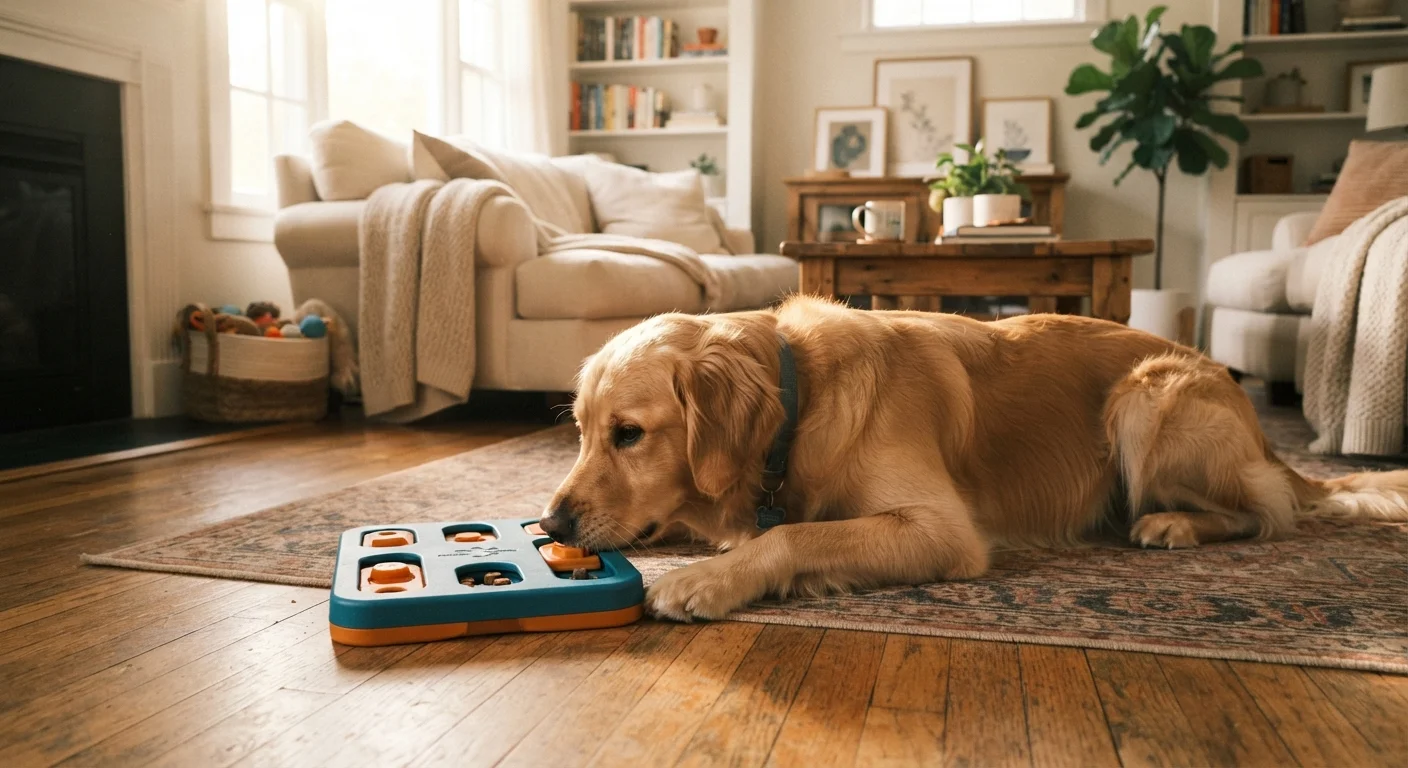
Photo credit: PrimeFaqs.com | Trending And Accurate Content
In this article
Mental stimulation is as important as physical exercise for dogs. Learn how to create an enrichment plan that works even on busy or remote-work days.
Key Takeaways
- Mental enrichment is just as essential as physical exercise for a dog's overall wellbeing.
- A consistent daily enrichment routine can reduce boredom-driven behaviors like chewing and barking.
- Rotating toys and activities prevents habituation and keeps dogs genuinely engaged.
- Enrichment doesn't require expensive equipment - everyday household items work well.
- Pairing enrichment with a predictable schedule amplifies its calming effect on dogs.
Why Enrichment Matters for Dogs Left Alone
Dogs are social, cognitively active animals whose behavioral needs don't pause when the house empties. Without adequate mental stimulation, many dogs default to self-directed behaviors - destructive chewing, nuisance barking, or repetitive pacing - not out of spite but out of unmet need. Research in animal behavior consistently links environmental enrichment to reduced stress indicators and lower rates of stereotypic behavior in domestic dogs.
Physical exercise alone is not sufficient. A tired body with an unstimulated mind is still a bored dog. Enrichment addresses the cognitive and sensory dimensions of a dog's experience: the need to forage, investigate, problem-solve, and engage with novel stimuli. For dogs in households where owners work outside the home or maintain remote schedules with periods of focus, a deliberate enrichment plan is a practical welfare tool - not an optional luxury.
Enrichment Is Not a Cure for Separation Anxiety
While enrichment routines can reduce everyday boredom and mild restlessness, they are not a treatment for clinical separation anxiety. If your dog shows persistent distress - destructive behavior, self-harm, or inability to settle even briefly - consult a veterinarian or a certified applied animal behaviorist. See our guide to separation anxiety for a fuller picture of signs and evidence-based management.
What You'll Need Before You Start
Setting up an enrichment routine requires minimal investment but some upfront planning. Before working through the steps below, gather a core set of enrichment items and designate a safe space in your home where your dog will spend alone time. This space should be dog-proofed - free of hazards your dog might interact with when unsupervised.
What you will need
Puzzle Feeder or Snuffle Mat
Slows down eating and engages foraging instincts, providing sustained mental focus.
Durable Chew (size-appropriate)
Satisfies natural chewing drive and helps dogs self-soothe during alone time.
Kong-Style Hollow Toy
Can be stuffed and frozen with food to extend engagement to 20-30 minutes.
Lick Mat
Repetitive licking is naturally calming; spreading food across the texture prolongs the activity.
Storage Bin for Toy Rotation
Keeps inactive toys out of sight so they remain novel when reintroduced.
Supervise New Items the First Time
Introduce any new puzzle feeder, chew, or DIY toy while you're home and can observe your dog. Some dogs chew through soft materials quickly, creating choking hazards. Confirm an item is appropriate for your dog's size and chew strength before leaving it unsupervised.
Step-by-Step: Creating the Routine
Follow these steps to build a structured enrichment plan tailored to your dog's needs and your daily schedule. The goal is a repeatable system that requires minimal daily decision-making from you once it's established.
Assess your dog's enrichment needs
Start by observing your dog's behavior during alone time. Are there signs of boredom - excessive barking, chewing furniture, or restlessness when you return? Note how long your dog is left alone and how much physical exercise they receive beforehand. High-energy breeds generally need more cognitive challenge than lower-energy ones, and younger dogs typically need more variety than seniors. This baseline shapes everything that follows.
Choose enrichment categories that suit your dog
Enrichment falls into several broad categories: food-based (puzzle feeders, stuffed toys, scatter feeding), sensory (novel scents, safe outdoor sniff walks), social (doggy daycare, arranged play), and cognitive (trained behaviors practiced briefly). For dogs spending time alone, food-based and sensory options are the most practical. Aim to include at least two different categories in your weekly plan rather than relying on a single approach.
Build a pre-departure enrichment setup
The thirty minutes before you leave matters most. Offer a physically tiring activity first - a brisk walk or a short training session using the principles outlined in our consistent home training guide. Immediately before departure, present the day's primary enrichment item: a frozen stuffed toy, a loaded snuffle mat, or a fresh chew. This pairs your leaving with something positive and gives the dog an immediate occupation.
Set up a rotation schedule
Divide your available enrichment items into two or three groups and rotate them on a weekly basis. If you own six items, use Group A this week and Group B next week. Store inactive items completely out of sight - smell included where possible. This prevents your dog from becoming desensitized to any single item. Novelty is itself enriching: an unfamiliar scent on a returning toy can trigger the same exploratory behavior as a brand-new one.
Anchor enrichment to a consistent daily schedule
Enrichment is most effective when delivered predictably. Dogs anticipate routines and show lower stress hormones when events occur at expected times - something explored in depth in our article on why pets need routine. Decide on fixed enrichment windows - morning departure, midday if a walker or neighbor visits, and a brief evening session - and protect them as consistently as you would feeding time.
Evaluate and adjust monthly
Review how the routine is working every three to four weeks. Ask: Is your dog finishing enrichment items quickly (may need more complexity)? Is your dog ignoring them entirely (may need higher-value food or different category)? Are problem behaviors improving, staying the same, or worsening? Adjust difficulty, food value, timing, or variety accordingly. If you see no improvement in distress signs after consistent effort, raise the issue with your veterinarian - behavioral concerns sometimes have underlying medical drivers.
Rotate, Don't Replace
Dogs habituate quickly to the same toys and puzzles. Keep a small storage bin and cycle three to five items in and out each week. Reintroducing a 'stale' toy after ten days often makes it feel brand new to your dog - no purchase required.
Keeping It Sustainable on Busy Days
The most common failure point in enrichment routines is inconsistency under pressure. When schedules shift, enrichment prep is often the first thing dropped. To prevent this, prepare in batches: stuff and freeze several hollow toys on Sunday, portion scatter-feed servings into small containers, and keep a chew reserve stocked. A five-minute setup the evening before requires far less willpower than improvising each morning.
On days when even a pre-departure setup feels impossible, a simple scatter feed on the kitchen floor - dry kibble or treats spread across a surface the dog must sniff out - takes under sixty seconds and activates the same foraging circuits as a puzzle feeder. Imperfect enrichment delivered consistently outperforms elaborate plans executed sporadically. For owners building broader daily structure, this training readiness checklist offers complementary strategies for short, high-impact engagement sessions that fit into tight windows.
This article provides general pet care information for educational purposes only and is not a substitute for professional veterinary or behavioral guidance. If your dog is showing signs of distress, anxiety, or behavioral problems, please consult a licensed veterinarian or certified animal behaviorist.

Author
Pets & Animals Editorial Team
Pets & Animals Editorial Team is the collective byline for our editorial team and contributor network. Articles published under this byline or an editorial pen name are researched, written, and reviewed according to our editorial standards for clarity, consistency, and independence before publication.
View all articles →