
How Highway Driving Differs from City Driving - and What Each Demands
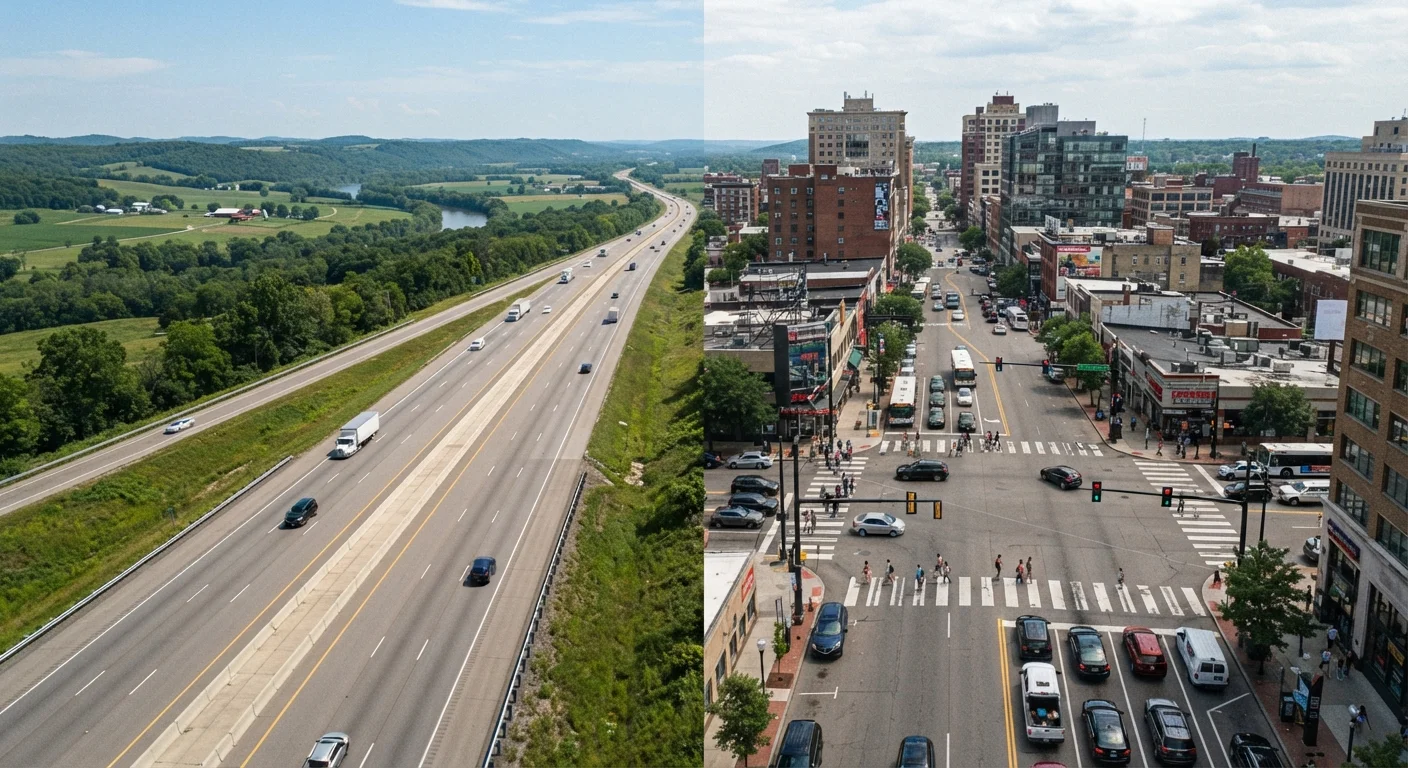
Photo credit: PrimeFaqs.com | Trending And Accurate Content
In this article
Merging at speed, managing exits, and sustained focus make highway driving its own skill. Here's what changes when you leave urban streets behind.
Key Takeaways
- Highway driving demands sustained attention and precise speed control; city driving demands rapid, constant decision-making.
- Merging at highway speed is one of the most technically demanding maneuvers everyday drivers routinely perform.
- City driving exposes you to more hazard types per mile - pedestrians, cyclists, signals, and blind intersections.
- Following distance rules differ: highways require significantly more space than city streets.
- Fatigue accumulates faster on long highway stretches due to reduced visual stimulation and monotony.
- Both environments require adapted versions of defensive driving - not just one universal approach.
The Core Difference: What Each Environment Actually Demands
At first glance, driving is driving - you steer, brake, and accelerate. But highway and city environments place fundamentally different cognitive and physical demands on a driver, and recognizing those differences is the first step toward handling both confidently.
City driving is defined by complexity. Intersections, traffic signals, pedestrians, cyclists, delivery vehicles, and unpredictable turns from side streets all compete for your attention within short distances. You make dozens of micro-decisions per mile - who has right of way, whether that pedestrian will step off the curb, how quickly the light ahead will change. Speeds are lower, but the hazard density is high.
Highway driving is defined by sustained exposure. There are fewer decision points per mile, but each one carries more consequence. A merge executed poorly at 65 mph is far less forgiving than a missed turn signal at 25 mph. And while the environment looks simpler, the speed compresses your reaction time and amplifies every error.
Experienced drivers learn to shift their mental mode when they shift environments - not just their speed. See how defensive driving adapts to each setting for a deeper look at the principles behind this shift.
| Criterion | Highway Driving | City Driving |
|---|---|---|
| Typical speed range | 55-75 mph | 15-45 mph |
| Hazard types | Merging, lane changes, fatigue | Pedestrians, cyclists, signals, turns |
| Decision frequency | Low per mile, high consequence | High per mile, rapid-fire |
| Recommended following distance | 3-4+ seconds | 2-3 seconds |
| Primary fatigue risk | Monotony and reduced stimulation | Mental overload on long urban drives |
| Key skill required | Speed management and merging | Hazard scanning and anticipation |
| Lane discipline complexity | High (passing lane etiquette) | Moderate (positioning for turns) |
Highway-Specific Demands: Merging, Lane Discipline, and Fatigue
Merging onto a highway is one of the most technically demanding maneuvers in everyday driving. You must accelerate to match traffic flow - typically 55-70 mph - while simultaneously scanning your mirror, checking your blind spot, and identifying a safe gap. Hesitating or entering too slowly creates a real hazard for vehicles behind you. The acceleration lane exists precisely to give you space to reach speed; use all of it when you need to.
Once on the highway, lane discipline matters more than many drivers realize. The left lane on a multi-lane highway is generally intended for passing, not cruising. Staying in it when not actively overtaking slows traffic and can frustrate drivers into making unsafe passes on the right. Choosing your lane based on your speed and intended exit is both courteous and safer.
Following distance expands significantly at highway speeds. At 65 mph, a commonly cited guideline is at least a 3-to-4-second gap behind the vehicle ahead - more in adverse weather. For a full breakdown of how weather changes these calculations, see adjusting your driving for rain, ice, and fog.
Fatigue is a highway-specific risk that city drivers rarely face in the same way. The visual monotony of open road - minimal landmarks, repetitive lane markings - can induce a low-alertness state even in well-rested drivers. Recognize early warning signs: difficulty maintaining your lane, missing exits, or finding that you cannot recall the last several miles. Pulling off to rest is always the right call.
~50%
Fatal crashes occurring on rural/highway roads
According to NHTSA data, roughly half of all traffic fatalities occur on rural roads and highways despite lower traffic volume compared to urban areas.
176 ft
Distance traveled in 2 seconds at 60 mph
At 60 mph, a vehicle covers approximately 88 feet per second - underscoring why even brief attention lapses carry serious risk at highway speeds.
40%
Of crashes involving driver inattention
The NHTSA has estimated that driver inattention is a contributing factor in a significant proportion of all motor vehicle crashes across both urban and highway settings.
City-Specific Demands: Scanning, Intersections, and Shared Space
Urban driving is an exercise in constant scanning. Hazards rarely announce themselves - a child steps from between parked cars, a cyclist drifts into your lane, a double-parked delivery truck narrows the road to one usable lane. The driver who spots these situations early can respond smoothly; the driver who spots them late is left braking hard or swerving.
Intersections deserve particular attention. Even when you have a green light, a quick glance left and right before committing is a habit that can prevent serious collisions. Red-light runners, pedestrians finishing a late crossing, and vehicles turning from unexpected positions all represent hazards that a green signal does not neutralize. For more on disciplined lane and position management in complex situations, the full sequence of a safe lane change is worth reviewing - many of its principles apply in city intersections too.
Speed management in cities is less about maintaining a number and more about reading context. School zones, hospital areas, and residential streets each carry specific norms and legal limits. Pedestrians and cyclists have legally protected rights of way in many situations that drivers sometimes overlook.
New drivers often find city environments overwhelming at first precisely because they demand so much simultaneous processing. That cognitive load is also what makes urban driving such effective practice. The skills built there - hazard scanning, anticipation, spatial awareness - transfer directly to highway driving and every other environment. What experience teaches that the driving test doesn't explores how that development actually happens over time.
Building the Right Habits for Both Environments
The most capable drivers don't have one driving style - they have a flexible one. That means actively adjusting your mental state, your following distance, your scan pattern, and your speed management each time the environment changes.
A few habits serve you well in both contexts:
- Mirror checks on a regular cycle - roughly every 5-8 seconds - keep your mental picture of surrounding traffic current whether you're on an expressway or a city block.
- Signaling early and consistently gives other drivers - and pedestrians - time to respond, in any setting.
- Managing your following distance actively, not just setting it once and forgetting it, means adjusting as traffic compresses or weather changes.
- Reducing in-car distractions matters even more at highway speeds, where a two-second glance at a phone translates to nearly 200 feet of ground covered without your eyes on the road at 65 mph.
Consider extending your awareness to conditions that multiply risk in both environments. Night driving introduces its own compounding hazards - reduced depth perception and longer reaction distances affect highways and city streets differently but significantly in both.
Ultimately, confident driving in any environment comes from building habits that are consistent and deliberate, not just knowledge of the rules. Both highway and city driving reward drivers who approach them with active attention rather than routine autopilot.

Author
Automotive Basics Editorial Team
Automotive Basics Editorial Team is the collective byline for our editorial team and contributor network. Articles published under this byline or an editorial pen name are researched, written, and reviewed according to our editorial standards for clarity, consistency, and independence before publication.
View all articles →