
Rain, Ice, Snow, or Fog: Adjusting Your Driving for Each Condition
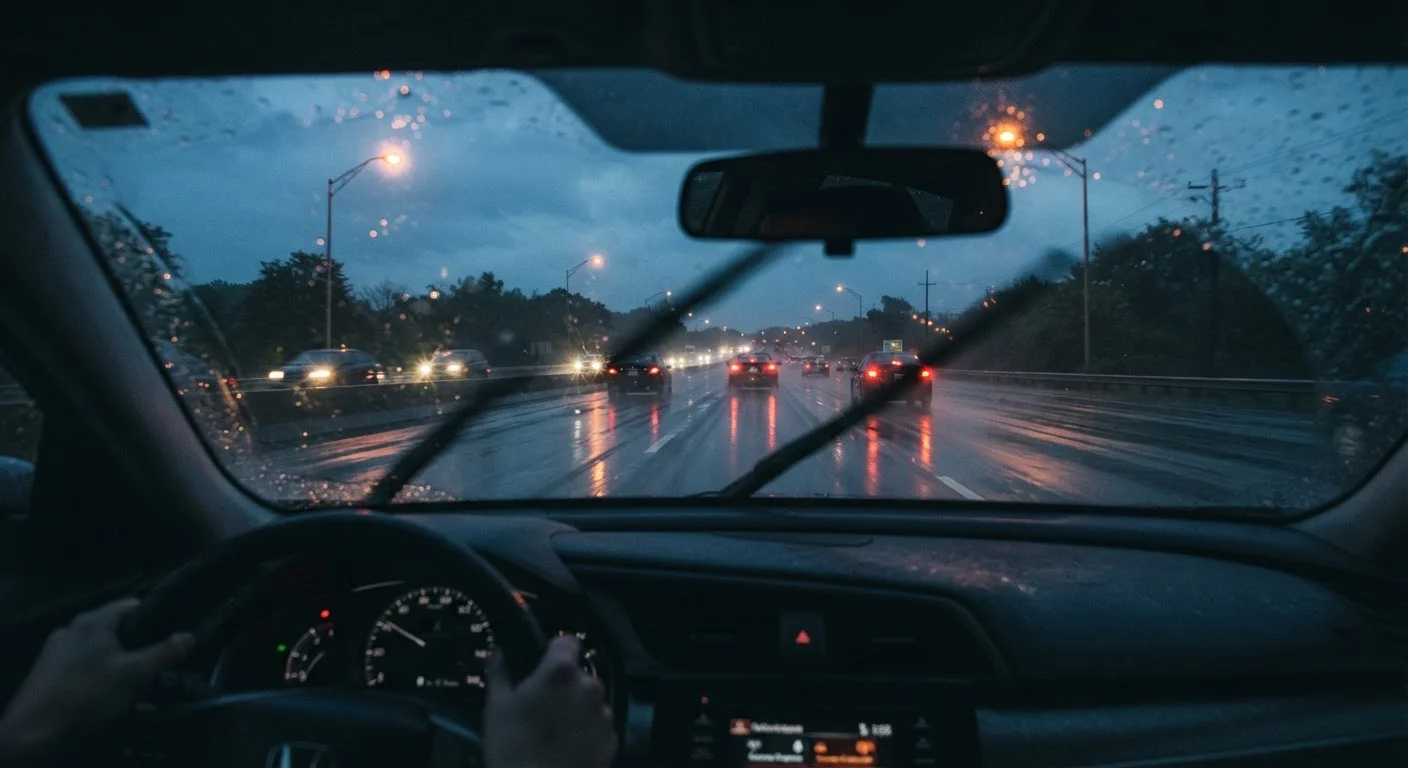
Photo credit: PrimeFaqs.com | Trending And Accurate Content
In this article
Different weather demands different responses. Here's how to adapt your speed, following distance, and visibility habits for each type of road condition.
Key Takeaways
- Rain reduces tire grip and visibility - increase following distance and reduce speed even on light rain days.
- Ice is the most treacherous condition because traction loss happens with little warning and braking distances multiply dramatically.
- Snow requires slow, smooth inputs; sudden acceleration, braking, or steering can trigger skids.
- Fog demands low-beam headlights, reduced speed, and navigation by road markings rather than the vehicle ahead.
- Each weather type requires a different combination of speed reduction, spacing, and visibility adaptation.
Why Weather Demands More Than Just Slowing Down
Most drivers know to slow down when weather turns bad. What fewer drivers appreciate is that rain, ice, snow, and fog each create a different kind of hazard - and responding the same way to all of them leaves real risk on the table. The physics of traction loss in ice differs from aquaplaning in rain. The visibility problem in fog is not the same as the depth-perception challenge of driving in heavy snowfall. Treating these conditions interchangeably is a common mistake.
Understanding what each condition actually does to your vehicle - and to your ability to see and be seen - allows you to make smarter, more targeted adjustments. For a broader view of how stopping distance is affected by road surface and speed, see how stopping physics work.
| Rain | Ice | Snow | Fog | |
|---|---|---|---|---|
| Primary hazard | Reduced grip, aquaplaning | Near-total traction loss | Low traction + depth obscured | Severely reduced visibility |
| Speed reduction | Moderate (10+ mph below limit) | Significant (25+ mph or more) | Significant (match conditions) | Match actual sight distance |
| Recommended following distance | 4+ seconds | 8+ seconds | 6+ seconds | 4+ seconds minimum |
| Headlight guidance | Low beams on | Low beams on | Low beams on | Low beams only - never high beams |
| Greatest danger moment | First minutes of rain (oil + water) | Bridges and shaded stretches | Turning or braking on packed snow | Misjudging speed vs. sight distance |
| Common driver mistake | Underestimating aquaplaning risk | Overconfidence after mild slides | Over-relying on AWD/4WD | Using high beams in dense fog |
Driving in Rain: Grip, Spray, and Aquaplaning
Rain reduces tire grip by creating a thin film of water between rubber and road. The danger intensifies in the first 10-20 minutes of rainfall, when water mixes with accumulated oil residue to produce an especially slick surface. Beyond that early window, sustained rain actually washes away much of that residue.
Key adjustments for rain:
- Reduce speed by roughly 10 mph below the posted limit in moderate rain; more in heavy downpours.
- Increase following distance to at least four seconds - double the dry-road recommendation.
- Switch headlights on even during daytime rain to improve your visibility to others.
- Avoid sudden steering, hard braking, or rapid acceleration, all of which overwhelm wet tires.
- If you feel aquaplaning (the steering goes light, the engine revs rise), ease off the accelerator gently and hold a straight line until traction returns.
Worn tires are disproportionately dangerous in rain. Tread channels water away from the contact patch; shallow tread cannot do this effectively.
Driving on Ice: When Traction Nearly Disappears
Ice is the most unforgiving surface a driver will encounter. Black ice - a thin, nearly transparent glaze that forms on bridges, overpasses, and shaded stretches - is particularly dangerous because it is difficult to detect until traction is already lost. Braking distances on ice can be five to ten times longer than on dry pavement.
Key adjustments for ice:
- Reduce speed dramatically - driving 20-25 mph on an icy road may still be too fast in certain conditions.
- Increase following distance to eight seconds or more.
- Accelerate, brake, and steer with extreme gentleness; any sudden input can send the vehicle into a slide.
- If your vehicle begins to slide, steer gently in the direction you want to go and avoid stabbing the brakes.
- Bridges and overpasses freeze before road surfaces - reduce speed before reaching them.
Drivers in cold climates should also review how freezing temperatures affect vehicle systems to ensure their car is mechanically prepared for winter conditions.
Practice Before You Need It
If you live in a region with seasonal ice and snow, practicing slow-speed maneuvers in an empty, snowy parking lot can build the muscle memory for gentle inputs before you need them on a live road. Understanding how your specific vehicle responds to a controlled skid situation - with no traffic present - is one of the most practical investments a winter driver can make.
Driving in Snow: Smooth Is the Operative Word
Snow presents a combination of reduced traction and reduced visibility. Packed snow behaves somewhat like ice; loose or deep snow adds resistance and can cause the vehicle to push wide in corners. The core principle of snow driving is keeping all inputs slow and smooth.
Key adjustments for snow:
- Reduce speed to match conditions - posted speed limits assume clear, dry roads.
- Increase following distance to at least six seconds.
- Accelerate slowly from stops to avoid wheelspin.
- Brake early and gradually; use engine braking by downshifting (in a manual) or releasing the accelerator well before you need to stop.
- Keep your vehicle's windows, mirrors, lights, and roof fully cleared of snow before driving - snow sliding from your roof onto your windshield or another vehicle is both a safety hazard and a legal issue in many states.
All-wheel drive and four-wheel drive help with acceleration in snow but do not meaningfully improve braking or cornering traction - a common misunderstanding that leads to overconfidence.
Driving in Fog: Seeing and Being Seen
Fog is a visibility problem first. Unlike the other three conditions, fog does not necessarily reduce traction - but it can reduce your effective sight distance to just a few car lengths, making it one of the most disorienting and collision-prone driving environments.
Key adjustments for fog:
- Use low-beam headlights, not high beams. High beams reflect off fog particles and reduce visibility further.
- If your vehicle has dedicated fog lights, use them - they are designed to cut below the fog layer.
- Reduce speed to ensure you can stop within your actual sight distance, not the distance you could see in clear conditions.
- Use the right edge of the road or lane markings as a reference point rather than the taillights of the vehicle ahead.
- Increase following distance and avoid pulling over - if you must stop, move as far off the road as possible and turn off your lights to avoid attracting following drivers.
Fog can also combine with other conditions - ice fog, for example, creates both a visibility hazard and an ice risk. Poor visibility at night compounds these challenges further; see night driving hazards most drivers underestimate for related guidance.
Building reliable habits across all of these conditions takes practice and intention. For practical frameworks on making safe behaviors automatic, building safer driving habits that actually stick is a useful companion read.

Author
Automotive Basics Editorial Team
Automotive Basics Editorial Team is the collective byline for our editorial team and contributor network. Articles published under this byline or an editorial pen name are researched, written, and reviewed according to our editorial standards for clarity, consistency, and independence before publication.
View all articles →