
Road Safety for New Drivers: What Experience Teaches That the Test Doesn't
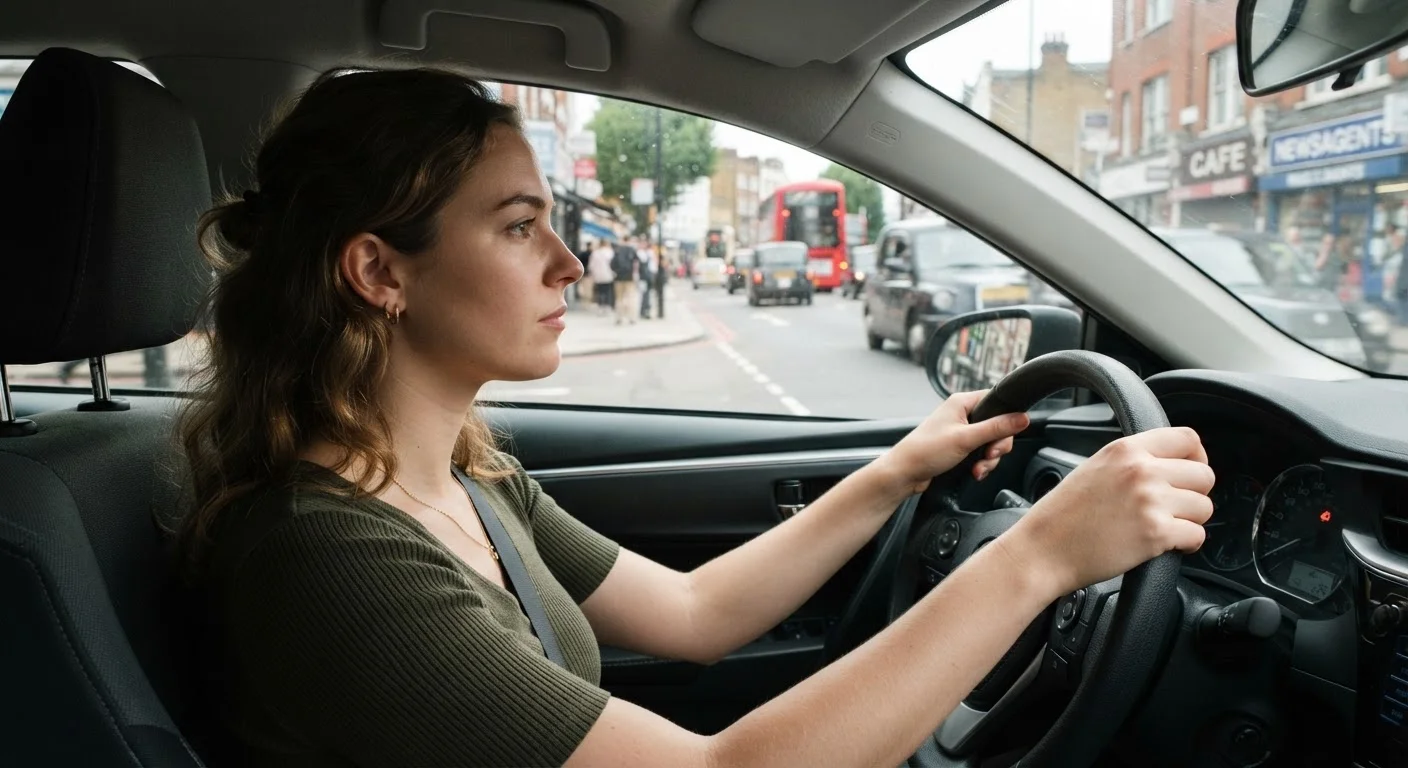
Photo credit: PrimeFaqs.com | Trending And Accurate Content
In this article
Passing a driving test is just the start. Here are the real-world safety lessons that take time behind the wheel — and awareness — to fully absorb.
Key Takeaways
- A driver's license proves you met a minimum threshold - not that you're fully prepared for every road situation.
- Situational awareness and hazard prediction are skills built through experience, not memorized rules.
- Following distance, speed management, and weather adaptation are among the most underestimated safety factors.
- Distraction and drowsy driving are as dangerous as alcohol impairment in many documented studies.
- Safe driving habits form through repetition - small, deliberate choices made consistently over time.
Why the Test Doesn't Tell the Whole Story
Earning a driver's license is a genuine achievement, but it's also just a starting point. The test confirms that a new driver understands traffic laws, can execute basic maneuvers, and has met the state's minimum competency threshold. What it cannot measure is judgment - the real-time decision-making that safe driving actually requires.
Driving examiners assess a narrow window of performance under controlled, predictable conditions. Real roads are not controlled or predictable. They involve other drivers making mistakes, animals entering the roadway, construction zones that reroute traffic mid-commute, and weather that shifts within minutes. Experienced drivers handle these situations through a mental library built over years of exposure. New drivers are still compiling that library.
This gap isn't a criticism of new drivers - it's simply the nature of skill acquisition. The goal is to recognize where experience fills in what the test left out, so you can pursue those lessons actively rather than stumbling into them. See how defensive driving principles extend well beyond what most licensing curricula cover.
Situational Awareness: Reading the Road Around You
Situational awareness means knowing what is happening not just in front of you, but in all directions - and anticipating what might happen next. Experienced drivers scan constantly: checking mirrors every several seconds, tracking pedestrians at crosswalks before they step off the curb, and noticing brake lights two or three cars ahead, not just the vehicle immediately in front.
New drivers often focus heavily on the car they're directly behind, which creates a tunnel-vision effect. This makes it harder to react in time when a chain reaction occurs - for example, when traffic slows suddenly four cars ahead.
Train yourself to scan your mirrors on a rhythm - every five to eight seconds - rather than waiting until you feel the urge to check. Consistency makes it automatic within a few weeks.
New drivers often check mirrors reactively rather than proactively, which means hazards in adjacent lanes can go unnoticed until they become urgent.
When driving in rain or reduced visibility, add one full second of following distance for every adverse condition present - wet roads, low light, and heavy traffic each count as one.
Layering conditions compound stopping distance and reaction time demands; a single adjustment rule helps drivers recalibrate without doing complicated mental math mid-drive.
Developing wider visual scanning takes deliberate practice. A useful habit: pick a point 10 to 15 seconds ahead down the road and use it as your primary focal point, while making mirror checks every five to eight seconds. This mental model is foundational to understanding what defensive driving actually demands.
Speed, Space, and Following Distance
Posted speed limits define the legal maximum, not the appropriate speed for every condition. Experienced drivers instinctively reduce speed before curves, in heavy rain, in dense traffic, and near school zones - even when the posted limit hasn't changed. New drivers sometimes treat the limit as a target rather than a ceiling.
Following distance is similarly underestimated. A common standard taught in licensing courses is the three-second rule - maintaining at least three seconds of space between your vehicle and the car ahead. However, on highways, in adverse weather, or when fatigued, that margin should expand considerably. Stopping distances increase dramatically at higher speeds; at 60 mph, a vehicle needs roughly twice the stopping distance it does at 40 mph.
Highway driving introduces its own demands. If you're still building confidence with merging, lane discipline, and sustained-speed focus, this breakdown of how highway driving differs from city driving is worth reading before your next long-distance trip.
Conditions That Change Everything
Rain, fog, ice, glare, and darkness are not simply inconvenient - they fundamentally change the physics and visibility of driving. Wet pavement can double or triple stopping distances. Black ice offers virtually no visual warning before a vehicle loses traction. Low-sun glare in the early morning or late afternoon can reduce forward visibility to near zero for several seconds.
New drivers frequently underestimate how much these conditions demand a change in behavior. Slowing down, increasing following distance, using headlights correctly, and avoiding sudden steering inputs are not optional adjustments - they're safety essentials. Driving after dark carries its own specific challenges around depth perception and fatigue. Our guide on night driving hazards most drivers underestimate covers those risks in detail.
Don't Underestimate Weather Conditions
Many new drivers leave their driving behavior unchanged in rain, fog, or ice because it feels manageable at first. However, stopping distances can double or triple on wet or icy pavement. Reduce your speed meaningfully - not just slightly - and increase your following distance well beyond the three-second baseline whenever conditions are less than ideal.
The Hidden Risks of Distraction and Fatigue
Research consistently shows that cognitive distraction - where attention is divided even if eyes remain on the road - meaningfully degrades reaction time and hazard detection. A hands-free phone call is not the same as an undistracted drive. New drivers, who are already using more mental bandwidth to manage unfamiliar situations, are especially vulnerable to any added cognitive load.
Drowsy driving is equally serious and significantly underreported as a crash factor. Warning signs include difficulty keeping eyes open, lane drifting, missing exits you know well, and having no memory of the last several miles. If these occur, pulling over and resting is the appropriate response - not increasing the radio volume or opening a window, which provide only momentary alertness.
Managing these risks is part of building safer driving habits that actually stick - habits that protect you long after the novelty of having a license wears off.
Building Habits That Outlast the Learning Curve
Safe driving is less about any single rule and more about consistent behavior repeated until it becomes automatic. Buckling up before the ignition, checking mirrors before lane changes, signaling with enough lead time for the driver behind you to react - these micro-habits compound into a significantly safer overall driving profile.
New drivers should also think practically about vehicle ownership: maintaining proper tire pressure, understanding what dashboard warning lights mean, and knowing what to do when something goes wrong. These aren't glamorous skills, but they're the foundation of responsible car ownership. The car ownership hub covers costs, insurance, and everyday vehicle decisions that matter from day one.
One area often overlooked early on is insurance. Coverage gaps and payment errors are common among first-time policyholders. What new drivers often get wrong about car insurance explains the most common mistakes and how to avoid them.
The learning curve for driving doesn't end at licensure - it simply shifts from supervised practice to self-directed experience. Approaching that experience with awareness and intention is what separates drivers who improve from those who only accumulate mileage.

Author
Automotive Basics Editorial Team
Automotive Basics Editorial Team is the collective byline for our editorial team and contributor network. Articles published under this byline or an editorial pen name are researched, written, and reviewed according to our editorial standards for clarity, consistency, and independence before publication.
View all articles →