
Your Carry-On Bag Before Every Flight
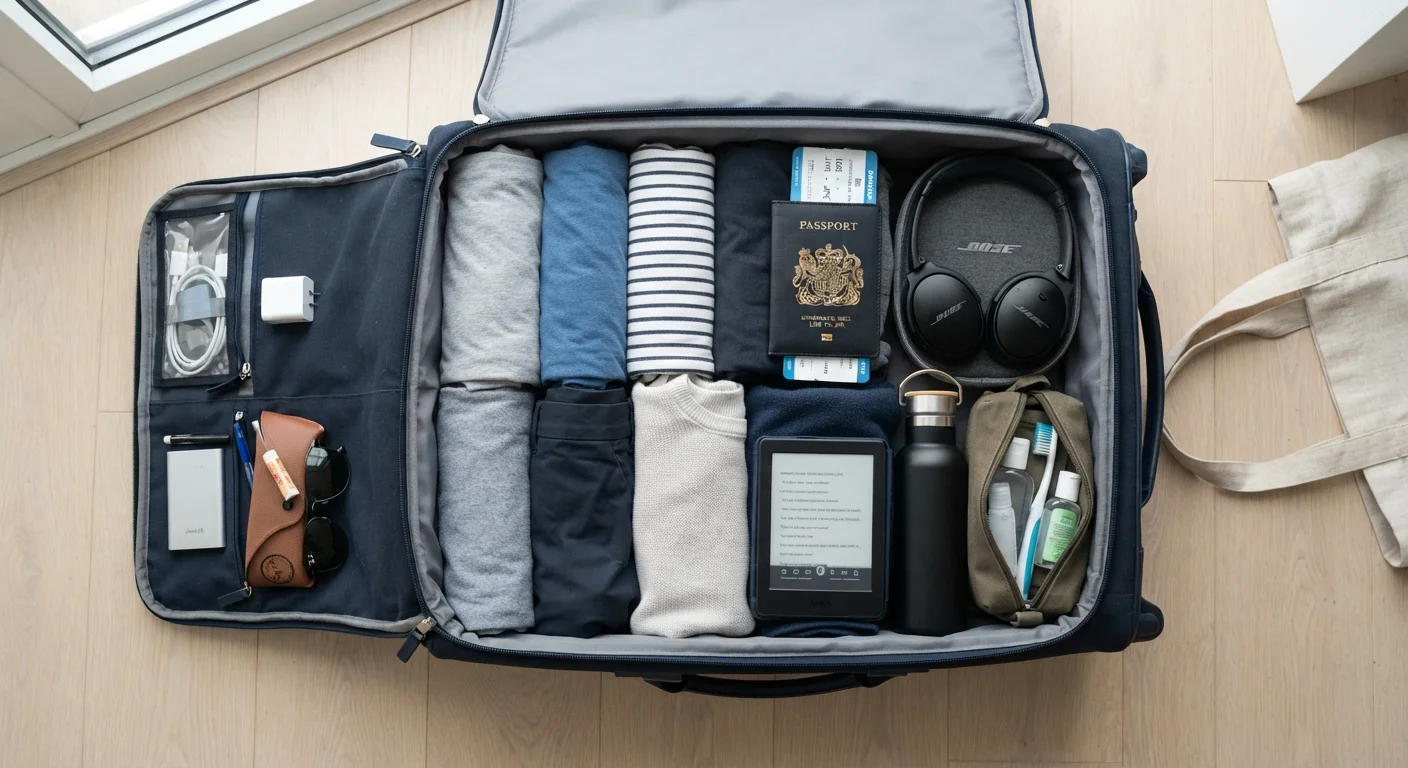
Photo credit: PrimeFaqs.com | Trending And Accurate Content
In this article
A practical pre-flight checklist covering documents, electronics, medications, and comfort essentials to pack in your carry-on.
Key Takeaways
- Pack all critical documents and medications in your carry-on, never in checked luggage.
- TSA liquid rules apply to carry-ons - all liquids must be 3.4 oz or less and fit in one quart-sized bag.
- Electronics and chargers should be accessible for security screening without unpacking your entire bag.
- A few comfort items can significantly improve a long-haul flight experience.
- Verify airline-specific size and weight limits for carry-ons before you pack.
Why Your Carry-On Deserves a Dedicated Checklist
Your carry-on bag is your travel lifeline. It holds everything you'd genuinely miss if the airline lost your checked luggage - and for many American travelers, it is the only luggage. Getting it right before every flight isn't about being overly cautious; it's about flying smarter.
Whether you're hopping a two-hour domestic leg or boarding a transatlantic red-eye, the carry-on checklist below covers four core categories: documents and payment, electronics, health and medications, and in-flight comfort. Run through it the night before you leave, then do a quick 60-second spot-check at the door.
If you're still deciding how much to bring, our carry-on vs. checked bag guide walks through the real trade-offs - cost, convenience, and risk - so you can make the right call for your trip.
Airline Size Rules Vary - Don't Assume
Carry-on size and weight limits differ significantly between airlines, and enforcement has tightened at many carriers. Before you pack, look up your specific airline's current carry-on dimensions and weight allowance. A bag that fits comfortably on one airline may be gate-checked on another, which can cost you both time and money.
What to Pack: The Full Carry-On Checklist
Use the groups below as a systematic walkthrough. Items marked must are non-negotiable; should items are strongly recommended for most trips; nice-to-have items depend on your flight length and personal preferences.
Documents & Payment
Electronics & Chargers
Health & Medications
Comfort & In-Flight Essentials
Traveling with prescriptions or over-the-counter medications? Our guide on traveling with medications covers domestic and international rules in plain language - always a worthwhile read before you pack your pill case.
Tools and Resources to Help You Prepare
A few simple tools make this checklist even easier to execute. None of these are mandatory, but each one removes a common point of failure on travel day.
TSA's 3-1-1 Liquids Guide
Use TSA's official guidance to verify what liquid containers are permitted and how to organize them before reaching the checkpoint.
Airline Carry-On Size Chart
Check your specific airline's published bag dimensions and weight limits - these vary by carrier and cabin class.
Packing Cubes
Compress and organize items within your carry-on so you can quickly access what you need without unpacking everything.
Digital Document Wallet App
Store scans of your passport, travel insurance, and reservations so you have backup access even if your bag is lost.
For those aiming to travel with one bag only, packing light without leaving something critical behind pairs perfectly with this checklist - covering clothing systems and the mindset shift that makes a single carry-on feel like enough.
And once you're wheels-up, good security habits matter as much as good packing. See how to protect your cash, cards, and devices in our guide on keeping your money and devices safe while traveling.
Medications Always Fly in Your Carry-On
Never pack prescription or critical medications in a checked bag. Checked luggage can be delayed, lost, or misrouted - sometimes for days. Keep all medications in your carry-on, in their original pharmacy-labeled containers where possible. If you're traveling internationally, verify the rules for carrying certain medications into your destination country through official government sources before you fly.
This article is for general informational purposes only. Consult your healthcare provider regarding medications and your airline or the TSA for the most current security and carry-on regulations before you travel.

Author
Travel & Trips Editorial Team
Travel & Trips Editorial Team is the collective byline for our editorial team and contributor network. Articles published under this byline or an editorial pen name are researched, written, and reviewed according to our editorial standards for clarity, consistency, and independence before publication.
View all articles →