
Packing Light Without Leaving Something Critical Behind
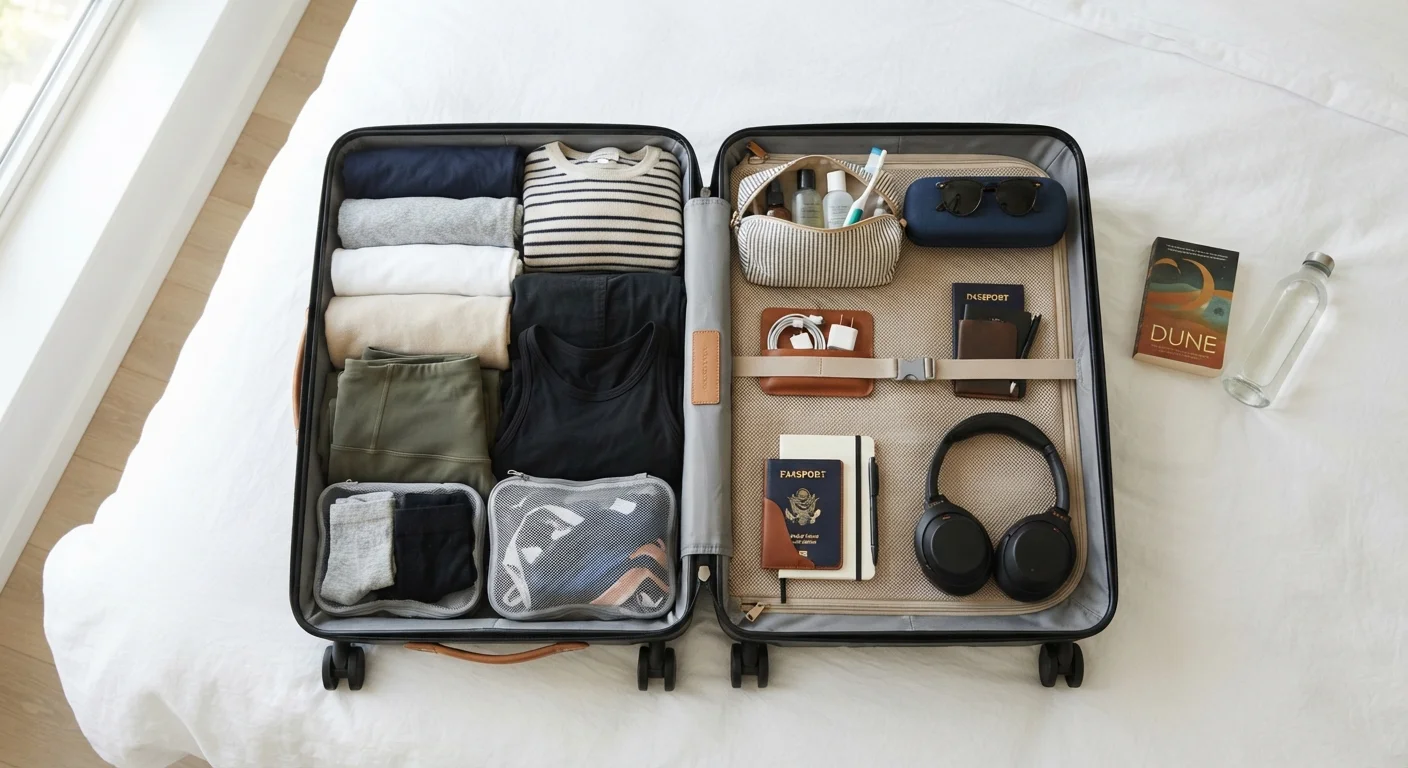
Photo credit: PrimeFaqs.com | Trending And Accurate Content
In this article
Practical techniques for cutting luggage weight—clothing systems, toiletry rules, and the mindset shift that makes one bag feel like enough.
Key Takeaways
- Build your clothing around a neutral color palette so every piece mixes and matches.
- The toiletry bag is often where packing weight spirals - a strict 3-1-1 mindset fixes it.
- A pre-pack audit - laying everything out before it goes in the bag - eliminates 'just in case' items.
- Rolling clothes saves space; packing cubes keep everything auditable and organized.
- Wearing your heaviest items on travel day is a legitimate strategy for staying under weight limits.
Why Packing Light Is Worth the Discipline
Lugging a heavy suitcase through cobblestone streets, missed connections spent dragging oversized bags, and checked-bag fees that quietly inflate a travel budget - these are predictable, avoidable costs of overpacking. Traveling with less isn't about deprivation; it's about moving through your trip with more freedom and less friction.
The biggest mental barrier is the belief that every contingency requires a physical object. In practice, most 'what if' scenarios either don't materialize or are solvable on the ground. Once you've traveled light once and landed safely with everything you needed, the mindset shift tends to stick. For a broader look at whether a carry-on-only strategy fits your specific trip, see Carry-On Only vs. Checked Bag: The Real Trade-Offs.
Verify Airline Size and Weight Rules
Carry-on dimensions and weight limits vary by airline and even by fare class on the same carrier. Always check your specific airline's current policy before you finalize your bag choice. Overhead bin space on regional jets is especially tight, and gate-check situations can arise without warning.
What You'll Need Before You Start
Getting your packing system right starts before anything goes into a bag. Gather the right tools, confirm your constraints, and set up your space for the pre-pack audit.
What you will need
Packing cubes (set of 3-4)
Compress and organize clothing categories so the bag stays tidy and every cubic inch is used.
Luggage scale
Weigh your bag at home before departing to avoid surprise overweight fees at the check-in counter.
Reusable silicone travel bottles
Decant full-size toiletries into TSA-compliant containers to reduce both weight and bulk.
Lightweight packable daypack
Serves as your personal item on the flight and day bag at your destination, eliminating the need for a separate tote.
Wrinkle-release spray (travel size)
Refreshes clothes that have been rolled or compressed, reducing the perceived need to overpack 'backup' outfits.
Step-by-Step: Packing Light Without Missing Anything
Follow these steps in order. Each one builds on the last - skipping the clothing audit in step two, for example, undermines every compression technique you apply in step four.
Build your itinerary-based clothing list
Before you touch your bag, write out every day of your trip and the primary activity for each one - dinner out, hiking, beach, city walking, business meeting. Then assign one outfit per activity type, not per day. A dinner outfit worn on day two can repeat on day six. Aim for no more than five to seven clothing items for a week-long trip, plus a versatile layer.
Lay everything out - then cut 20%
Pile every item you intend to pack on a flat surface. Step back and look at the full spread honestly. Identify the 'just in case' items - the formal shoes for the dinner that might happen, the fourth pair of socks, the backup jacket. Remove roughly one-fifth of what you see. This audit step catches the impulse packing that inflates bags before a single item is rolled.
Apply the toiletry discipline
Toiletries are the silent weight culprits. Decant only what you'll realistically use into small reusable bottles - aim for 1-2 oz per liquid product. Solid versions of shampoo, conditioner, and soap eliminate liquid restrictions entirely and weigh a fraction of bottled equivalents. Remember that most hotels provide shampoo, conditioner, and soap; factor that into what you actually need to carry.
Pack using the roll-and-cube method
Roll soft items like t-shirts, underwear, and socks tightly and load them into packing cubes by category. Flatter items - dress shirts, trousers - can be folded and placed along the bag's spine. Shoes go sole-down along the bottom edge, stuffed with socks to preserve shape and reclaim dead space. Fill every void: charger cables tuck inside shoes, a scarf wraps around fragile items.
Wear your heaviest items on travel day
Your bulkiest shoes, your heaviest jacket or blazer, and your thickest jeans should be on your body when you walk through the airport - not in your bag. This single habit can shave two to four pounds off your checked or carry-on weight without removing a single item from your trip wardrobe.
Do a final weigh and close
Before zipping up, weigh your packed bag with a luggage scale. If you're carry-on only, compare against your airline's posted limit - most US carriers set this at 22-40 lbs for overhead bags, but regional partners often cap lower. If you're over, go back to step two and remove one more item. Once you're within limits, zip up and resist the urge to add anything in the morning.
The One-Week Rule Works for Longer Trips Too
Most experienced light packers cap their clothing at roughly one week's worth regardless of trip length - then plan to do one laundry run. Many hotels, hostels, and Airbnbs have in-unit washers or laundry facilities. Factor this in during trip planning and you'll rarely need more than seven days of outfits.
Once you're packed and ready, run through a final pre-flight check for the items that should ride in your carry-on personal item - documents, medications, and electronics. Our carry-on checklist walks through exactly what belongs at arm's reach during the flight.
Common Pitfalls and How to Avoid Them
Even seasoned travelers fall into predictable traps. The most common: packing for a worst-case version of the trip instead of the most likely version. If your itinerary has one formal dinner, one pair of dress shoes is the answer - not two. If rain is forecast on two of seven days, a packable rain layer handles it; a full rain suit does not.
Don't Cut Medications or Documents
Prescription medications, travel documents, insurance cards, and any items you cannot replace at your destination should never be minimized for the sake of a lighter bag. These are non-negotiables. Keep them in your personal item or carry-on, never in checked luggage.
The second pitfall is return-trip inflation: souvenirs, purchases, and items borrowed from travel companions that suddenly need to fit on the way home. If you're a shopper, pack with deliberate empty space or carry a foldable bag inside your main luggage. Planning your trip logistics with similar intention pays off across the board - the same structured thinking that makes a packing list work also applies to your daily itinerary. See The Anatomy of a Travel Itinerary That Actually Works for how to apply it to your schedule.

Author
Travel & Trips Editorial Team
Travel & Trips Editorial Team is the collective byline for our editorial team and contributor network. Articles published under this byline or an editorial pen name are researched, written, and reviewed according to our editorial standards for clarity, consistency, and independence before publication.
View all articles →