
Traveling With Medications: What American Travelers Need to Know
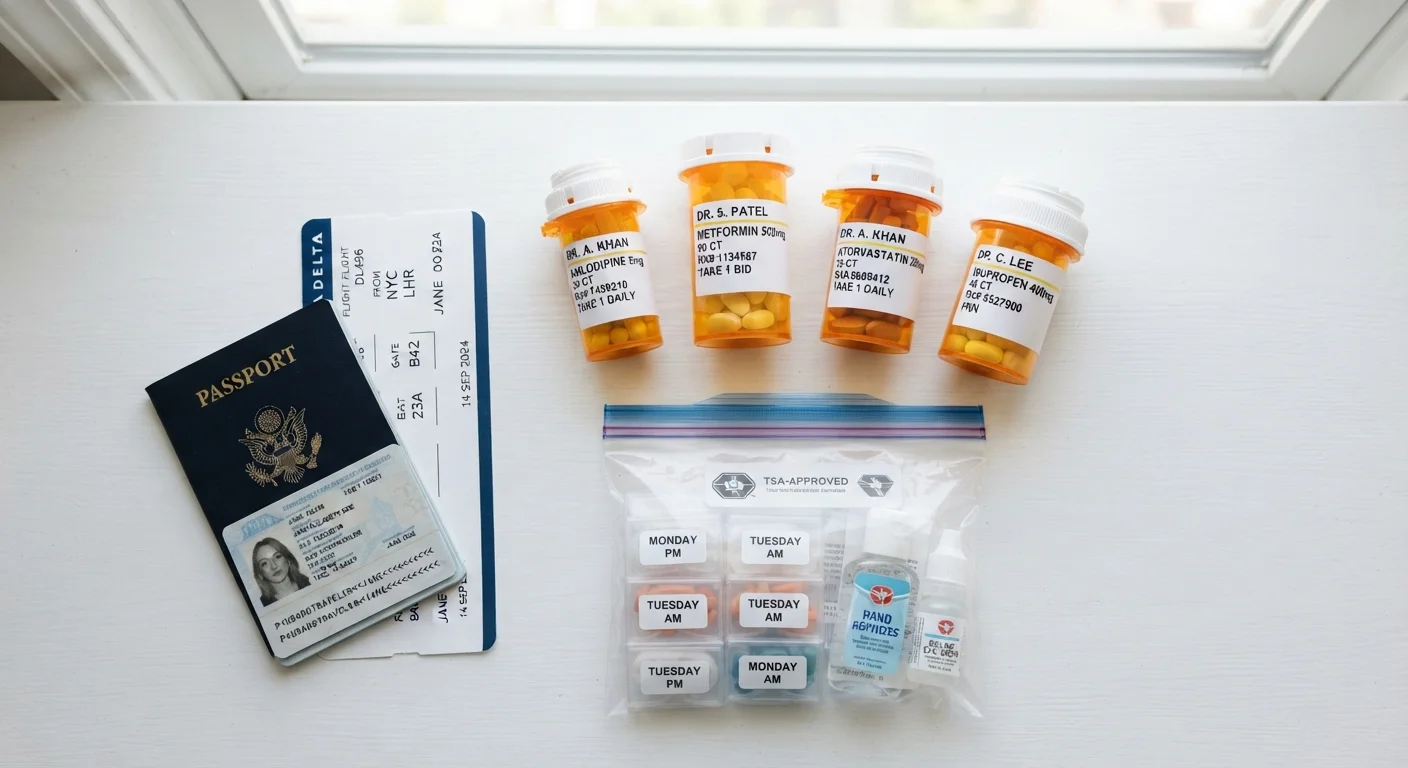
Photo credit: PrimeFaqs.com | Trending And Accurate Content
In this article
General guidance on packing prescription and over-the-counter medications safely for domestic and international travel. Not medical advice.
Key Takeaways
- Keep all medications in their original, labeled containers whenever possible.
- Carry prescriptions and a doctor's letter in your carry-on, not checked luggage.
- Controlled substances often require extra documentation for international travel.
- Destination countries may classify certain medications as illegal - always verify in advance.
- TSA allows medically necessary liquids over 3.4 oz when declared at the security checkpoint.
- Always consult your prescribing physician before traveling with any medication regimen.
Why Medication Planning Belongs in Your Pre-Trip Checklist
Most travelers remember to pack their passport and phone charger. Medications - especially the ones you take every day - can slip through the cracks until you're already at cruising altitude. A few hours of planning before departure can prevent real emergencies on the road.
Think of medication management as its own travel logistics task, on par with booking accommodations. It touches airline rules, customs law, healthcare access abroad, and simple pack organization. If you're working through a broader pre-departure checklist, our pre-trip verification guide is a useful companion to this article. And for the bigger picture of preparing your first trip outside the U.S., see our international trip planning walkthrough.
Talk to Your Doctor Before You Pack
Schedule a pre-travel appointment with your prescribing physician at least four to six weeks before departure, especially for international trips. They can adjust your supply, write a travel letter, advise on time zone dosing adjustments, and flag any destination-specific concerns. This step is especially important for controlled substances or medications requiring refrigeration.
Packing Medications: The Fundamentals
Whether you're flying to Phoenix or Paris, the core packing rules are consistent:
- Carry-on is essential. Checked luggage gets lost, delayed, and exposed to temperature extremes in cargo holds. Keep all medications - especially critical prescriptions - in your carry-on bag. Our carry-on checklist article covers where medications fit into your overall bag strategy.
- Original containers matter. Keep prescriptions in the pharmacy-labeled bottles. For long trips, a weekly pill organizer is convenient - but bring the original bottles too, especially for international travel.
- Pack extra supply. Aim for a few days beyond your trip length. Delays happen. Discuss the appropriate supply with your physician beforehand.
- Temperature-sensitive medications like insulin require insulated travel cases and may need special handling on long hauls - consult your healthcare provider for guidance specific to your situation.
45%
U.S. adults taking at least one prescription drug
According to the CDC's National Center for Health Statistics, nearly half of American adults report taking at least one prescription medication - making this a near-universal travel consideration.
100+
Countries with restrictions on common U.S. medications
The International Narcotics Control Board notes that controlled substance classifications differ significantly across countries, meaning widely prescribed U.S. drugs may be restricted or banned in many destinations.
3.4 oz
Standard TSA liquid limit (exemptions apply for medical liquids)
TSA's standard liquid rule has a documented medical exemption - travelers with documented medical need may carry larger quantities when declared at the checkpoint.
Navigating TSA and International Customs
Domestically, TSA is generally straightforward with medications. Declare medically necessary liquids over 3.4 oz at the checkpoint and set them aside for separate screening. Agents may inspect them but cannot deny your right to travel with a legitimately prescribed drug.
International travel is more complex. Each country sets its own rules on what medications can cross its border and in what quantities. Controlled substances - including many common pain medications, sleep aids, and ADHD treatments - may be banned, restricted, or require advance permits in countries where the U.S. traveler wouldn't expect it. Always verify with the destination country's embassy or consulate before flying. The U.S. State Department's travel pages and the International Narcotics Control Board (INCB) are good starting points for research.
A physician's letter - printed on official letterhead, signed, and ideally translated into the destination country's language - is one of the most practical documents you can carry. It should describe the medication, your general diagnosis, the prescribed dosage, and the medical necessity. Check how entry requirements and travel advisories may affect your plans, especially for destinations with strict customs regimes.
Regulations Change - Always Verify Officially
Drug import rules can be updated with little public notice. The information in this article reflects general guidance, not current legal requirements for any specific country. Before traveling, verify the rules directly with the destination country's embassy in the U.S. and review the U.S. State Department's country-specific travel information pages. Do not rely solely on travel forums or third-party websites for legal compliance.
What to Do If Something Goes Wrong
Even well-prepared travelers face the unexpected: a bag lost, a bottle confiscated, a medication running out. Here's how to respond:
- Contact your travel insurance provider as soon as possible. Many travel insurance plans include medical assistance services that can help locate a local physician or pharmacy.
- Reach the nearest U.S. Embassy or Consulate. They maintain lists of local English-speaking medical providers and can help navigate unfamiliar healthcare systems.
- Call your prescribing physician back home. A faxed or emailed prescription to a local pharmacy may be an option in some countries, though regulations vary widely.
Carrying digital and physical copies of your prescriptions - stored separately from your medication supply - gives you a recovery path no matter what happens. You can store them alongside other important documents, a habit discussed in our guide to keeping valuables safe while traveling.
This article is for general informational purposes only and is not medical or legal advice. Medication rules and healthcare access vary by destination and individual circumstance. Always consult your prescribing physician before traveling with any medication, and verify current regulations with official government sources and your destination country's embassy before departure.
Frequently Asked Questions

Author
Travel & Trips Editorial Team
Travel & Trips Editorial Team is the collective byline for our editorial team and contributor network. Articles published under this byline or an editorial pen name are researched, written, and reviewed according to our editorial standards for clarity, consistency, and independence before publication.
View all articles →