
Gutters: When Cleaning Them Yourself Makes Sense and When It Doesn't
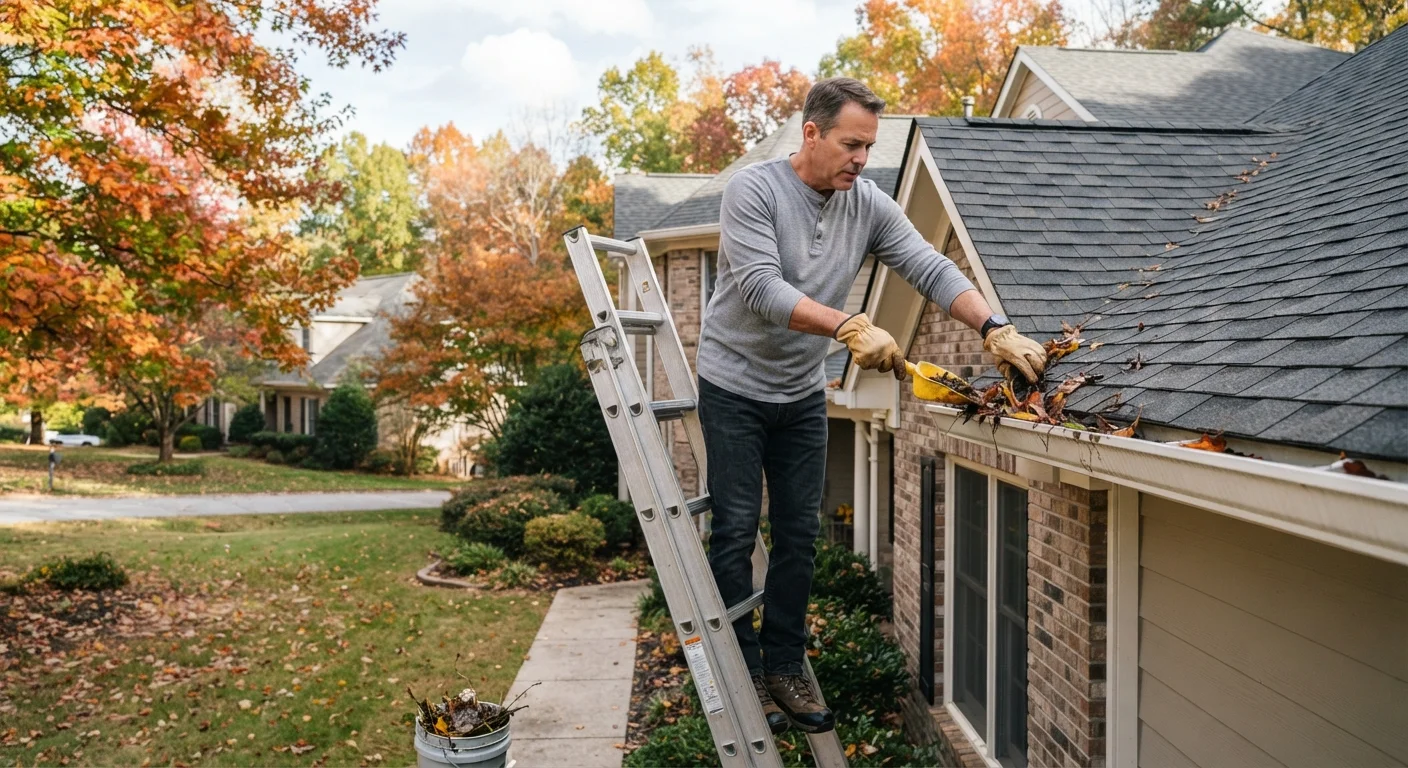
Photo credit: PrimeFaqs.com | Trending And Accurate Content
In this article
Gutter maintenance is essential but not always a safe DIY task. Learn what factors determine whether to tackle it yourself or call a professional.
Key Takeaways
- DIY gutter cleaning is reasonable for single-story homes with easy ladder access and minimal debris.
- Height, roof pitch, and physical condition are the primary safety factors to evaluate before attempting this task yourself.
- Clogged gutters can cause foundation damage, basement flooding, and wood rot if left unaddressed.
- Professional cleaners bring safety equipment, experience, and the ability to spot early damage you might miss.
- Most homes benefit from gutter cleaning at least twice a year - typically in late spring and late fall.
Saves money on routine maintenance costs
Professional gutter cleaning involves a service fee that adds up over multiple cleanings per year. Doing it yourself eliminates that recurring cost for homeowners with the right setup.
Flexible scheduling on your own timeline
You can clean gutters immediately after a heavy leaf fall or before a forecasted storm, rather than waiting for a professional appointment that may be days away.
Builds firsthand knowledge of your home
Getting up close with your gutters lets you notice early signs of damage - loose hangers, rust spots, or sagging - before they escalate into expensive repairs.
Minimal tools and low startup cost
A stable ladder, work gloves, a gutter scoop, and a garden hose are typically all you need. Most homeowners already own these items.
Significant fall risk on multi-story homes
Working at height on a ladder - especially above a single story - carries a genuine injury risk. An unstable footing, unexpected debris, or overreaching can cause serious falls.
Physical demands may not suit all homeowners
Gutter cleaning requires climbing, balancing, and reaching repeatedly along the roofline. Homeowners with mobility limitations, balance issues, or fatigue concerns should not attempt this task alone.
Risk of missing damage without trained eyes
A DIYer focused on removing debris may not notice hairline cracks, improperly pitched sections, or early fascia rot that a professional would flag during a routine cleaning.
Complex rooflines and tall homes add risk exponentially
Steep-pitched roofs, valleys, or sections that require repositioning the ladder frequently make the job far more hazardous - even for physically capable adults.
Improper technique can damage gutters or siding
Using too much hose pressure, leaning a ladder against a gutter channel, or forcing debris into a downspout can bend, crack, or block components, creating new problems.
Why Gutter Maintenance Can't Be Skipped
Gutters do one job: channel water away from your home's foundation, siding, and landscaping. When they're blocked by leaves, twigs, shingle granules, or compacted debris, water backs up and finds other paths - often destructive ones. Overflowing gutters can saturate soil against your foundation, contribute to basement moisture intrusion, rot fascia boards, and even cause ice dams in winter climates.
The good news is that regular cleaning - generally twice a year - keeps these problems at bay. The question isn't whether to clean your gutters, but how to get it done safely and effectively. As part of a broader seasonal routine, gutter maintenance belongs on every homeowner's radar. See every homeowner's spring maintenance list for where it fits alongside other exterior checks.
The Case for Doing It Yourself
For the right homeowner and the right house, DIY gutter cleaning is genuinely practical. It requires no specialized training, can be completed in a few hours, and costs little beyond the tools you likely already own - a sturdy ladder, work gloves, a garden hose, and a small scoop or gutter brush.
Saves money on routine maintenance costs
Professional gutter cleaning involves a service fee that adds up over multiple cleanings per year. Doing it yourself eliminates that recurring cost for homeowners with the right setup.
Flexible scheduling on your own timeline
You can clean gutters immediately after a heavy leaf fall or before a forecasted storm, rather than waiting for a professional appointment that may be days away.
Builds firsthand knowledge of your home
Getting up close with your gutters lets you notice early signs of damage - loose hangers, rust spots, or sagging - before they escalate into expensive repairs.
Minimal tools and low startup cost
A stable ladder, work gloves, a gutter scoop, and a garden hose are typically all you need. Most homeowners already own these items.
Single-story homes with accessible rooflines and moderate tree coverage are the ideal DIY scenario. If you're comfortable on a ladder, have a helper to stabilize it at the base, and aren't dealing with heavily compacted or soggy debris, this is a task well within reach. Always work section by section rather than repositioning from the ladder, and never lean beyond your body's center of gravity.
When Calling a Professional Is the Smarter Move
DIY gutter cleaning carries real physical risk that scales quickly with home height and roof complexity. Falls from ladders are among the most common causes of serious home-improvement injuries - and a second-story gutter line is high enough to cause life-altering harm. Beyond height, there are other situations where professional help is the clearly correct choice.
Significant fall risk on multi-story homes
Working at height on a ladder - especially above a single story - carries a genuine injury risk. An unstable footing, unexpected debris, or overreaching can cause serious falls.
Physical demands may not suit all homeowners
Gutter cleaning requires climbing, balancing, and reaching repeatedly along the roofline. Homeowners with mobility limitations, balance issues, or fatigue concerns should not attempt this task alone.
Risk of missing damage without trained eyes
A DIYer focused on removing debris may not notice hairline cracks, improperly pitched sections, or early fascia rot that a professional would flag during a routine cleaning.
Complex rooflines and tall homes add risk exponentially
Steep-pitched roofs, valleys, or sections that require repositioning the ladder frequently make the job far more hazardous - even for physically capable adults.
Improper technique can damage gutters or siding
Using too much hose pressure, leaning a ladder against a gutter channel, or forcing debris into a downspout can bend, crack, or block components, creating new problems.
Professionals also bring value beyond safety. They can identify early signs of gutter damage - sagging sections, separated joints, rust, or improper slope - that an untrained eye might miss. Those observations can prevent much costlier repairs down the line. It's worth pairing a professional gutter inspection with a broader roof check; spotting roof warning signs early is far less expensive than repairing damage after the fact.
Top 3
Cause of home exterior water damage
Clogged and overflowing gutters are consistently cited by home inspectors as a leading contributor to water intrusion at the foundation and fascia level.
2×/year
Recommended minimum cleaning frequency
Most home maintenance guidance recommends cleaning gutters at least twice annually - in late spring and late fall - with additional cleanings for heavily wooded properties.
Weighing the DIY Trade-Off Honestly
The DIY-versus-professional decision for gutters mirrors choices homeowners face across many maintenance tasks. Weighing the trade-off for common home projects involves an honest assessment of skill, safety, tools, and the real cost of getting it wrong.
For gutter cleaning specifically, ask yourself three questions before climbing that ladder: Is my home one story? Do I have a stable, appropriately rated ladder and someone to help? Am I physically confident working at height without fatigue or balance concerns? If any answer is no, the cost of a professional cleaning - typically a modest expense - represents solid value against the risks involved.
Tools, Technique, and Safety Basics for DIYers
If you've assessed your situation and DIY makes sense, a few basics go a long way. Use a ladder rated for your weight plus equipment, and position it on firm, level ground - never on soft soil or near an open doorway. Wear non-slip footwear and work gloves to protect against sharp debris and potential pests.
Work from the downspout end outward, scooping debris into a bucket or dropping it onto a tarp below. Once the channel is clear, flush with a garden hose toward the downspout to confirm flow and check for leaks at the seams. If you notice sagging sections, separated hangers, or water draining toward the house rather than away, those are issues to address before the next rain - either as a follow-up DIY fix or with professional help.
While you're at it, a quick exterior inspection is worthwhile. Cleaning your home's exterior safely can complement gutter work and help you spot siding or trim issues at the same time. And don't let common home maintenance myths lead you to skip this task - gutters that look clear from the ground often hold significant hidden buildup.
When Gutter Guards Change the Equation
Gutter guards and leaf screens can reduce the frequency of cleaning, but they rarely eliminate it entirely. Fine debris, shingle granules, and small seeds can still accumulate on top of or inside many guard systems. If your home has gutter guards installed, check the manufacturer's guidance and inspect annually rather than assuming no maintenance is needed.

Author
Home & Garden Editorial Team
Home & Garden Editorial Team is the collective byline for our editorial team and contributor network. Articles published under this byline or an editorial pen name are researched, written, and reviewed according to our editorial standards for clarity, consistency, and independence before publication.
View all articles →