
DIY Car Maintenance: Where It Makes Sense and Where to Draw the Line
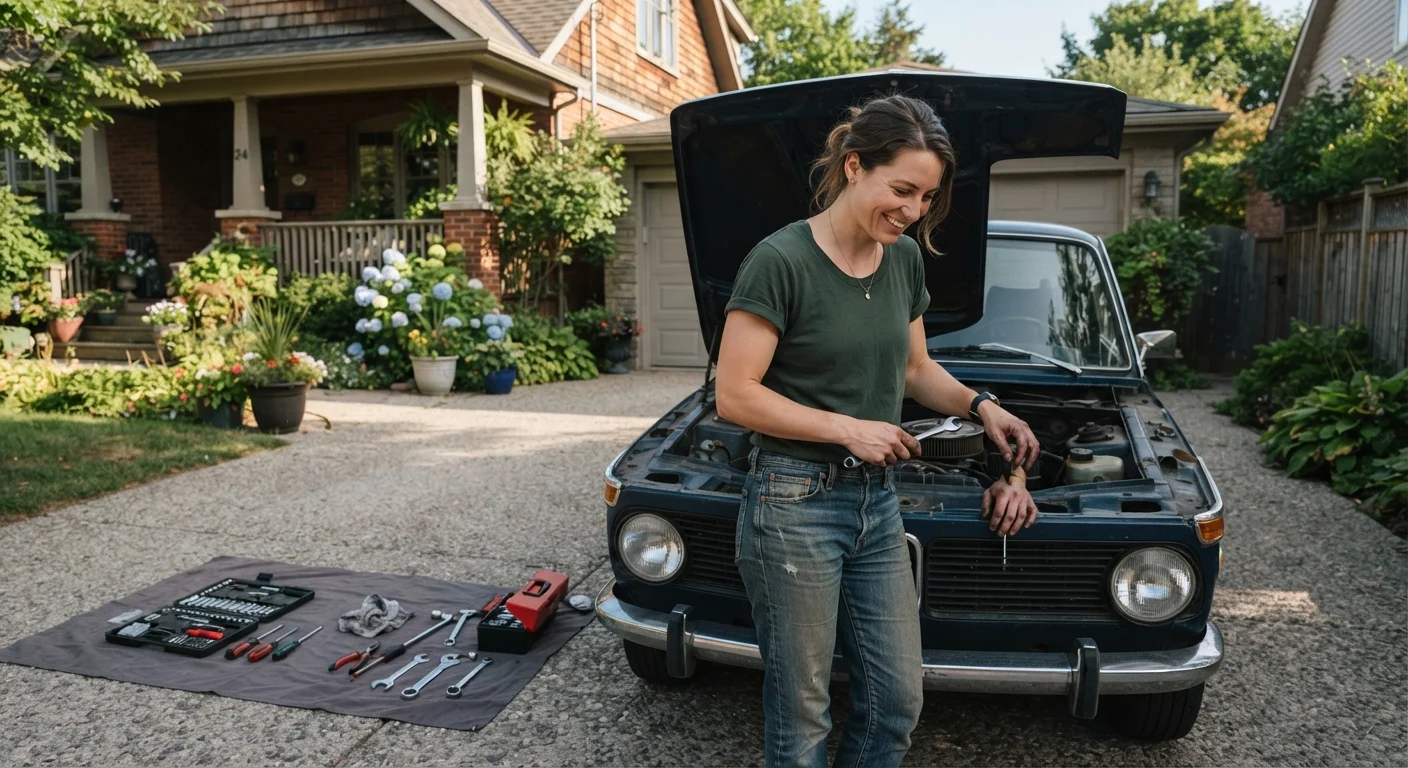
Photo credit: PrimeFaqs.com | Trending And Accurate Content
In this article
Some maintenance tasks are straightforward for home mechanics; others carry real safety risk. Here's how to know the difference.
Key Takeaways
- Routine tasks like oil changes, air filter swaps, and wiper replacements are manageable for most drivers with basic tools.
- Brake system work, suspension repairs, and anything involving high-voltage components carry significant safety risk and typically require a professional.
- Your owner's manual is the authoritative reference for your vehicle's specific fluids, intervals, and specifications.
- Mistakes on safety-critical systems can create liability, void warranties, and result in costly secondary damage.
- Starting with simple tasks builds mechanical confidence before progressing to more involved maintenance.
Reduces routine maintenance costs meaningfully
Labor charges often account for more than half of a service bill. Handling oil changes, filter replacements, and fluid top-offs yourself eliminates that cost for straightforward tasks.
Builds direct familiarity with your vehicle
Physically inspecting components - hoses, belts, fluid levels - trains you to notice early warning signs before they become expensive failures.
Flexible scheduling on your own timeline
DIY tasks can happen on a weekend without booking an appointment, waiting in a queue, or arranging alternative transportation.
Entry-level tasks require minimal tools
Wiper blade replacement, cabin air filters, and tire pressure checks need little more than your hands and a basic gauge - no professional equipment required.
Develops confidence for future, more involved tasks
Successfully completing simple maintenance builds mechanical intuition and comfort, making it easier to approach moderately complex jobs over time.
Errors on safety-critical systems carry serious consequences
Mistakes with brakes, steering components, or wheel bearings don't just damage the car - they can cause loss of vehicle control. These systems have essentially zero margin for error.
Incorrect work can void manufacturer warranties
Using the wrong fluid specification or improperly servicing a component may void coverage under a powertrain or parts warranty, depending on the terms.
Modern vehicles require diagnostic tools, not just hand tools
Many service resets - oil life monitors, TPMS recalibration, transmission adaptations - require an OBD-II scanner or dealer-level software that most home mechanics don't own.
Secondary damage from incomplete repairs is costly
A partially completed job - an improperly torqued component, a missing seal - can cause failures that cost far more to fix than the original service would have.
High-voltage systems in hybrids and EVs present real injury risk
Battery packs and associated wiring in hybrid and electric vehicles can carry hundreds of volts and retain charge after shutdown. These systems should only be serviced by certified technicians.
What DIY Maintenance Actually Involves
DIY car maintenance covers a wide spectrum - from checking tire pressure to replacing a timing belt. Not all of these tasks carry the same complexity or risk. The goal isn't to do everything yourself; it's to identify which jobs fall within your ability and which are better left to a trained mechanic.
For a thorough starting point, the first-time owner's maintenance orientation walks through every core service your car will need, how often, and why it matters. Before picking up a wrench, it also helps to understand your owner's manual, which contains fluid specifications, torque ratings, and maintenance schedules tailored to your exact vehicle - not generic estimates.
Reduces routine maintenance costs meaningfully
Labor charges often account for more than half of a service bill. Handling oil changes, filter replacements, and fluid top-offs yourself eliminates that cost for straightforward tasks.
Builds direct familiarity with your vehicle
Physically inspecting components - hoses, belts, fluid levels - trains you to notice early warning signs before they become expensive failures.
Flexible scheduling on your own timeline
DIY tasks can happen on a weekend without booking an appointment, waiting in a queue, or arranging alternative transportation.
Entry-level tasks require minimal tools
Wiper blade replacement, cabin air filters, and tire pressure checks need little more than your hands and a basic gauge - no professional equipment required.
Develops confidence for future, more involved tasks
Successfully completing simple maintenance builds mechanical intuition and comfort, making it easier to approach moderately complex jobs over time.
Where DIY Maintenance Falls Short
The risks in DIY maintenance aren't about pride - they're about physics and consequences. A stripped drain plug can cause catastrophic oil loss. An incorrectly bled brake line can cause brake failure. Miswired electrical components in modern vehicles, especially hybrids and EVs with high-voltage systems, can cause serious injury even after the ignition is off.
Even well-intentioned repairs can trigger unintended problems. Common maintenance oversights often originate not from neglect but from incomplete DIY work - a coolant hose not fully reseated, a sensor connector left unplugged, or a torque spec ignored. If your car needs brake attention, reviewing brake wear warning signs first will help you communicate clearly with a mechanic about what you've observed.
Errors on safety-critical systems carry serious consequences
Mistakes with brakes, steering components, or wheel bearings don't just damage the car - they can cause loss of vehicle control. These systems have essentially zero margin for error.
Incorrect work can void manufacturer warranties
Using the wrong fluid specification or improperly servicing a component may void coverage under a powertrain or parts warranty, depending on the terms.
Modern vehicles require diagnostic tools, not just hand tools
Many service resets - oil life monitors, TPMS recalibration, transmission adaptations - require an OBD-II scanner or dealer-level software that most home mechanics don't own.
Secondary damage from incomplete repairs is costly
A partially completed job - an improperly torqued component, a missing seal - can cause failures that cost far more to fix than the original service would have.
High-voltage systems in hybrids and EVs present real injury risk
Battery packs and associated wiring in hybrid and electric vehicles can carry hundreds of volts and retain charge after shutdown. These systems should only be serviced by certified technicians.
Building a Practical DIY Approach
The most sustainable approach is a tiered one: handle what you can confidently and safely do yourself, and be honest about what falls outside that range. Start with tasks that have clear visual confirmation of completion - replacing an air filter has an obvious before-and-after. Progress from there.
When to Stop and Call a Mechanic
If you remove a component and find corrosion, cracked hardware, or something that doesn't match what you expected from the instructions, stop before proceeding. Continuing when something looks wrong is one of the most common ways a small DIY job becomes an expensive repair. It's also worth noting that some jurisdictions require licensed professionals to perform certain types of repairs for insurance or inspection purposes - check your local requirements.
Oil changes, cabin air filter replacements, wiper blade swaps, and tire pressure checks are solid starting points. Tire rotation is worth understanding, but knowing that rotation, balancing, and alignment are three separate jobs helps you avoid assuming you've handled everything when you've only addressed one piece. For drivers focused on long-term ownership, the priorities shift - see what actually matters past 100,000 miles to understand where professional service pays off most.
~50%
Typical labor share of a service bill
Industry service advisors commonly note that labor makes up roughly half or more of most standard repair invoices, making DIY labor savings most significant on time-intensive tasks.
3-5 tasks
Maintenance jobs most accessible to non-mechanics
Oil changes, air filters, wiper blades, tire pressure checks, and battery terminal cleaning are consistently cited by mechanic training programs as the most beginner-appropriate DIY tasks.
When a repair falls outside your ability, knowing how to communicate clearly with a shop matters. Talking to a mechanic without feeling lost covers the terminology and questions that help you make informed decisions rather than rushed ones.

Author
Automotive Basics Editorial Team
Automotive Basics Editorial Team is the collective byline for our editorial team and contributor network. Articles published under this byline or an editorial pen name are researched, written, and reviewed according to our editorial standards for clarity, consistency, and independence before publication.
View all articles →