
Choosing Between a City Trip and a Nature Trip: How to Think It Through
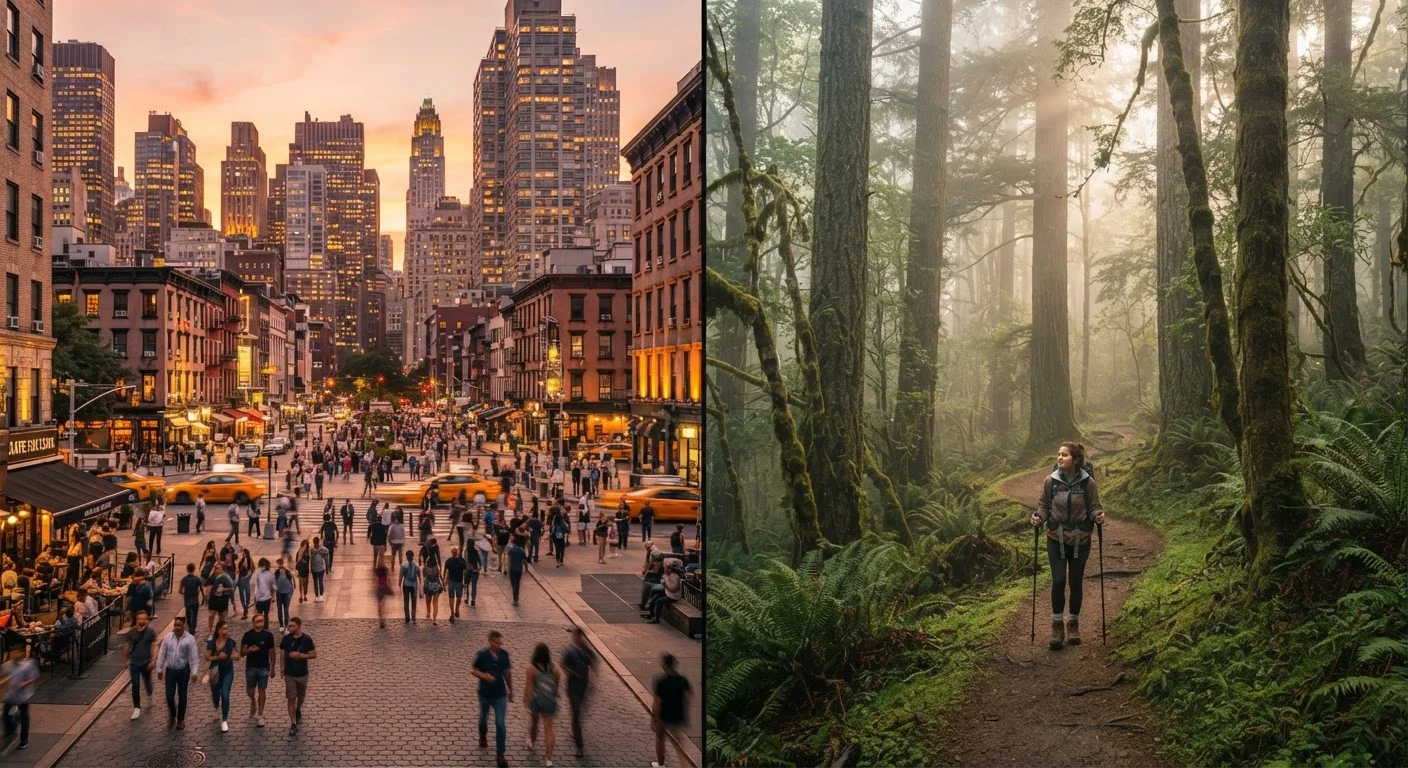
Photo credit: PrimeFaqs.com | Trending And Accurate Content
In this article
Not sure whether to book a cultural city break or a wilderness escape? Here's a framework for deciding what actually fits your needs.
Key Takeaways
- Your current energy level and mental state should heavily influence which trip type you choose.
- City trips generally offer more flexibility in bad weather; nature trips depend heavily on conditions and season.
- Group dynamics and travel companions often determine whether a city or nature trip works better logistically.
- Trip length shapes which option delivers real value - nature escapes often need more time to unwind.
- Neither option is objectively superior; the right choice is the one that fits your actual needs right now.
Start With What You're Actually Running Toward (Not Away From)
Most people frame this choice wrong. They ask, "Where should I go?" before answering the more useful question: "What do I need from this trip?" A city break and a nature retreat aren't just different settings - they produce fundamentally different experiences in your body and mind.
City trips tend to stimulate: new food, dense culture, the hum of unfamiliar streets, museums, neighborhoods to wander. They reward curiosity and social energy. Nature trips tend to restore: slower pace, physical movement, quiet, and the particular mental reset that comes from spending time away from built environments.
Neither is a superior vacation. The right one depends entirely on what you're walking in with. If you're burned out from overstimulation at work, a packed urban itinerary may deepen that fatigue rather than relieve it. If you've been isolated or under-stimulated, two weeks of wilderness silence might feel lonely rather than peaceful. Start with an honest self-assessment before you start searching flights.
| City Trip | Nature Trip | |
|---|---|---|
| Ideal trip length | 3-5 days | 5-10 days |
| Weather dependency | Low - easy to pivot indoors | High - conditions shape the whole trip |
| Physical demands | Variable, mostly low | Often moderate to high |
| Group compatibility | High - easy to split and reunite | Moderate - fitness levels matter |
| Gear and planning required | Minimal | Significant - permits, gear, maps |
| Primary emotional outcome | Stimulation and novelty | Restoration and quiet |
| Budget predictability | Moderate - dining costs vary widely | More predictable once gear is sourced |
Practical Factors That Often Decide It
Trip length matters enormously. Nature trips - especially anything involving national parks, backcountry hiking, or camping - often need a minimum of five to seven days to feel worth the logistics. You spend the first day or two just arriving and decompressing. City breaks, by contrast, can be genuinely satisfying over a long weekend. See our guide to trip length trade-offs for a fuller breakdown.
Weather dependency is real. A rainy weekend in a city usually means you pivot to museums, cafés, and covered markets - still enjoyable. A rainy weekend at a trail-based destination can wipe out most of your planned activities. Check the seasonal timing guide before locking in a nature-heavy itinerary.
Who's traveling with you? Mixed groups - families with young children, friends with varying fitness levels - often find cities more accommodating. Everyone can split off and reunite, and there's rarely a fitness mismatch problem. If you're coordinating a larger group, the group travel logistics guide is worth a read before you commit to a trailhead-centered trip.
Consider a Hybrid Destination
You don't always have to choose one or the other. Many American destinations - Asheville, NC; Bend, OR; Denver, CO; Flagstaff, AZ - sit at the intersection of urban culture and serious outdoor access. A hybrid destination lets different travelers in the same group satisfy different needs without requiring compromise on the core trip.
What Each Trip Type Actually Delivers
City trips tend to be denser in novelty per day - you can pack in neighborhoods, restaurants, galleries, and live music without needing to pre-book permits or worry about gear. They're also more forgiving to first-time travelers or those who prefer knowing a pharmacy and a decent meal are always nearby.
Nature trips deliver something different: a specific kind of quiet that cities simply can't replicate. Research consistently suggests that time in natural environments can reduce stress markers and improve mood, though individual results vary widely depending on the experience, the person, and the setting. Destinations like lesser-visited national parks - explored in our guide to parks beyond Yellowstone and the Grand Canyon - can offer that restoration without the overcrowded trailheads.
It's also worth noting that some destinations blur the line entirely. Cities like Asheville, NC or Portland, OR sit adjacent to serious wilderness. Hawaii blends both so thoroughly that choosing the right island is itself a nature-vs-city question in miniature.
A Simple Framework for Making the Call
If you're still torn, try this three-question gut check:
- What's your current energy level? High and curious → city. Low and depleted → nature.
- How much time do you have? Four days or fewer → city usually wins on value. Five-plus days → nature becomes genuinely viable.
- What's your group's lowest-mobility member comfortable with? If someone isn't up for uneven terrain, altitude, or variable facilities, a city is the more inclusive choice.
If you're leaning toward a specific city destination and want to compare your shortlist, our New Orleans vs. Savannah comparison is a good example of how two seemingly similar cities can serve very different traveler needs. The same logic applies to nature destinations: identical landscapes can feel wildly different depending on trail difficulty, crowd levels, and seasonal access.
Ultimately, the best trip is the one you return from feeling like it gave you what you needed - not the one that looked most impressive in the planning stage. For broader trip planning guidance, our hub covers everything from budgeting to itinerary structure.

Author
Travel & Trips Editorial Team
Travel & Trips Editorial Team is the collective byline for our editorial team and contributor network. Articles published under this byline or an editorial pen name are researched, written, and reviewed according to our editorial standards for clarity, consistency, and independence before publication.
View all articles →