
New Orleans vs. Savannah: Two Southern Cities With Very Different Souls
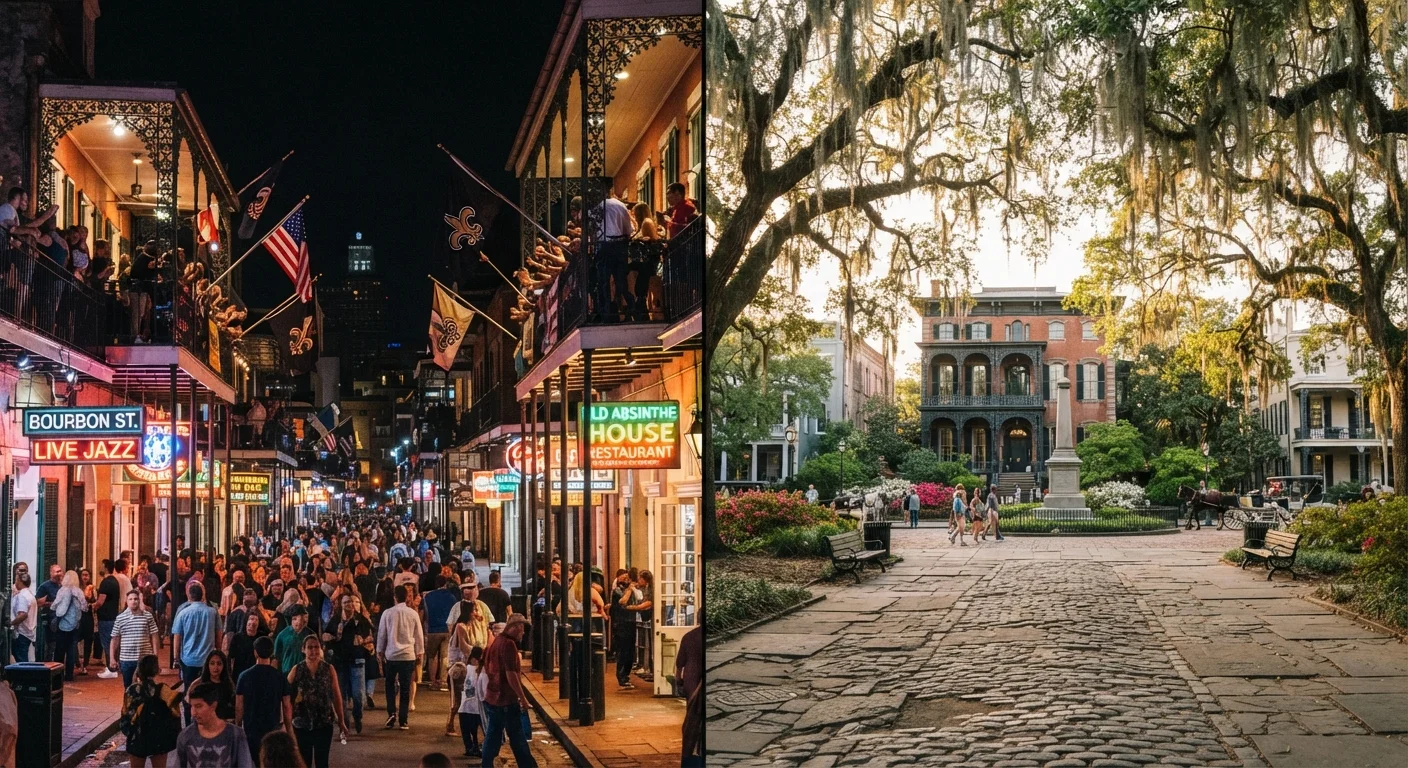
Photo credit: PrimeFaqs.com | Trending And Accurate Content
In this article
Both cities are steeped in history and charm, but they offer distinct experiences. Here's how they compare for American travelers.
Key Takeaways
- New Orleans offers an unmatched nightlife, festival culture, and Creole culinary scene unlike anywhere in the US.
- Savannah is defined by its 22 historic squares, antebellum architecture, and a deeply relaxed, walkable pace.
- Both cities are compact enough to explore mostly on foot, but they attract very different traveler personalities.
- New Orleans tends to be louder and more festival-dense; Savannah rewards those who slow down and soak it in.
- Both cities carry complicated histories that are addressed - with varying depth - through museums and tours.
The Vibe: Festive Chaos vs. Graceful Stillness
Walking into New Orleans feels like stepping into a city perpetually mid-celebration. The French Quarter pulses with brass band parades, the aroma of beignets and crawfish étouffée drifts from every corner, and the wrought-iron balconies above Bourbon Street drip with character - and occasionally Mardi Gras beads year-round. New Orleans does not do quiet. It is exuberant, unpredictable, and absolutely singular in American culture.
Savannah operates on an entirely different frequency. Enter through its historic district and you'll find yourself beneath cathedral oaks draped in Spanish moss, circling one of its 22 public squares that feel designed for lingering. The Forsyth Park fountain, the cobblestone River Street, the candy-colored row houses on Jones Street - every frame in Savannah looks like it was composed for a postcard. It's a city where locals still wave from porches and the pace genuinely slows you down.
Neither is better in an absolute sense - they simply serve very different travel moods. If you're still working out whether a vibrant urban environment or a more contemplative city fits your trip better, this framework for choosing your trip style can help clarify what you're actually looking for.
Food, Culture, and Things to Do
New Orleans carries one of the most genuinely distinctive culinary identities in the United States. Creole cooking - shaped by French, Spanish, West African, and Indigenous influences - produced dishes like gumbo, jambalaya, and red beans and rice that are deeply rooted in the city's history. The food here isn't just good; it tells a story. Beyond eating, the city's cultural calendar is relentless: French Quarter Festival, Jazz Fest, Voodoo Fest, and countless neighborhood celebrations mean there's almost always something happening. The National WWII Museum is also one of the country's finest history museums and worth an extended visit on its own.
| Criterion | New Orleans, Louisiana | Savannah, Georgia |
|---|---|---|
| Overall Vibe | Energetic, festive, unpredictable | Graceful, walkable, reflective |
| Nightlife | World-class; live music every night | Low-key bars and rooftop lounges |
| Food Scene | Iconic Creole and Cajun cuisine | Growing chef-driven Southern dining |
| Architecture | French Creole, Spanish colonial, ironwork | Antebellum, Federal, Greek Revival |
| Walkability | High in the French Quarter | High throughout the historic district |
| Best Season to Visit | Feb-May (avoid peak summer heat) | March-May, September-November |
| Festival Culture | Extensive; year-round major events | Moderate; St. Patrick's Day notable |
| Family-Friendliness | Selective - some areas adult-oriented | Generally relaxed and accommodating |
Savannah's cultural life is quieter but no less rich. The Telfair Museums offer an impressive fine arts collection, while the Ralph Mark Gilbert Civil Rights Museum provides essential historical context. Walking tours - ghost tours being a beloved local staple - are genuinely well-produced and surprisingly educational. Savannah's food scene has matured significantly in recent years, with a growing roster of chef-driven restaurants alongside traditional Southern cooking.
22
Historic squares in Savannah's city plan
Savannah's grid of public squares, laid out beginning in 1733, is considered one of the most thoughtful examples of urban planning in early American history.
~1,400
Live music venues in greater New Orleans
New Orleans is widely cited as one of the most music-dense cities per capita in the United States, with venues ranging from grand concert halls to corner bars.
Top 10
US foodie destinations - New Orleans
New Orleans consistently appears on major travel publications' lists of the top food cities in America, recognized for its unique Creole and Cajun culinary heritage.
Logistics, Costs, and Practical Considerations
Both cities are compact enough that a car is largely unnecessary once you've arrived, though parking in New Orleans can be a particular headache and is worth factoring into your budget. New Orleans is served by Louis Armstrong New Orleans International Airport, while Savannah is served by Savannah/Hilton Head International Airport - both with solid connections from major US hubs.
Accommodation costs fluctuate heavily in New Orleans based on whether a major festival or convention is in town; prices during Mardi Gras or Jazz Fest can spike dramatically, so booking well in advance is essential during those windows. Savannah tends to have a more stable pricing environment, though spring and fall weekends fill up quickly given its popularity as a wedding and romantic getaway destination.
Both cities carry deep, sometimes painful histories tied to slavery and the Civil War era. Responsible travelers will find meaningful opportunities to engage with that history - through places like the Whitney Plantation near New Orleans or the First African Baptist Church in Savannah - and doing so adds genuine depth to any visit.

Author
Travel & Trips Editorial Team
Travel & Trips Editorial Team is the collective byline for our editorial team and contributor network. Articles published under this byline or an editorial pen name are researched, written, and reviewed according to our editorial standards for clarity, consistency, and independence before publication.
View all articles →