
Teaching a Dog to Sit, Stay, and Come: A Foundation for Lifelong Manners
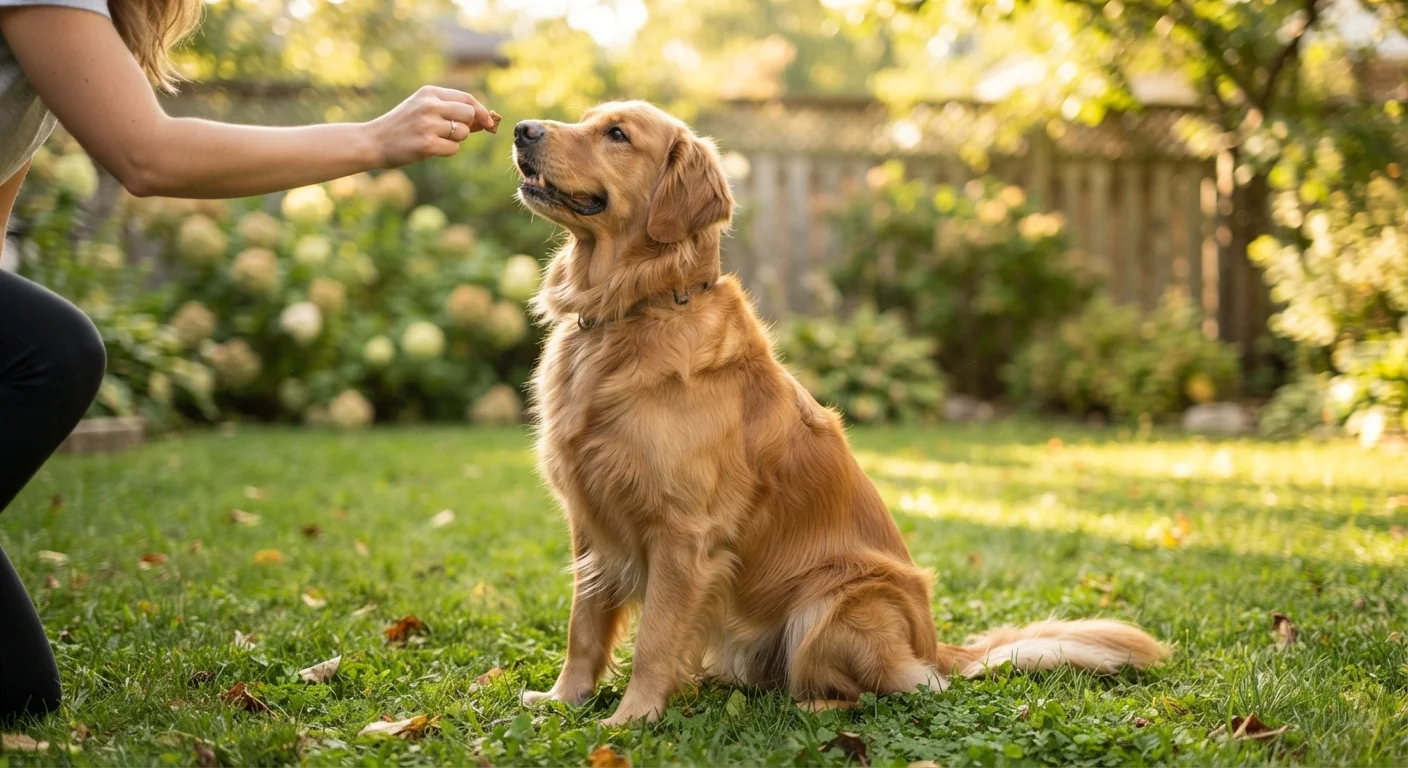
Photo credit: PrimeFaqs.com | Trending And Accurate Content
In this article
Learn how to build reliable responses to the three most important cues every dog should know, using clear, humane techniques.
Key Takeaways
- Short, frequent sessions of 5-10 minutes are more effective than long, infrequent ones.
- Luring with a treat helps dogs understand what you're asking before a verbal cue is added.
- "Come" is a safety cue - never use it to lead into something the dog finds unpleasant.
- Reward every correct response during the learning phase; fade treats gradually once the behavior is reliable.
- Dogs progress faster when all household members use the same cues and reward criteria.
Why These Three Cues Matter
Sit, stay, and come are not arbitrary tricks. They form a functional safety net for everyday life: a sitting dog is easier to leash; a dog that stays doesn't bolt through an open door; a dog that comes when called can be redirected away from hazards. Together, these three cues give you reliable communication with your dog across dozens of real-world situations.
If you're just getting started, our introduction to early training principles covers the foundational concepts - timing, consistency, and reinforcement - that underpin everything in this guide. It's also worth reading about common training myths so outdated ideas don't slow your progress.
What you will need
Tools and Setup
Effective training requires very little equipment, but what you choose matters. High-value treats - small, soft, and easy to eat quickly - keep a dog's focus far better than dry kibble during early learning. Keep sessions to 5-10 minutes, end on a success, and train in a low-distraction space before advancing to busier environments.
Deciding how to mark correct behavior is one of your first practical choices. A clicker provides a precise, consistent signal, while a verbal marker like "yes" is always available. Our guide to clicker vs. verbal markers can help you choose the approach that fits your style. Whichever you pick, use it consistently from session one.
High-value soft treats
Motivate and reward correct responses quickly without breaking the dog's focus.
Clicker or verbal marker
Precisely marks the moment the dog performs the correct behavior so they understand what earned the reward.
Standard 4-6 ft leash
Provides a safety tether during "come" practice and early outdoor sessions.
Treat pouch or bait bag
Keeps rewards accessible so you can deliver them within 1-2 seconds of the marker.
Long line (15-30 ft)
Allows safe distance practice for the "come" cue in open spaces before off-leash reliability is established.
Step-by-Step: Teaching Sit, Stay, and Come
The steps below follow a lure-reward progression - a widely used, humane approach supported by applied animal behavior research. Work through each cue at your dog's pace, and resist the urge to move on until the current step is reliable.
Teach Sit with a Lure
Hold a treat at your dog's nose and slowly move it back over their head toward their tail. As the nose follows the treat upward, the hindquarters naturally lower. The moment the dog's bottom touches the floor, mark (click or say "yes") and deliver the treat.
Repeat 5-10 times per session. Once the dog is luring into a sit reliably, add the verbal cue "sit" just before you begin the hand motion. After several repetitions pairing word and lure, try saying "sit" without moving your hand to test comprehension.
Introduce Duration with Stay
Ask for a sit. With your palm facing the dog, say "stay" calmly. Wait one second, mark, and reward - while the dog is still seated. This is the key: the reward comes before they move, not after they break position.
Gradually extend the duration: 2 seconds, then 5, then 10. Only increase time when the dog is succeeding at least 8 out of 10 attempts. Add a release word like "okay" or "free" to clearly signal when the stay is finished.
Build a Reliable Recall (Come)
Begin indoors with your dog just a few feet away. Say your dog's name followed by "come" in a bright, upbeat tone, then back up a step or two to encourage movement toward you. The moment they reach you, mark and reward enthusiastically - make arriving at you the best thing that happens in their day.
Practice on a long line outdoors before attempting off-leash recalls. Never call your dog to you for something they find unpleasant (bath time, nail trim, the end of play) - instead, go get them. Poisoning the recall cue by pairing it with unpleasant outcomes is one of the most common and costly training mistakes.
Fade the Lure and Proof in New Environments
Once sit, stay, and come are consistent indoors, begin phasing out constant food luring. Reward every correct response at first (continuous reinforcement), then shift to an intermittent schedule - rewarding 7 or 8 out of every 10 correct responses - which actually strengthens behavior over time.
Take each cue to a new environment (yard, sidewalk, a friend's home) and treat it like the first lesson: lower expectations, increase reward rate, and rebuild reliability before adding more distance or distraction.
Every Household Member Should Train the Same Way
Dogs learn cues from specific people before generalizing them to others. Have everyone in the home use identical words, hand signals, and reward criteria. Even brief, inconsistent sessions from a second person can delay learning significantly. A quick five-minute walk-through with all family members before training begins goes a long way.
Building Reliability Over Time
Once your dog responds consistently in a quiet room, begin adding what trainers call the "three Ds": distance, duration, and distraction - but introduce only one at a time. Ask for a stay from two steps away before trying five. Practice "come" in the backyard before the dog park.
Pay attention to your dog's body language during sessions. Yawning, looking away, or slow responses often signal that the dog is tired or stressed, not stubborn. Our body language reference guide can help you read these signals accurately. For dogs showing strong arousal or reactivity outdoors, understanding leash reactivity is a helpful companion read. Long-term success comes from building a consistent daily routine rather than marathon sessions.

Author
Pets & Animals Editorial Team
Pets & Animals Editorial Team is the collective byline for our editorial team and contributor network. Articles published under this byline or an editorial pen name are researched, written, and reviewed according to our editorial standards for clarity, consistency, and independence before publication.
View all articles →