
Reading Your Dog's Body Language: A Visual Reference for Pet Owners
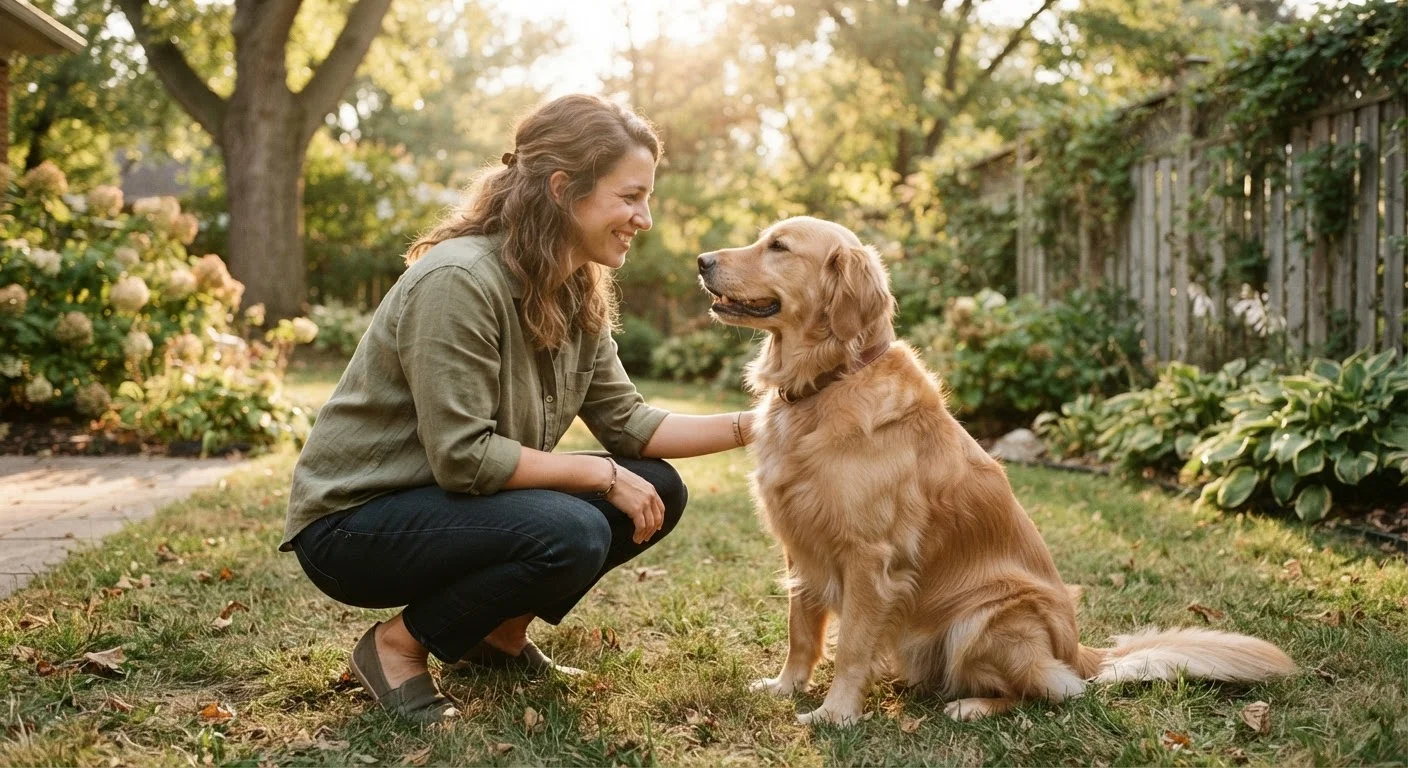
Photo credit: PrimeFaqs.com | Trending And Accurate Content
In this article
Ears, tail, posture, and gaze all communicate something. This quick-reference guide decodes what your dog is expressing in common situations.
Why Body Language Matters More Than Barking
Most of what your dog communicates never makes a sound. Vocalizations - barks, whines, growls - are just one layer. The deeper, more constant channel is body language: subtle shifts in ear position, tail carriage, muscle tension, and gaze that dogs use continuously to express comfort, anxiety, playfulness, and warning.
Learning to read these signals accurately helps you respond appropriately, avoid misreads that can escalate tension, and build the kind of trust that makes training and daily life smoother for both of you. If you're working on foundational skills, understanding what your dog is telling you in the moment pairs naturally with humane training methods that rely on clear communication.
Always read signals in combination - a wagging tail alone doesn't mean a dog is friendly, and a low head doesn't always mean fear. Context and the full body picture matter.
Calming signals
Behaviors dogs use to de-escalate tension or communicate non-threat, such as yawning, lip licking, blinking slowly, or turning the head away. The concept was described by Norwegian dog trainer Turid Rugaas and is widely referenced in modern dog behavior literature.
Appeasement behavior
Actions a dog performs to signal deference or to reduce perceived social tension - for example, rolling over, lowering the body, or avoiding eye contact. These are not signs of a problem; they are normal canine communication.
Whale eye
A stress signal in which the whites (sclera) of a dog's eyes become visible at the corner or rim, indicating discomfort or conflict about a situation. Named for the shape it creates.
Displacement behavior
An action a dog performs that seems out of context - such as suddenly sniffing the ground or scratching - often indicating conflicting internal states like excitement mixed with anxiety.
Hackles
The fur along a dog's back and neck that can involuntarily rise (piloerection) in response to arousal - including excitement, fear, or alertness. Raised hackles alone do not indicate aggression.
Play bow
A posture in which a dog drops its front end to the ground while keeping its rear elevated, clearly signaling an invitation to play. It is one of the most reliably positive social signals a dog can display.
Signal-by-Signal Quick Reference
Use this section as a lookup guide for the four primary signal zones.
| Primary signal zones | Ears, tail, posture, eyes/face |
| Tail wag always means friendly? | No - speed, height, and stiffness all change the meaning (Canine behavior consensus) |
| Whale eye indicates | Stress or conflict; dog needs space |
| Play bow reliability | One of the most consistently positive social signals in dogs (Applied animal behavior literature) |
| Calming signals include | Yawning, lip licking, head turning, blinking (Turid Rugaas, canine communication research) |
| Reading rule of thumb | Always assess the full body, not a single signal in isolation |
Ears
- Relaxed and natural: Content or neutral - baseline state for that individual dog.
- Forward and erect: Alert, curious, or focused. Common during play or when something catches attention.
- Pinned flat against the skull: Fear, submission, or extreme appeasement. Often paired with lowered body posture.
- Rotated back slightly: Mild stress or uncertainty - watch for other confirming signals.
Tail
- Held loosely at mid-height, relaxed wag: Comfortable and social.
- Stiff, high, and slow wag: Arousal that may be assertive or agitated - not necessarily friendly.
- Tucked under the body: Fear or anxiety; the dog feels threatened or insecure.
- Low but gently sweeping: Appeasement or deference toward a person or another dog.
Posture
- Play bow (front down, rear up): Clear invitation to play - one of the most reliably positive signals.
- Weight shifted forward, hackles raised: Threat assessment or warning - give space.
- Body curved, leaning in: Friendly greeting and social engagement.
- Crouching or rolling onto back: Submissive behavior; may also be an invitation to belly rubs in relaxed contexts.
Eyes and Face
- Soft, relaxed eyes with natural blinking: Calm and comfortable.
- Hard stare, pupils dilated: High arousal; potential precursor to a stress response.
- Whale eye (whites showing at the corner): Stress or conflict - the dog is uncomfortable with a situation.
- Yawning, lip licking outside of meals: Common calming signals used to self-soothe or de-escalate.
When Signals Indicate a Dog Needs Space or Support
Some combinations of signals are worth learning as a set because they escalate in predictable patterns. A dog displaying pinned ears, whale eye, lip licking, and a tucked tail simultaneously is communicating significant discomfort. Pushing interaction in that moment - even with good intentions - can increase stress or prompt a defensive response.
Dogs also show subtler distress cues that are easy to overlook. Excessive yawning in a non-tired context, repeatedly turning the head away, or a sudden stillness can all be appeasement or displacement behaviors - the dog's way of signaling it wants a situation to stop. For a broader look at these low-key signals, see our guide on hidden stress cues in pets.
If body language signals suggesting pain - such as a hunched posture, reluctance to move, or sudden sensitivity when touched - accompany behavioral changes, consult your veterinarian. Body language can be an early indicator of physical discomfort, and recognizing pain signals is a critical skill for any owner.
Body Language Varies by Breed and Individual
Breed anatomy can affect how signals appear - a dog with naturally cropped ears or a docked tail has a reduced signaling range, which can make reading that individual harder. Dogs with heavy facial folds may also show whale eye less visibly. Always learn your own dog's baseline so you can detect deviations. A monthly behavioral observation routine, like the one outlined in our room-by-room wellness check, can help you track changes over time.
This article is for general educational purposes only. If your dog shows sudden or significant behavioral changes, consult a qualified veterinarian or a certified applied animal behaviorist for individualized guidance.

Author
Pets & Animals Editorial Team
Pets & Animals Editorial Team is the collective byline for our editorial team and contributor network. Articles published under this byline or an editorial pen name are researched, written, and reviewed according to our editorial standards for clarity, consistency, and independence before publication.
View all articles →