
Raw Diets vs. Kibble: Sorting Evidence from Enthusiasm
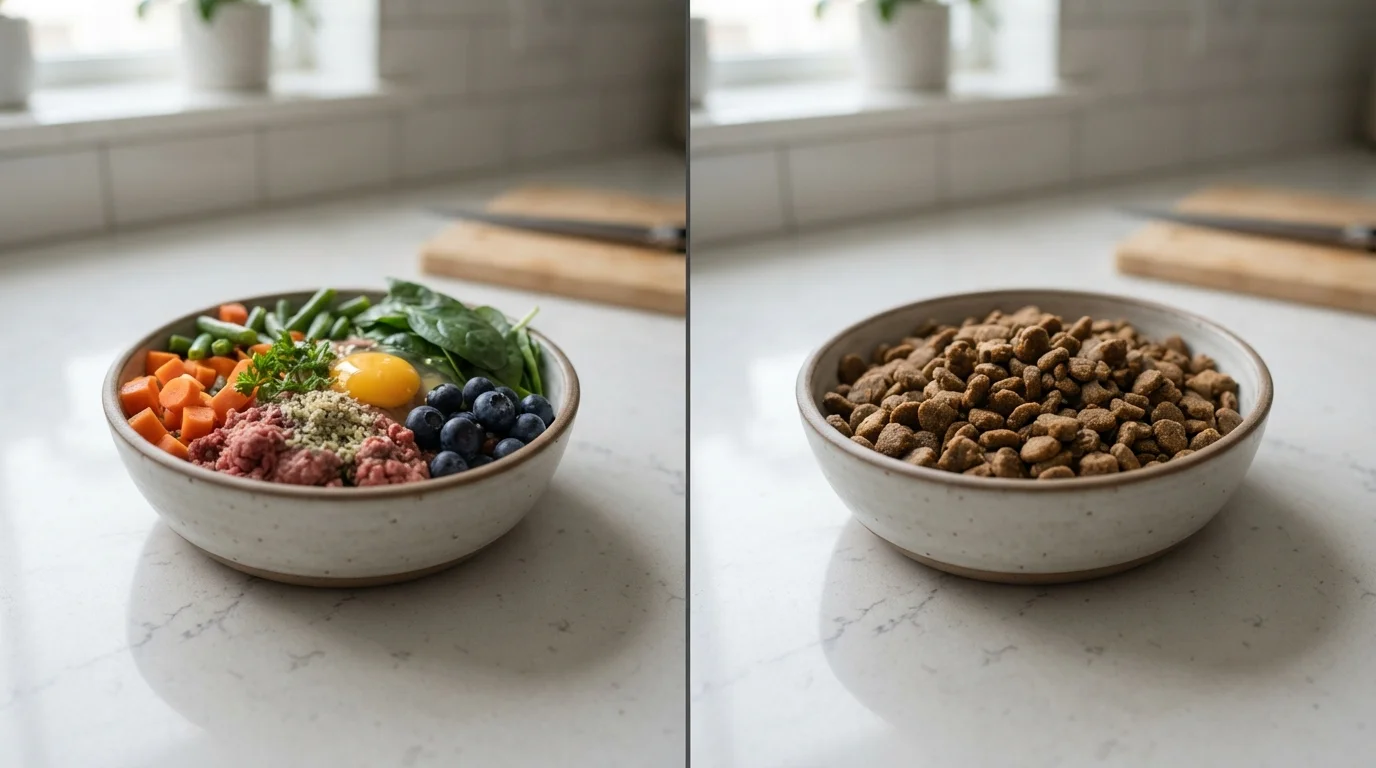
Photo credit: PrimeFaqs.com | Trending And Accurate Content
In this article
The debate over raw feeding is passionate on both sides. This article unpacks what the research actually says and what remains genuinely uncertain.
Key Takeaways
- Raw diets carry genuine bacterial contamination risks for both pets and people handling the food.
- Commercial kibble is formulated to AAFCO standards, but processing does alter some nutrients.
- No large-scale controlled trials have conclusively proven raw diets superior to quality kibble.
- Homemade raw diets are frequently nutritionally incomplete without professional guidance.
- Veterinary and veterinary nutrition organizations generally advise caution around raw feeding.
- The right choice depends on your pet's health status, your household circumstances, and expert input.
Where the Debate Actually Stands
Few topics in pet nutrition generate as much passion - or as much confusion - as raw feeding. Proponents describe shinier coats, better digestion, and a return to ancestral eating. Critics point to bacterial hazards and nutritional gaps. The honest answer is that the science hasn't caught up to the conversation.
Large-scale, controlled clinical trials comparing raw diets to commercial kibble in companion animals are scarce. Most published evidence consists of small observational studies, laboratory analyses of raw food products, or expert consensus statements rather than long-term outcome data. This doesn't mean both approaches are equally safe or equally risky - it means owners and vets are working with incomplete information, and that warrants humility on both sides.
Many popular beliefs about raw feeding don't hold up well when tested against the available evidence, but that doesn't make commercial kibble beyond scrutiny either.
| Criterion | Raw Diet | Commercial Kibble |
|---|---|---|
| Nutritional completeness | Often incomplete without expert formulation | Standardized to AAFCO profiles |
| Pathogen risk | Documented risk (Salmonella, Listeria) | Low risk after processing |
| Processing level | Minimal - whole, raw ingredients | High-temperature extrusion |
| Convenience | Low - requires sourcing, prep, hygiene | High - shelf-stable, easy to portion |
| Cost | Typically higher | Wide range; generally lower |
| Clinical evidence base | Limited controlled trial data | More extensive, longer history |
| Vet/nutrition body stance | Caution advised by most major bodies | Generally supported as safe baseline |
The Case for Raw - and Its Limits
Advocates of raw diets argue that minimally processed whole ingredients preserve heat-sensitive nutrients and enzymes, more closely mirroring what dogs and cats consumed before domestication. Some small studies suggest raw-fed dogs may have different gut microbiome profiles, and anecdotal reports of improved stool quality and coat condition are common.
The limits, however, are significant. Multiple studies - including analyses published in veterinary nutrition journals - have found that a substantial proportion of homemade and commercial raw diets fail to meet AAFCO (Association of American Feed Control Officials) nutritional profiles, particularly for calcium, phosphorus, and key vitamins. Bone content introduces variability that is hard to standardize.
Food safety is the other major concern. Research has repeatedly detected Salmonella, Listeria monocytogenes, and other pathogens in raw pet food products, and these bacteria can persist in home environments and on pet fur. The FDA, the American Veterinary Medical Association (AVMA), and the World Small Animal Veterinary Association have all issued formal cautions against raw feeding, citing these documented risks. Several widely shared raw-feeding claims lack the evidence base their proponents suggest.
What Kibble Gets Right - and Where Critics Have a Point
Commercial dry kibble is, for most pets in most households, a nutritionally reliable option. Products labeled as "complete and balanced" to AAFCO standards must meet defined nutrient profiles or pass feeding trials - a level of oversight that homemade raw diets rarely receive. Kibble's long shelf life, ease of portioning, and relative affordability make it the practical default for millions of owners.
That said, critics raise legitimate questions. High-temperature extrusion - the process that creates most kibble - does reduce levels of some heat-sensitive amino acids and vitamins, which manufacturers typically compensate for by adding synthetic nutrients. The long-term implications of ultra-processed diets for companion animals remain an open research question, much as they do in human nutrition. Understanding the spectrum of food processing is useful context here - not all processing is equivalent, and not all whole food is automatically superior.
Understanding what's actually on a product's label is a meaningful first step for any owner. Reading a pet food label carefully reveals whether a kibble genuinely meets nutritional standards or relies on marketing language.
A Note on "Grain-Free" and Raw Overlap
Many raw diet advocates also promote grain-free feeding, but these are separate choices with separate evidence profiles. The FDA investigated a potential association between grain-free diets and dilated cardiomyopathy (DCM) in dogs, though causality has not been established and research is ongoing. If you're considering both raw and grain-free feeding simultaneously, discussing the combined implications with your veterinarian is especially important.
Making an Informed Decision for Your Pet
Because nutritional needs vary by species, breed, age, and health status, there is no single answer that applies to every household. A young, healthy adult Labrador living with an experienced owner willing to follow strict hygiene protocols faces a different risk-benefit calculation than an elderly cat with kidney disease or a household with young children.
The most consistent advice from board-certified veterinary nutritionists is this: if you're considering a raw diet, consult a veterinary nutritionist - not just a general practitioner - before making the switch. They can assess your pet's individual needs, identify nutritional gaps, and guide safe handling practices. If you continue with kibble, look for products that have undergone AAFCO feeding trials rather than simply meeting nutrient profiles on paper.
Whichever route you choose, monitor your pet's body condition, coat, energy level, and stool quality over time, and schedule regular veterinary checkups. These real-world signals, combined with professional guidance, are more useful than any single study or online testimonial. For broader context on how nutrition claims get distorted, see the most persistent nutrition myths - many patterns repeat across human and pet nutrition discourse alike.
This article provides general educational information about pet nutrition and is not a substitute for personalized veterinary advice. Always consult a qualified veterinarian or board-certified veterinary nutritionist before making significant changes to your pet's diet.

Author
Pets & Animals Editorial Team
Pets & Animals Editorial Team is the collective byline for our editorial team and contributor network. Articles published under this byline or an editorial pen name are researched, written, and reviewed according to our editorial standards for clarity, consistency, and independence before publication.
View all articles →