
Popular Pet Health Claims That Don't Hold Up
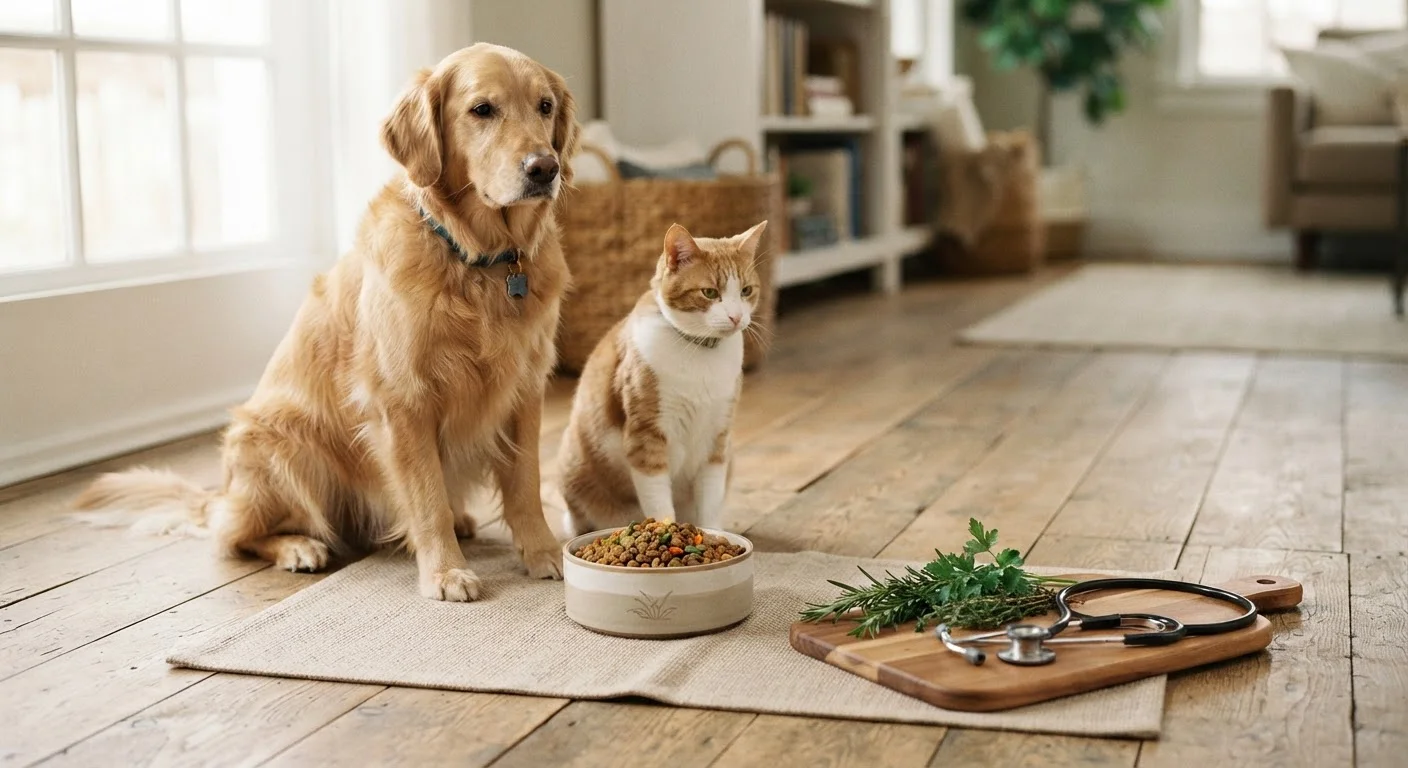
Photo credit: PrimeFaqs.com | Trending And Accurate Content
From grain-free diets to garlic as a flea repellent, some widely shared pet health advice lacks solid backing. Here's what the evidence actually shows.
Key Takeaways
- Grain-free diets lack evidence of broad health benefits and may carry cardiac risks for some dogs.
- Garlic is toxic to pets - it should never be used as a flea remedy.
- A dog's wet nose is not a reliable indicator of their overall health status.
- Annual veterinary checkups remain important even when a pet appears symptom-free.
- Human supplements and foods marketed as 'natural' are not automatically safe for pets.
Why Pet Health Myths Are So Persistent
Well-meaning pet owners share advice quickly - across social media, neighborhood groups, and family conversations. Many of these claims sound plausible, echo familiar human health trends, or carry the weight of long tradition. The problem is that plausibility is not the same as evidence, and what works (or appears to work) in one context doesn't automatically transfer to another species.
Veterinary science has made significant advances in understanding companion animal nutrition, physiology, and preventive care. But that knowledge doesn't always reach pet owners as quickly as a viral post does. The result is a landscape where some widely repeated advice is harmless but useless - and some is genuinely risky. The myth-and-fact pairs below address some of the most common claims circulating today.
Myth
Grain-free diets are healthier for most dogs and cats.
Fact
There is no broad scientific consensus that grain-free diets benefit the average healthy pet, and the FDA has investigated a potential link between certain grain-free diets and dilated cardiomyopathy in dogs.
The grain-free trend largely borrowed momentum from human low-carb dietary movements. In reality, grains such as rice, oats, and barley are digestible energy sources for most dogs and cats. True grain allergies exist but are far less common than food sensitivities to animal proteins. More significantly, the U.S. Food and Drug Administration issued alerts investigating a possible association between legume-heavy, grain-free diets and dilated cardiomyopathy - a serious heart condition - in dogs. Research is ongoing and causality has not been firmly established, but the concern is real enough that many veterinary cardiologists have advised caution. If you're evaluating pet food labels, our guide on reading pet food labels can help you interpret what ingredient lists actually mean.
Myth
Garlic is a safe, natural flea repellent for dogs and cats.
Fact
Garlic is toxic to both dogs and cats and can cause hemolytic anemia - it should never be used as a flea preventive.
This claim has circulated for years in natural pet care communities, but veterinary toxicologists are unambiguous: garlic belongs to the Allium family along with onions, leeks, and chives, all of which contain compounds that damage red blood cells in pets. Even small amounts fed regularly can accumulate to dangerous levels. Cats are particularly sensitive, but dogs are not immune. Signs of toxicity - lethargy, pale gums, reduced appetite, and weakness - may not appear for several days, making it easy to miss the connection. Effective, veterinarian-approved flea prevention options exist; consult your vet to find the approach appropriate for your pet's size, species, and health history.
Myth
A wet nose means a dog is healthy; a dry nose means something is wrong.
Fact
Nose moisture in dogs fluctuates normally throughout the day and is not a reliable health indicator on its own.
This is one of the most enduring pet myths, but veterinarians consistently note that nose moisture varies with activity level, sleep, ambient temperature, and hydration - none of which signal illness on their own. A dog that just woke up from a nap may have a temporarily dry nose. Conversely, a dog with a systemic illness may still have a moist nose. What owners should actually watch for are accompanying signs: changes in appetite, energy level, discharge color or consistency, or behavioral shifts. These are far more meaningful cues than nose texture alone. For a broader look at what physical signals may warrant attention, see our article on what your dog's coat can tell you.
Myth
If a pet seems fine, annual vet visits aren't necessary.
Fact
Routine wellness exams detect early-stage conditions that show no outward symptoms, making regular checkups valuable even for apparently healthy pets.
Pets are instinctively good at masking discomfort - a trait inherited from prey-animal ancestors for whom showing weakness was dangerous. Conditions like early kidney disease, dental disease, obesity, and certain cancers may progress significantly before a pet displays noticeable symptoms. Veterinary wellness exams include physical assessments, weight tracking, and sometimes bloodwork that can identify problems while they are still manageable. Skipping visits because a pet appears healthy is a false economy; catching a condition early is generally less costly - financially and in terms of the animal's wellbeing - than treating advanced disease. This is especially true for senior pets, for whom bi-annual checkups are commonly recommended.
Myth
Human-grade or 'all-natural' supplements are safe to share with pets.
Fact
Many supplements formulated for humans contain ingredients - including xylitol, certain herbs, and dose levels - that are unsafe or outright toxic for pets.
'Natural' does not mean species-safe. Xylitol, a sweetener found in many human vitamins and gummies, is severely toxic to dogs. Some herbal supplements that are benign for people can interfere with a pet's liver function or interact with veterinary medications. Dosing is another major variable: a supplement calibrated for a 150-pound adult human is not appropriate for a 12-pound cat. Pet-specific supplements do exist and can be appropriate in certain contexts - such as joint support or omega-3 fatty acids - but they should only be introduced with veterinary guidance, particularly if your pet has an existing health condition or is on medication.
Making Better Decisions for Your Pet's Health
Sorting reliable information from well-intentioned misinformation is one of the more underappreciated challenges of pet ownership. A few practical habits can help.
When in Doubt, Ask a Veterinarian
No article - including this one - can substitute for a professional assessment of your individual pet. If you encounter a health claim that sounds compelling, or notice a change in your pet's behavior, appetite, or appearance, a veterinarian is the appropriate first resource. For emergencies or suspected poisoning, contact your vet or an animal poison control hotline immediately.
Cross-check trends with your veterinarian. Before changing your pet's diet, adding a supplement, or adopting a new wellness practice, a quick conversation with your vet costs little and can prevent real harm. Veterinarians can also help you evaluate whether a specific change is appropriate for your pet's age, breed, and health history.
Look for consensus, not anecdote. A single owner's success story - or even dozens of them - doesn't constitute clinical evidence. Look for guidance from veterinary professional organizations and peer-reviewed research when evaluating a health claim. Our article on raw diets versus kibble is a good example of how to weigh enthusiastic community advocacy against what studies actually show.
Watch for weight changes early. One easily overlooked area of pet wellness is body condition. Many owners underestimate gradual weight gain, which carries significant health consequences. For a closer look at this issue, see why pet obesity is hard to recognize.
This article is for general informational and educational purposes only and does not constitute veterinary medical advice. Always consult a licensed veterinarian for guidance specific to your pet's health, diet, or medical needs.

Author
Pets & Animals Editorial Team
Pets & Animals Editorial Team is the collective byline for our editorial team and contributor network. Articles published under this byline or an editorial pen name are researched, written, and reviewed according to our editorial standards for clarity, consistency, and independence before publication.
View all articles →