
Reading a Pet Food Label: What the Ingredients List Actually Tells You
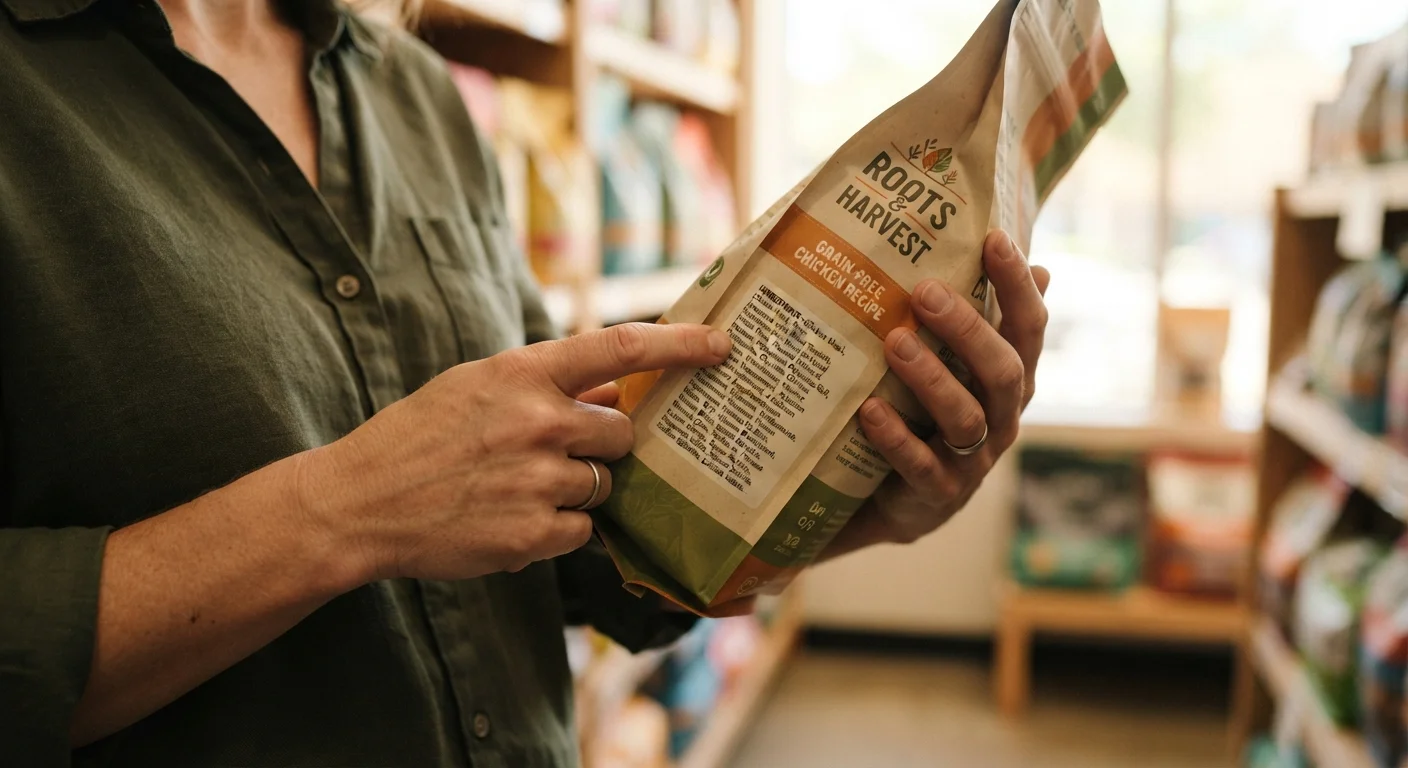
Photo credit: PrimeFaqs.com | Trending And Accurate Content
In this article
Decode pet food packaging with confidence. Learn what ingredient order, guaranteed analysis, and AAFCO statements really mean for your pet's diet.
Key Takeaways
- Ingredients are listed by pre-cooking weight, not by their final nutritional contribution to the food.
- The AAFCO nutritional adequacy statement tells you whether a food was formulated or feeding-trial tested for a specific life stage.
- The guaranteed analysis shows minimum or maximum nutrient levels, not exact amounts.
- Moisture content differences make comparing dry and wet food labels misleading without adjustment.
- A long ingredient list is not automatically better or worse than a short one.
- Your veterinarian is the best resource for evaluating whether a specific food suits your individual pet.
Why Ingredient Order Matters - and Its Limits
AAFCO regulations require that pet food manufacturers list ingredients in descending order by pre-processing weight. This means fresh chicken - which is roughly 70% water - will often appear first on the list, ahead of ingredients that may actually contribute more protein or fat after cooking. This isn't deceptive by design, but it is a detail worth understanding.
A more reliable approach is to evaluate the first five to eight ingredients as a group. This cluster generally represents the bulk of what's in the food. If you see multiple protein sources, whole grains or vegetables, and named fats early in the list, that signals a reasonably formulated product. Conversely, if the first several ingredients are fragments of the same ingredient listed separately - such as 'corn,' 'corn gluten meal,' and 'corn flour' - that practice, called ingredient splitting, can push what is effectively the dominant ingredient further down the visual list.
For a broader look at how popular ingredient-related beliefs hold up to scrutiny, see our examination of common pet feeding myths.
~4,000
Pet food products reviewed annually by AAFCO members
AAFCO's model regulations are adopted and enforced by individual U.S. states, which collectively oversee thousands of registered pet food products each year.
70-80%
Moisture content in typical wet/canned pet food
This high moisture level means guaranteed analysis percentages on wet food labels are not directly comparable to those on dry kibble without a dry-matter conversion.
2
AAFCO substantiation methods accepted for nutritional adequacy claims
Manufacturers may use either nutrient-profile formulation or actual animal feeding trials to support a 'complete and balanced' claim on the label.
The Guaranteed Analysis: What the Numbers Actually Show
Below the ingredient list, the guaranteed analysis panel lists minimum or maximum percentages for crude protein, crude fat, crude fiber, and moisture. These are guarantees in a regulatory sense - they represent thresholds the manufacturer must meet - but they are not exact values. The actual protein content of a batch could be higher than the stated minimum.
One practical complication: comparing wet and dry foods on a guaranteed-analysis basis is misleading. A wet food showing 8% protein and a dry kibble showing 28% protein may deliver comparable protein once moisture is removed from the calculation. This is called a dry-matter basis comparison, and it requires a simple calculation: divide the nutrient percentage by the percentage of dry matter (100 minus moisture content).
The guaranteed analysis also does not tell you about digestibility - how much of a listed nutrient a pet can actually absorb and use. Two foods can show identical protein percentages but differ substantially in how bioavailable that protein is. This is one reason feeding trials and peer-reviewed research carry more weight than label numbers alone.
How to Calculate Dry-Matter Protein
Subtract the moisture percentage from 100 to get the dry matter percentage. Then divide the listed crude protein by that number and multiply by 100. For example, a wet food with 78% moisture and 10% crude protein: 100 − 78 = 22% dry matter; 10 ÷ 22 × 100 = approximately 45% protein on a dry-matter basis. This makes cross-format comparisons far more meaningful.
The AAFCO Statement: Your Most Reliable Label Checkpoint
The nutritional adequacy statement - often called the AAFCO statement - is arguably the most important sentence on the label. It specifies which life stage the food is intended for (puppy/kitten, adult, senior, or all life stages) and how that adequacy was established.
There are two methods: formulation, meaning the recipe was designed to meet AAFCO's published nutrient profiles on paper, and feeding trials, where the food was fed to actual animals under controlled conditions. Feeding-trial substantiation is generally seen as the higher bar, since it accounts for real-world digestibility and palatability. Look for language like 'animal feeding tests substantiate' to identify trial-tested products.
If a label reads 'for intermittent or supplemental feeding only,' the food has not been established as nutritionally complete. This is appropriate for treats or toppers, but should not be your pet's sole diet.
For broader context on evaluating pet diet options, our overview of raw diets vs. kibble unpacks what research does and doesn't confirm.
Ingredients That Often Cause Confusion
Several ingredient terms generate frequent questions among pet owners:
- Meat meal: A rendered, dried protein concentrate. Named meals like 'salmon meal' or 'turkey meal' are considered more transparent than generic 'meat meal' or 'poultry meal' because you know the species involved.
- By-products: Regulated by AAFCO definitions, by-products include organ meats and other non-muscle tissues. Organ meat can be nutrient-dense; the key is whether the source is named.
- Natural flavors: A broad category that can include concentrated broths or digests used to enhance palatability. This term is permitted under AAFCO rules and doesn't indicate poor quality, but it offers limited transparency.
- Preservatives: Both synthetic (such as ethoxyquin, BHA, and BHT) and natural options (such as mixed tocopherols and rosemary extract) are used. Each has been subject to varying levels of regulatory review; discuss concerns with your veterinarian.
If a specific ingredient raises questions for your pet - particularly one with known food sensitivities or allergies - a board-certified veterinary nutritionist can provide individualized guidance. This article is for general educational purposes and is not a substitute for professional dietary advice tailored to your animal. See our Pet Health & Wellness hub for more resources.
Frequently Asked Questions

Author
Pets & Animals Editorial Team
Pets & Animals Editorial Team is the collective byline for our editorial team and contributor network. Articles published under this byline or an editorial pen name are researched, written, and reviewed according to our editorial standards for clarity, consistency, and independence before publication.
View all articles →