
Wet Food vs. Dry Kibble for Cats and Dogs
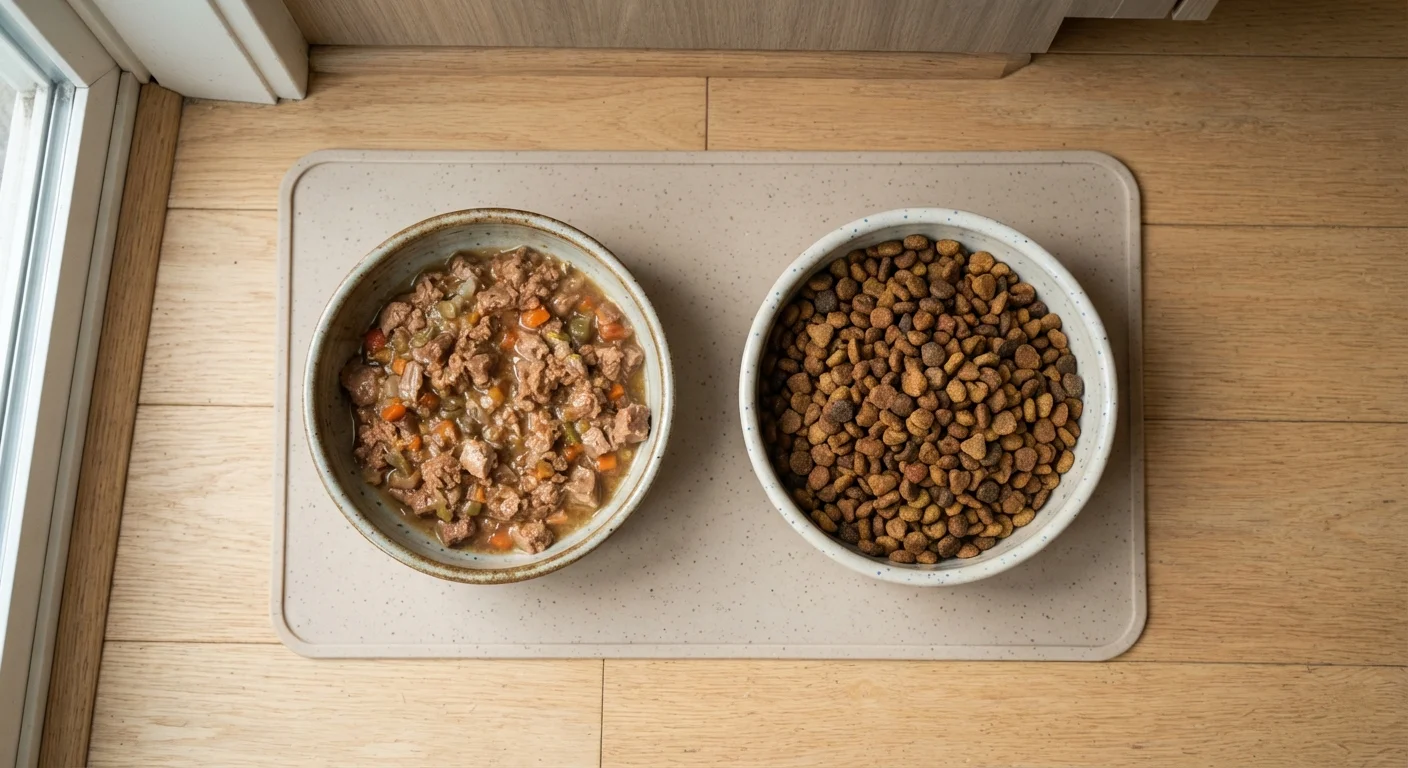
Photo credit: PrimeFaqs.com | Trending And Accurate Content
In this article
Wet and dry pet foods each have real trade-offs. Here's what nutrition experts say about moisture, dental health, cost, and when each format makes sense.
Key Takeaways
- Wet food provides significantly more moisture, which matters most for cats and pets with urinary or kidney conditions.
- Dry kibble is more calorie-dense per ounce and generally costs less per serving than wet food.
- Neither format is universally superior - the best choice depends on your individual pet's health, age, and preferences.
- Some veterinarians recommend mixing both formats to balance hydration, palatability, and cost.
- Dental health benefits of dry kibble are modest; dedicated dental chews and brushing remain more effective.
- Always consult your veterinarian before making significant changes to your pet's diet.
The Core Difference: Water Content
The most fundamental distinction between wet food and dry kibble is moisture. Wet food typically contains 70-80% water, while dry kibble usually sits at just 6-10%. That gap has real consequences, particularly for cats.
Cats evolved as desert animals with a naturally low thirst drive, meaning they are wired to obtain most of their hydration from their prey - not a water bowl. A cat fed exclusively on dry kibble may consume significantly less fluid than their body needs, which is associated with a higher risk of urinary tract disease and chronic kidney disease over time. You can learn more in our overview of why hydration matters for pets.
Dogs are generally better at drinking water independently, but pets with existing kidney or urinary conditions - regardless of species - often benefit from the added moisture that wet food delivers. Veterinarians frequently recommend wet food as a practical way to increase fluid intake without relying on the animal to voluntarily drink more.
| Criterion | Wet Food | Dry Kibble |
|---|---|---|
| Moisture content | 70-80% | 6-10% |
| Calorie density per ounce | Lower | Higher |
| Cost per serving | Generally higher | Generally lower |
| Shelf life (opened) | 1-2 days refrigerated | Weeks to months |
| Palatability | High; appeals to picky eaters | Variable by pet |
| Dental benefit | Minimal | Modest at best |
| Suited for urinary/kidney health | Yes - supports hydration | Less so without extra water intake |
| Auto-feeder compatible | No | Yes |
Nutrition, Palatability, and Calorie Density
Both wet and dry foods can be nutritionally complete when formulated to meet standards set by the Association of American Feed Control Officials (AAFCO). The label phrase "complete and balanced" indicates the food meets these standards for its intended life stage.
Where they differ is in calorie density and palatability. Dry kibble packs more calories per ounce because it contains far less water. This makes portion control more straightforward - a cup of kibble delivers a consistent caloric load - but it also means a small overpour adds up quickly. Wet food's higher water content means pets eat a larger volume for fewer calories, which can support satiety in pets prone to overeating.
For picky eaters, wet food often wins. Its stronger aroma and softer texture tend to be more appealing, especially for cats. This can be a meaningful consideration for senior animals with reduced appetite or pets recovering from illness.
70-80%
Moisture content in typical wet pet food
Compared to roughly 6-10% in dry kibble, per general AAFCO-aligned product formulation standards.
~70%
Cats affected by dental disease by age 3
According to the American Veterinary Medical Association, the majority of cats show signs of periodontal disease by their third year.
2x-4x
Higher typical cost per calorie for wet vs. dry food
Cost comparisons vary by brand and region, but wet food generally delivers fewer calories per dollar than dry kibble due to its high water content.
Dental Health: A Common Misconception
Dry kibble is often marketed as better for dental health because of its crunchy texture. The reasoning is that chewing hard food creates mild abrasive action on tooth surfaces. However, veterinary dental experts generally consider this benefit to be modest at best. Most cats, in particular, swallow kibble whole rather than chewing it thoroughly.
Dental disease remains one of the most prevalent health conditions in cats and dogs. The reality is that no food format - wet or dry - adequately replaces active dental care. Tooth brushing, veterinarian-recommended dental chews, and routine professional cleanings are the evidence-supported tools for managing periodontal disease. Our guide on cat dental health explains what a good oral care routine actually looks like.
If your pet has existing dental pain or missing teeth, wet food is typically the more comfortable option. Discuss your pet's specific dental needs with your veterinarian rather than assuming one food format is protecting their teeth.
Cost, Convenience, and Practical Feeding Decisions
From a household budget standpoint, dry kibble is consistently more economical. A pound of dry food contains more usable calories than a pound of wet food, and kibble stores for weeks or months without refrigeration. Once opened, wet food must be refrigerated and used within a day or two, which can mean more waste and planning.
For pet owners who travel, work long hours, or use automatic feeders, kibble is far more practical. Wet food cannot be left out safely for extended periods - bacteria can begin to grow within a few hours at room temperature, particularly in warm conditions.
That said, many veterinarians suggest a mixed feeding approach - offering wet food once daily alongside a kibble base - as a way to balance hydration benefits, palatability, and cost. This is especially common for cats. If you're considering a shift in diet, it's worth exploring how other dietary formats compare so you have full context before making changes.
Ultimately, the format that best supports your pet's health is the one formulated for their species, age, and health status - and one your pet will actually eat consistently. Your veterinarian is the right person to help you weigh these factors for your specific animal.
This article is for general informational purposes only and does not constitute veterinary or medical advice. Always consult a licensed veterinarian before making significant changes to your pet's diet, especially if your pet has an existing health condition.

Author
Pets & Animals Editorial Team
Pets & Animals Editorial Team is the collective byline for our editorial team and contributor network. Articles published under this byline or an editorial pen name are researched, written, and reviewed according to our editorial standards for clarity, consistency, and independence before publication.
View all articles →