
Indoor vs. Outdoor Cats: Understanding the Trade-Offs
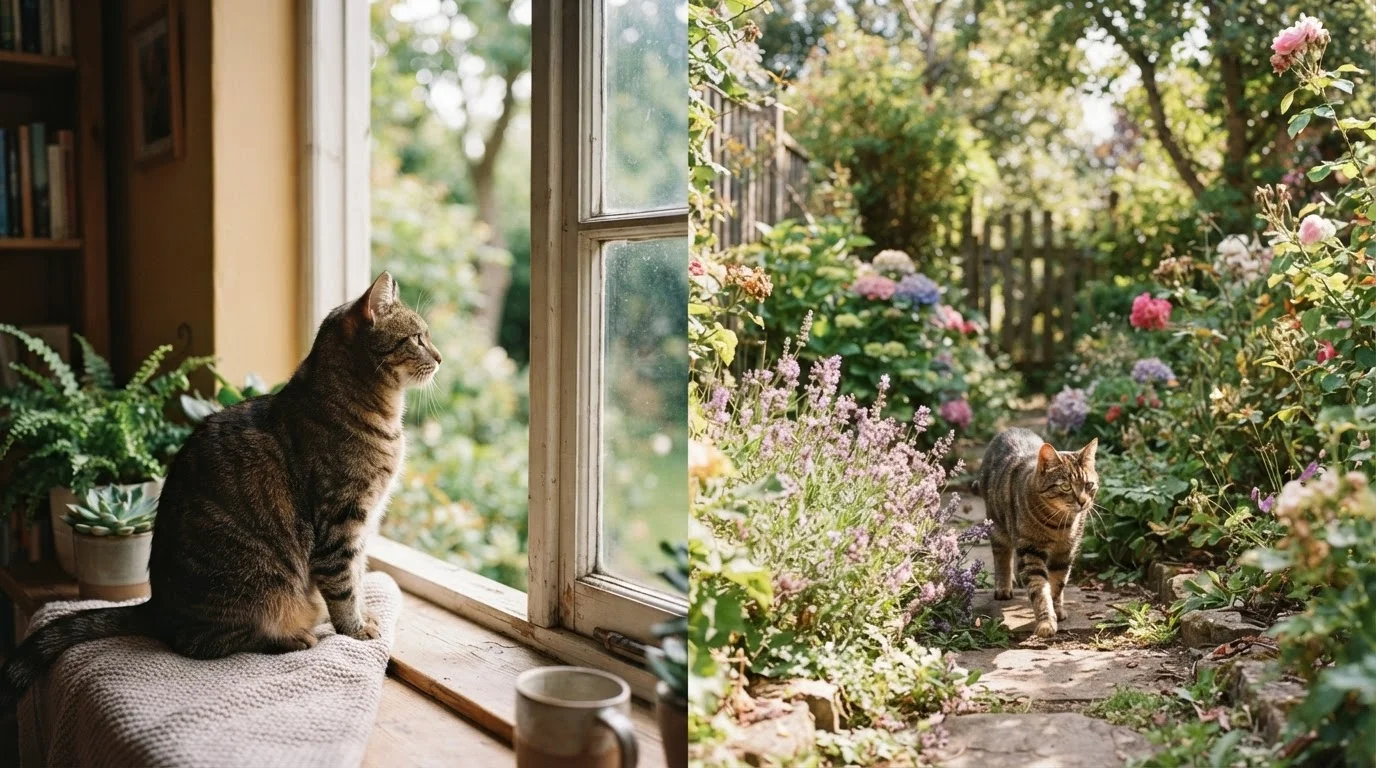
Photo credit: PrimeFaqs.com | Trending And Accurate Content
In this article
Keeping a cat indoors or letting them roam outside involves real compromises on health, enrichment, and safety. Here's a balanced look at both lifestyles.
Key Takeaways
- Indoor cats typically live longer lives due to reduced exposure to hazards and disease.
- Outdoor access provides genuine enrichment but introduces real risks including injury, parasites, and predators.
- A cat's individual temperament and history should strongly influence the lifestyle decision.
- Enriched indoor environments and supervised outdoor time can offer middle-ground solutions.
- Neither lifestyle is universally right - local environment and individual health matter.
Significantly longer average lifespan
Indoor cats face far fewer acute hazards - traffic, predators, toxins, and territorial fights - that cut outdoor cats' lives short. This alone is among the strongest arguments for indoor living.
Lower disease and parasite exposure
Outdoor cats are at higher risk for infectious diseases such as FIV, FeLV, and upper respiratory infections transmitted through contact with other cats. Parasite loads - fleas, ticks, intestinal worms - are also substantially reduced indoors.
Easier health monitoring by owners
When a cat lives indoors, changes in appetite, elimination, movement, or behavior are far easier to notice early, supporting prompt veterinary attention.
Reduced risk of injury from fights or accidents
Bite wounds from territorial disputes are a leading cause of abscesses and disease transmission in outdoor cats. Traffic injuries are another major source of trauma and fatalities.
Lower ecological impact on wildlife
Free-roaming domestic cats are documented predators of birds and small mammals. Keeping cats indoors eliminates this impact entirely, which matters for owners in ecologically sensitive areas.
Heightened risk of injury, illness, and predation
Outdoor cats encounter cars, other animals, and environmental toxins regularly. Even in low-traffic suburban areas, these hazards accumulate over a cat's lifetime.
Greater exposure to infectious disease
Contact with stray and feral cats creates real transmission risk for diseases like feline leukemia virus (FeLV) and feline immunodeficiency virus (FIV), both of which are incurable.
Harder to monitor health changes
Cats that spend significant time outdoors may hide illness, injury, or weight changes more effectively, delaying owner awareness and veterinary intervention.
Risk of becoming lost or displaced
Outdoor cats can become disoriented, trapped, or picked up by others who assume they are strays, particularly in unfamiliar situations like fireworks or construction nearby.
Why the Decision Matters More Than Most Owners Realize
Choosing whether to keep a cat indoors, allow outdoor access, or combine both approaches is one of the most consequential decisions a cat owner makes. It shapes a cat's average lifespan, daily stress levels, disease exposure, and behavioral expression. Yet many owners default to one option without fully weighing what each lifestyle actually involves.
Veterinary and animal welfare organizations generally note that indoor cats tend to live significantly longer than their outdoor counterparts - some estimates suggest indoor cats live 12 to 18 years on average, while outdoor cats may average fewer than 5 to 7 years, though figures vary widely by source and geography. These differences stem from cumulative exposure to hazards rather than any single cause. For a broader look at how lifestyle factors intersect with feline health, the health trade-offs between indoor and outdoor cats are worth reviewing in depth.
The Case for Keeping Cats Indoors
Significantly longer average lifespan
Indoor cats face far fewer acute hazards - traffic, predators, toxins, and territorial fights - that cut outdoor cats' lives short. This alone is among the strongest arguments for indoor living.
Lower disease and parasite exposure
Outdoor cats are at higher risk for infectious diseases such as FIV, FeLV, and upper respiratory infections transmitted through contact with other cats. Parasite loads - fleas, ticks, intestinal worms - are also substantially reduced indoors.
Easier health monitoring by owners
When a cat lives indoors, changes in appetite, elimination, movement, or behavior are far easier to notice early, supporting prompt veterinary attention.
Reduced risk of injury from fights or accidents
Bite wounds from territorial disputes are a leading cause of abscesses and disease transmission in outdoor cats. Traffic injuries are another major source of trauma and fatalities.
Lower ecological impact on wildlife
Free-roaming domestic cats are documented predators of birds and small mammals. Keeping cats indoors eliminates this impact entirely, which matters for owners in ecologically sensitive areas.
An enriched indoor environment - with climbing structures, window perches, puzzle feeders, and regular interactive play - can satisfy most of a cat's core behavioral needs without outdoor exposure. Indoor cats are also easier to monitor for health changes, which supports early detection of conditions like dental disease. Speaking of which, indoor owners tend to be more attentive to routine care; see our guidance on cat dental health for a wellness routine that's often overlooked regardless of lifestyle.
The Case for Outdoor Access
Heightened risk of injury, illness, and predation
Outdoor cats encounter cars, other animals, and environmental toxins regularly. Even in low-traffic suburban areas, these hazards accumulate over a cat's lifetime.
Greater exposure to infectious disease
Contact with stray and feral cats creates real transmission risk for diseases like feline leukemia virus (FeLV) and feline immunodeficiency virus (FIV), both of which are incurable.
Harder to monitor health changes
Cats that spend significant time outdoors may hide illness, injury, or weight changes more effectively, delaying owner awareness and veterinary intervention.
Risk of becoming lost or displaced
Outdoor cats can become disoriented, trapped, or picked up by others who assume they are strays, particularly in unfamiliar situations like fireworks or construction nearby.
For cats with strong prey drives, territorial instincts, or a history of outdoor living, confinement can generate real stress - manifesting as destructive behavior, vocalization, or litter box issues. Outdoor time allows cats to express species-typical behaviors: stalking, climbing, investigating scent, and patrolling territory. These aren't luxuries for all cats; for some, they are genuine needs. If litter box avoidance is already an issue in your household, understanding what your cat is communicating can help separate environmental frustration from other causes.
12-18 yrs
Average indoor cat lifespan
Veterinary sources commonly cite indoor cats living 12 to 18 years on average, compared to significantly shorter lifespans for free-roaming outdoor cats.
~1-4 billion
Birds killed annually by outdoor cats in the US
A widely cited 2013 study published in Nature Communications estimated that free-roaming cats kill between 1.3 and 4 billion birds annually in the contiguous United States.
Up to 3x
Higher parasite burden in outdoor cats
Veterinary parasitology studies consistently find outdoor cats carry substantially higher rates of intestinal parasites and ectoparasites compared to exclusively indoor cats.
Middle-Ground Approaches Worth Considering
Many owners find that a hybrid approach - offering structured outdoor access while managing the most serious risks - provides meaningful enrichment without full-time exposure to hazards. Common strategies include:
- Leash and harness walking: Allows supervised outdoor exploration. Takes patience to introduce but is achievable for many cats. Research on cat training confirms that cats can learn harness acceptance with reward-based conditioning.
- Catios and enclosed runs: Outdoor enclosures give cats fresh air, sunlight, and sensory stimulation while blocking escape routes and predator access.
- Window enrichment: Bird feeders placed near secure windows provide visual stimulation - a low-cost option for apartment dwellers.
Transitioning an Outdoor Cat Indoors
Cats that have lived outdoors for years can experience genuine stress when suddenly confined. A gradual transition - starting with supervised outdoor time only, then slowly reducing it - tends to be less disruptive than an abrupt change. Providing ample vertical space, hiding spots, and play sessions helps offset the loss of environmental complexity. Consult your veterinarian if anxiety-related behaviors persist during a transition.
The right approach depends on the individual cat's age, health status, and behavioral history. A cat raised exclusively indoors from kittenhood rarely misses outdoor access in the way a formerly feral or outdoor cat might.

Author
Pets & Animals Editorial Team
Pets & Animals Editorial Team is the collective byline for our editorial team and contributor network. Articles published under this byline or an editorial pen name are researched, written, and reviewed according to our editorial standards for clarity, consistency, and independence before publication.
View all articles →