
Cat Litter Box Avoidance: What Your Cat Is Trying to Tell You
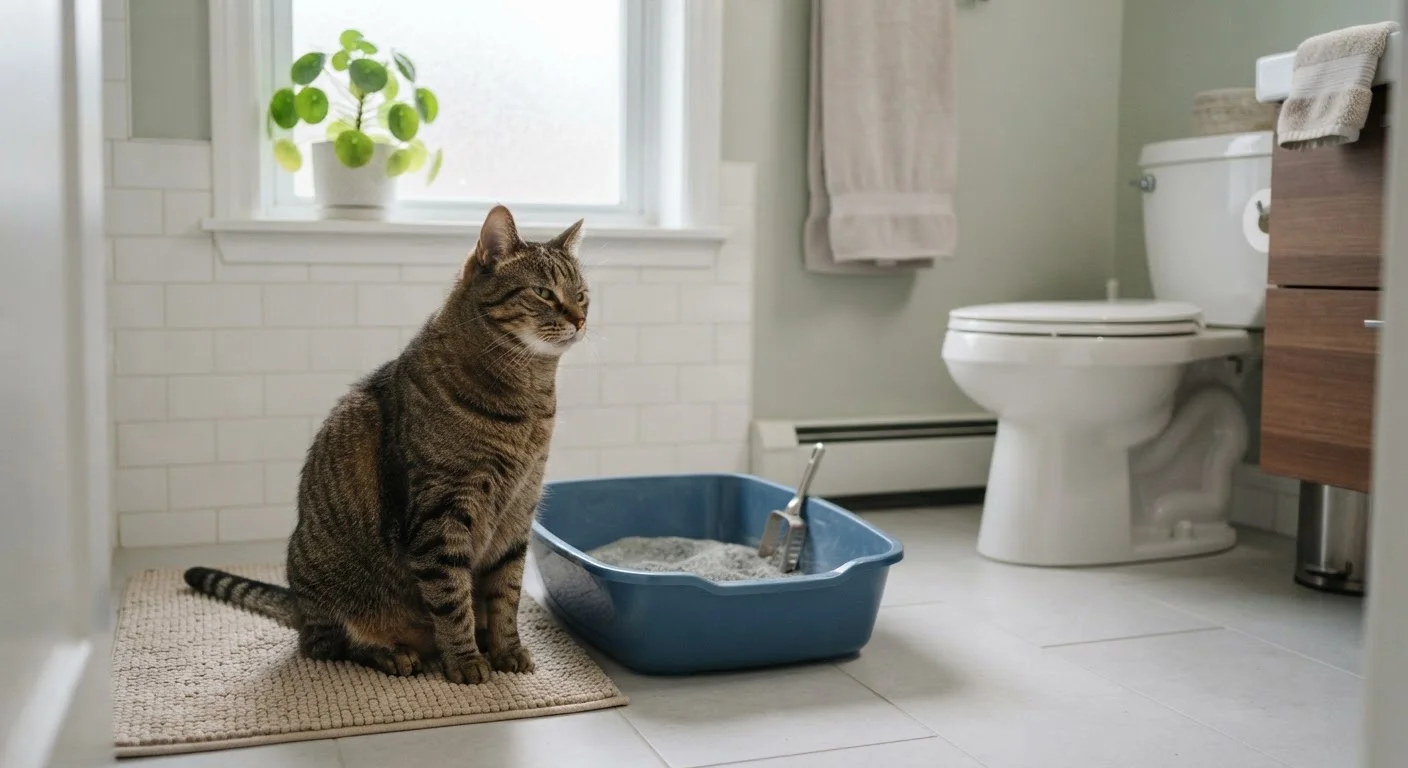
Photo credit: PrimeFaqs.com | Trending And Accurate Content
In this article
When a cat stops using the litter box, it's rarely spite. Uncover the behavioral and environmental reasons—and how to address them.
Key Takeaways
- Litter box avoidance is almost never spite - it signals a medical or environmental problem worth investigating.
- Box cleanliness, location, size, and litter type are the most common owner-controlled factors to reassess first.
- A sudden change in elimination habits warrants a veterinary visit to rule out urinary or gastrointestinal conditions.
- Multi-cat households require one box per cat plus one extra to reduce competition and stress.
- Punishment never resolves litter box problems and typically worsens the anxiety driving the behavior.
Why Cats Stop Using the Litter Box
When a cat starts eliminating outside the litter box, the instinct for many owners is frustration - and sometimes the assumption that the cat is acting out deliberately. That framing is both inaccurate and counterproductive. Cats are highly motivated to bury their waste; avoiding the box almost always means something about the box, the environment, or the cat's body has made it an unacceptable option.
The causes generally fall into two categories: medical and behavioral. Medical causes - including urinary tract infections, feline idiopathic cystitis, kidney disease, arthritis, and gastrointestinal issues - can make elimination painful or urgent, leading cats to associate the box with discomfort. Behavioral causes include stress, territorial conflict, inappropriate box setup, and learned aversion. Because the two categories overlap and can reinforce each other, a veterinary evaluation is always the right first step when avoidance begins suddenly.
Understanding what your cat is communicating - rather than what they're doing to you - is the foundation of resolving the problem. For a broader look at how stress manifests in pets, see our guide to hidden pet stress signals.
Assuming litter box avoidance is a behavioral problem without ruling out a medical cause first.
Why it happens: Owners often interpret elimination outside the box as a training or attitude issue, especially if the cat previously used the box reliably. Medical causes are less visible and easy to overlook.
Keeping the litter box in an inconvenient or high-stress location for the cat.
Why it happens: Boxes are often placed wherever is most convenient for the owner - laundry rooms, basements, or closets - without considering the cat's need for quiet, accessible, and escape-route-friendly spaces.
Not scooping frequently enough, allowing waste accumulation that deters use.
Why it happens: Owners underestimate how sensitive cats' sense of smell is - what seems acceptably clean to a human can be intensely aversive to a cat.
Using punishment - verbal scolding, physical correction, or rubbing the cat's nose in the spot - after an accident.
Why it happens: Punishment feels intuitive as a corrective measure, and owners may believe the cat understands why it's happening. Cats do not connect delayed punishment with a past action.
Providing too few boxes in a multi-cat household.
Why it happens: Owners assume cats will share resources the way people share communal facilities. In reality, cats are territorial, and resource competition is a significant source of stress.
Switching litter types abruptly without a transition period.
Why it happens: Owners may change litters for cost reasons or because a product becomes unavailable, not realizing that texture and scent preferences are deeply ingrained in many cats.
How to Reset Your Approach
Once you've addressed any medical causes with your veterinarian, a systematic review of the box setup itself is the most productive next step. Think of it as an audit: examine every variable the cat encounters during elimination, and adjust one factor at a time so you can identify what triggers avoidance.
10-15%
Cats affected by elimination problems
Litter box avoidance is among the most frequently cited reasons cats are relinquished to shelters, according to veterinary behavior literature.
1 per cat + 1
Recommended minimum litter boxes per household
Veterinary behaviorists consistently recommend this ratio to reduce inter-cat stress and competition in multi-cat homes.
Start with the basics: scoop at least once daily, perform a full litter change and box wash weekly, and use an unscented soap rather than strong chemical cleaners that can leave residue cats find aversive. Then evaluate the box itself - covered boxes trap odors that humans don't notice but cats find overwhelming. Many cats strongly prefer open, uncovered boxes with low entry points, especially older cats managing joint discomfort.
Location matters enormously. Boxes placed in loud, high-traffic, or hard-to-access areas are frequently rejected. Cats seek privacy and a clear escape route - a box wedged in a corner with only one approach can feel like a trap. If you have multiple cats, the general guideline supported by veterinary behaviorists is one box per cat plus one additional box, placed in different locations throughout the home. This reduces competition and gives every cat a reliable, uncontested option.
Finally, consider that litter preferences are individual. Unscented, fine-grained clumping litters are the most broadly accepted by cats, but some individuals have strong preferences that don't match the default. If you suspect litter type is a factor, a side-by-side preference test - offering two box types simultaneously - can reveal a lot. For more on feline cognition and what motivates cat behavior, our article on what feline training research actually shows offers useful context.
This article is for general informational and educational purposes only and does not constitute veterinary advice. Always consult a licensed veterinarian for guidance specific to your pet's health or behavior.

Author
Pets & Animals Editorial Team
Pets & Animals Editorial Team is the collective byline for our editorial team and contributor network. Articles published under this byline or an editorial pen name are researched, written, and reviewed according to our editorial standards for clarity, consistency, and independence before publication.
View all articles →