
Companion Planting: Which Plants Support Each Other (and Which Compete)
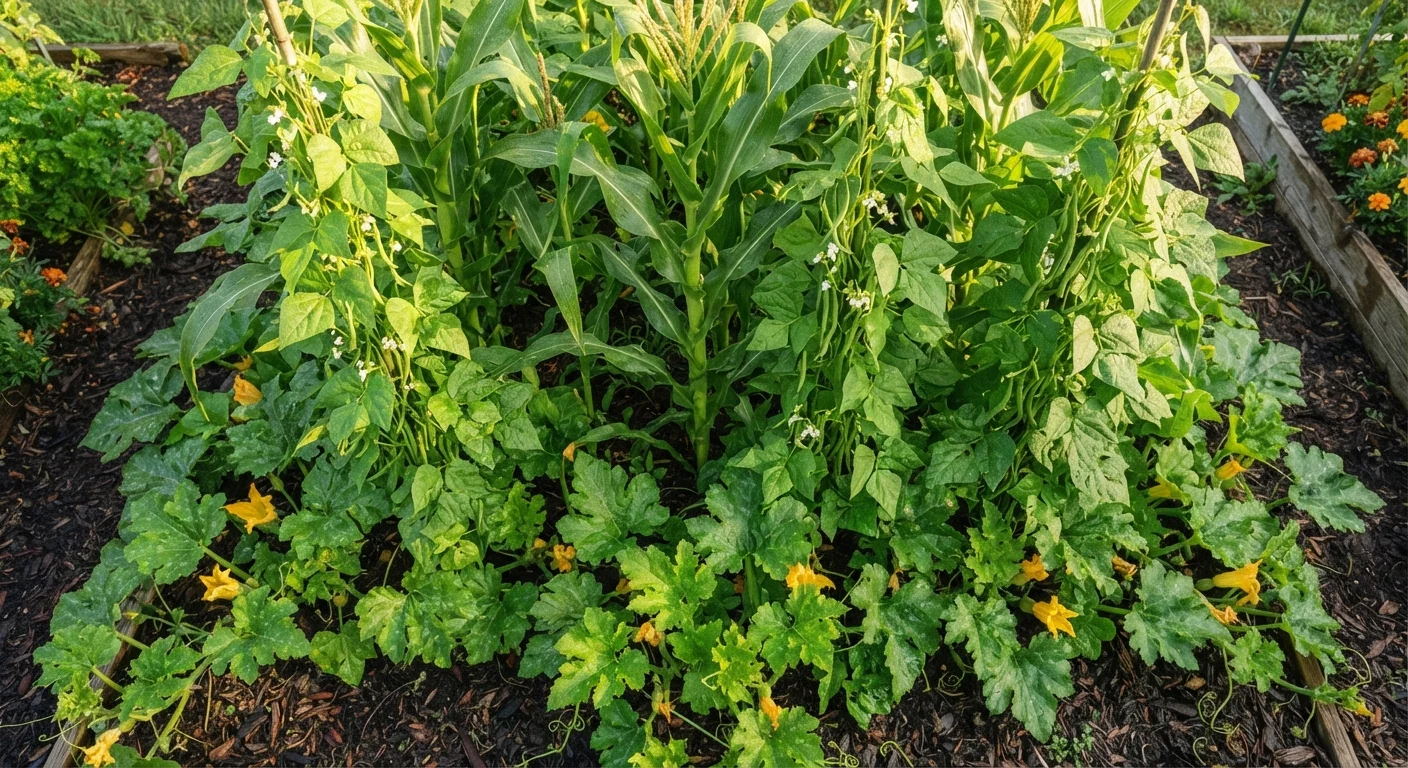
Photo credit: PrimeFaqs.com | Trending And Accurate Content
A curated look at proven plant pairings — including classic combinations like the Three Sisters — and the science behind why they work.
Key Takeaways
- Companion planting uses strategic pairings to deter pests, improve soil, and boost yields naturally.
- The Three Sisters (corn, beans, squash) is a centuries-old Native American system that remains effective today.
- Some plants actively suppress or compete with neighbors - knowing the bad pairings matters as much as the good ones.
- Aromatic herbs like basil and dill can confuse or repel common garden pests when planted near vulnerable crops.
- Nitrogen-fixing legumes improve soil fertility for nearby heavy-feeding plants like tomatoes and leafy greens.
Why Plant Placement Is More Than Aesthetics
Most gardeners think about spacing in terms of sunlight and airflow - and those matter - but what grows next to a plant can shape its entire season. Companion planting is the practice of positioning plants in deliberate combinations to take advantage of the ways they interact: through root chemistry, volatile compounds, canopy structure, and the insects they attract or repel.
The science behind these interactions is real, though not every folk pairing has been rigorously tested. Some combinations are well-supported by research; others remain part of traditional practice with plausible mechanisms. Understanding the difference helps you make smarter choices in the garden. If you're laying out a new bed from scratch, our garden prep checklist can help you plan spacing and groupings before a single seed goes in.
The Three Sisters: Corn, Beans, and Squash
This combination, developed by Indigenous peoples of North America over thousands of years, is one of the most complete companion systems in existence. Corn provides a vertical structure for pole beans to climb. Beans are legumes that fix atmospheric nitrogen into the soil, feeding the corn and squash. Squash spreads wide along the ground, its large leaves shading out weeds and retaining soil moisture while its prickly texture discourages some pests and foraging animals.
Each plant fills a different niche - vertical, mid-level nutrient cycling, and ground cover - making the system remarkably self-supporting. Plant corn first, allow it to establish several inches of height, then sow beans around the base and squash at the outer edges of the mound.
Each of the Three Sisters fills a distinct ecological niche, making the system nearly self-supporting.
Tomatoes and Basil
Basil is widely planted near tomatoes, and while the evidence is more anecdotal than conclusive, the pairing remains a staple of kitchen gardens for practical reasons. Basil's strong volatile oils are thought to deter thrips and aphids, and some gardeners report it may help confuse whitefly. More concretely, basil attracts pollinators and beneficial insects that also serve the tomato plants nearby.
From a purely practical standpoint, grouping herbs you'll harvest together makes garden management easier. Keep basil in full sun adjacent to tomato plants rather than in their shadow - both crops need direct light to thrive.
Basil's volatile oils may deter pests, and it attracts pollinators that benefit neighboring tomatoes.
Carrots and Onions (or Chives)
The traditional logic here is that carrot fly and onion fly are each repelled by the scent of the other's companion crop. Carrot fly is attracted to the smell of bruised carrot foliage, and onions mask that scent effectively. Conversely, onion fly is confused by the presence of carrots. It's a mutual disguise strategy.
Chives work similarly to onions and are easier to integrate into mixed beds because of their compact form. They also deter aphids on a range of plants when planted at intervals throughout a bed - a useful all-around border plant. Avoid planting carrots near dill, which can inhibit carrot development at certain growth stages.
Carrots and onions mask each other's scent from their respective pest species - a mutual disguise strategy.
Nasturtiums as Trap Crops
Nasturtiums are one of the most versatile companion plants in the garden, primarily because aphids love them. This makes them effective trap crops - plants positioned to lure pests away from more valuable crops. Plant nasturtiums near brassicas (broccoli, kale, cabbage) or beans to draw aphid colonies away from those plants and concentrate them where they're easier to manage or where natural predators can find them.
Nasturtiums also attract hoverflies, whose larvae are voracious aphid predators. Rather than viewing an aphid-covered nasturtium as a failure, treat it as the system working as intended. Remove and dispose of heavily infested stems periodically to prevent populations from spreading back into main crops.
A nasturtium covered in aphids isn't a failure - it's a trap crop doing exactly what it's designed to do.
Dill and Fennel: Keep These Apart
Not all companion relationships are beneficial - some plants actively harm their neighbors. Fennel is one of the most aggressive allelopathic plants in common kitchen gardens, meaning it releases compounds from its roots that inhibit the growth of many nearby plants. Keep fennel well away from tomatoes, peppers, and most brassicas.
Dill and fennel should not be planted close to each other either, because they cross-pollinate readily, producing seeds with muddled flavor. Dill itself is a good companion for brassicas and cucumber when it's young, but as it matures and flowers it can inhibit those same plants. Plant dill in a dedicated spot where it can be harvested young, or allow it to go to seed in a controlled area where it will self-sow and attract beneficial wasps.
Fennel releases root compounds that inhibit many nearby plants - keep it isolated from most vegetables.
Marigolds and Root Pest Control
French marigolds (Tagetes patula) produce a chemical from their roots called alpha-terthienyl, which has been shown in research to suppress certain nematode populations in the soil - specifically root-knot nematodes that damage tomatoes, peppers, and other crops. For this effect to work, marigolds need to be planted densely and grown as a full-season cover or interplanted over multiple consecutive seasons.
Above ground, marigolds' strong scent deters some flying pests and their open flowers attract hoverflies and parasitic wasps. They're one of the few companion plants where both above- and below-ground mechanisms are reasonably well supported. They're also a practical addition to any mixed border - the annuals vs. perennials guide covers how to mix seasonal bloomers like marigolds into a longer-term planting strategy.
French marigolds are one of the few companion plants with documented below-ground pest suppression through root chemistry.
Legumes as Soil Builders for Heavy Feeders
Legumes - including peas, beans, clover, and vetch - host nitrogen-fixing bacteria (Rhizobium) in nodules on their roots. These bacteria convert atmospheric nitrogen into a plant-available form that enriches the surrounding soil. This makes legumes invaluable companions for heavy nitrogen feeders like corn, leafy greens, and brassicas.
The benefit is most pronounced after the legume crop ends: when you cut the plant at the base rather than pulling it, the nitrogen-rich root system decomposes in place, feeding subsequent plantings. Rotating legumes through your beds each season is one of the most practical, low-cost ways to build long-term soil fertility without relying solely on added fertilizers. For gardens incorporating native plants, some native legumes like wild lupine also serve this function - worth exploring if you're interested in native plants for ecological benefit.
Cutting legumes at the base rather than pulling them leaves nitrogen-rich roots to feed the next crop.
Putting It All Together in Your Garden
Companion planting works best when it's built into your layout from the start rather than added as an afterthought. Sketch out your beds with plant relationships in mind - group heavy feeders with nitrogen-fixers, tuck aromatic herbs along the edges, and keep known competitors separated by a buffer of neutral plants.
Start Small With One or Two Pairings
If companion planting feels overwhelming, pick just one or two proven combinations for your first season - such as the Three Sisters or marigolds with tomatoes. Observe how they perform, take notes, and expand your pairings in subsequent seasons. A methodical approach will teach you far more than trying to implement every combination at once.
Keep a simple garden journal noting what grew near what and how each pairing performed over the season. Over time, you'll build a personalized reference that reflects your local pest pressure, soil, and microclimate - far more useful than any generic chart. For a broader view of how to structure your garden across the entire year, the seasonal garden maintenance reference offers a month-by-month task breakdown. And if you're just getting started with food growing, starting a vegetable garden from zero covers all the foundational steps before companion planting comes into play.

Author
Home & Garden Editorial Team
Home & Garden Editorial Team is the collective byline for our editorial team and contributor network. Articles published under this byline or an editorial pen name are researched, written, and reviewed according to our editorial standards for clarity, consistency, and independence before publication.
View all articles →