
The American Southwest's Hidden Desert Towns Most Travelers Drive Past
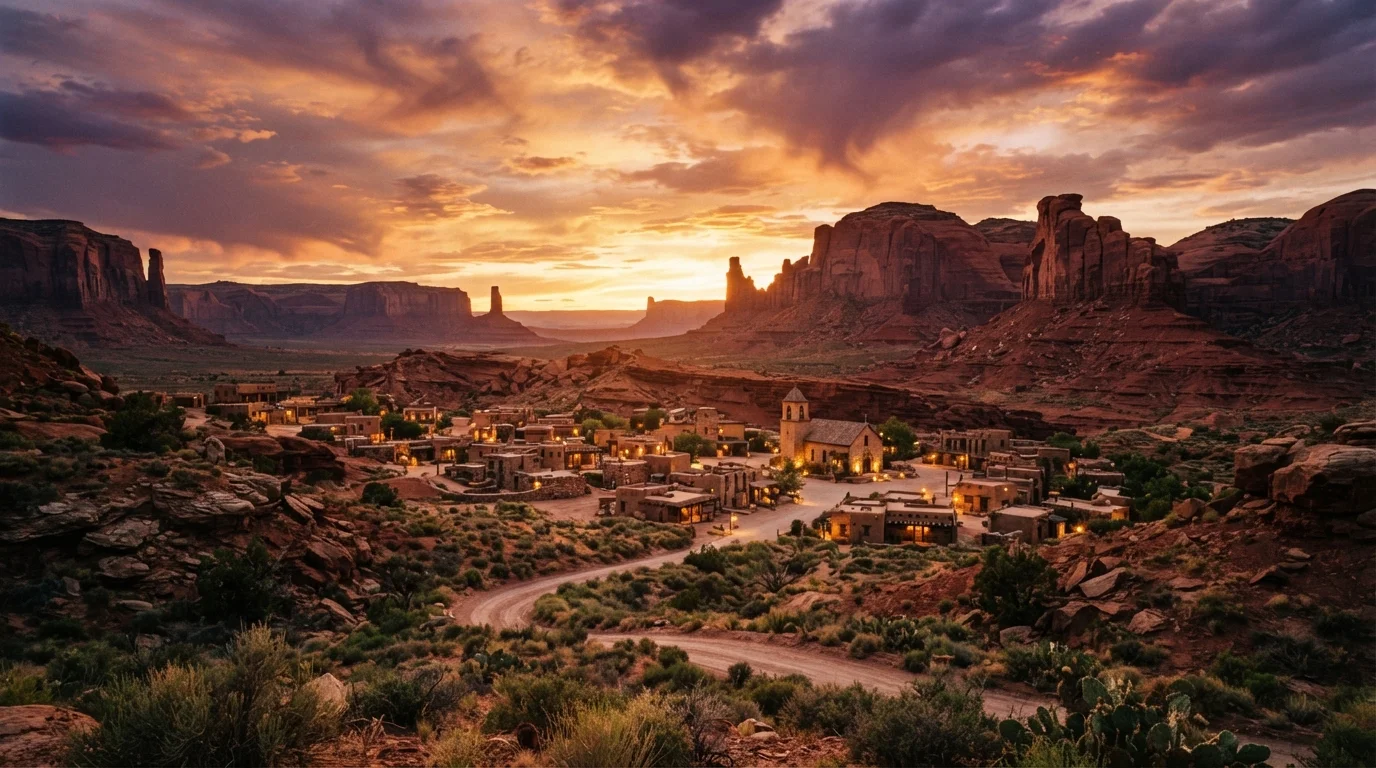
Photo credit: PrimeFaqs.com | Trending And Accurate Content
Beyond Sedona and Moab lie smaller desert communities with rich character, local art scenes, and access to remarkable landscapes.
Key Takeaways
- Several small Southwest desert towns offer remarkable landscapes and local culture largely overlooked by mainstream tourism.
- These communities tend to have thriving local art scenes, historic architecture, and direct access to wild public lands.
- Visiting during shoulder seasons - spring and fall - generally means cooler temperatures and fewer crowds.
- Road trippers can combine multiple hidden towns into a single loop, adding depth to any Southwest itinerary.
- Verify current road conditions, services, and entry requirements before traveling to remote desert areas.
The Road Less Taken Across the Desert
Most Southwest road trips follow a familiar script: Grand Canyon, Sedona, Moab, repeat. These are genuinely spectacular places - no argument there. But the region between and beyond those marquee stops contains a string of smaller towns that most travelers blow past at 75 mph, never realizing what they're missing.
These aren't ghost towns. They're living communities with galleries, working ranches, Indigenous cultural sites, and access to landscapes that can feel as dramatic as anything inside a national park boundary - without the parking lottery. If you're the kind of traveler who values character over convenience, consider rerouting around a few of these overlooked desert gems. For a deeper take on why slower, more deliberate itineraries tend to pay off, see our piece on the case for slow travel.
Marfa, Texas
Marfa sits at nearly 5,000 feet in the high Chihuahuan Desert of far West Texas, a four-hour drive from the nearest major airport. What started as a railroad water stop became an unlikely international art destination following Donald Judd's large-scale installations in the 1970s. Today, a cluster of galleries, a handful of excellent restaurants, and a distinctly dry, wide-sky atmosphere make it genuinely unlike anywhere else in the country.
The surrounding landscape - rolling grasslands, volcanic mountains, and enormous skies - rewards slow exploration. The mysterious Marfa Lights viewing area just east of town draws curious visitors, though their origin remains scientifically unresolved. Accommodations range from a historic hotel to airstream trailer parks; book well in advance for weekend stays.
Marfa's combination of world-class contemporary art and stark Chihuahuan Desert scenery is genuinely unlike anywhere else in the US.
Truth or Consequences, New Mexico
Yes, that's the actual name - the town famously renamed itself after a 1950s radio program. Sitting along the Rio Grande just north of Elephant Butte Lake, Truth or Consequences has quietly evolved into a quirky arts and wellness destination built around its natural geothermal hot springs.
Several small bathhouses pipe mineral-rich water directly from underground, offering a deeply restorative soak that visitors describe as more meditative than spa-like. The main street has attracted painters, sculptors, and potters, giving the downtown a creative energy that contrasts sharply with the surrounding Chihuahuan Desert terrain. It's an easy stop between Albuquerque and El Paso.
Geothermal hot springs fed directly from underground make Truth or Consequences a genuinely restorative desert stop.
Chloride, Arizona
Arizona's oldest continuously inhabited mining town sits in the Cerbat Mountains northwest of Kingman, a short but meaningful detour off Route 66. Chloride's population hovers around 200, its weathered storefronts and hand-painted murals giving it the feel of a living museum rather than a tourist reconstruction.
Rocky Ridge Trail leads hikers to a series of petroglyphs carved by the Hualapai people, and a collection of murals painted by artist Roy Purcell add a surreal, dreamlike quality to the canyon walls above town. Chloride pairs well with a visit to lesser-visited national parks in the region, including nearby Lake Mead National Recreation Area.
Chloride's ancient petroglyphs and hand-painted canyon murals create a layered cultural experience few Arizona visitors ever encounter.
Terlingua, Texas
On the edge of Big Bend National Park, Terlingua is less a conventional town than an atmospheric outpost. A mercury mining ghost town for much of the 20th century, it's been steadily repopulated by artists, river guides, astronomers, and people who simply wanted to live at the end of the road - literally.
The adjacent park offers some of the darkest skies in the lower 48 states, making Terlingua a superb base for stargazing. The Rio Grande runs just south, providing access to multi-day river float trips through remote canyons. The annual chili cook-off draws crowds each November, but most of the year the pace is slow and the quiet is profound.
Terlingua sits at the edge of Big Bend and some of the darkest, most star-filled skies in the continental United States.
Bisbee, Arizona
Tucked into the Mule Mountains near the Mexican border, Bisbee operated as one of the most productive copper mining towns in the world through the early 20th century. Its Victorian-era architecture - stacked up terraced hillsides because there was no flat land to build on - gives it a vertical, almost European feel wildly incongruous with its desert surroundings.
The Lavender Pit, a massive open-pit copper mine visible from several overlooks, remains one of the more striking industrial landscapes in the Southwest. Bisbee's artist community is well established, its vintage shops and galleries filling buildings that once housed miners and merchants. Travelers should note it sits close to the US-Mexico border; verify current conditions and entry logistics with official government sources before visiting.
Bisbee's stacked Victorian architecture rising up canyon walls makes it one of the most visually distinctive towns in the entire Southwest.
Aztec, New Mexico
Despite its name, Aztec's archaeological heritage belongs to the ancestral Pueblo people who built the remarkable stone structures now protected as Aztec Ruins National Monument. The site, a UNESCO World Heritage property as part of the broader Chaco Culture designation, receives a fraction of the visitors that Chaco Canyon itself draws - largely because Aztec sits closer to highways and doesn't require a long dirt-road approach.
The reconstructed Great Kiva at the monument is one of the few in the country where visitors can step inside a fully restored ceremonial structure and get a meaningful sense of its original scale and atmosphere. The town itself offers local dining, a small historic downtown, and easy access to the San Juan River for fly fishing.
Aztec Ruins National Monument lets visitors step inside a reconstructed Great Kiva - one of the most immersive ancestral Pueblo experiences accessible to travelers.
Planning Your Off-the-Beaten-Path Desert Trip
A few practical considerations make the difference between a rewarding detour and a frustrating one. Cell service drops significantly outside larger Southwest towns, so download offline maps before you leave. Gas stations can be 50 to 80 miles apart in rural stretches - fill up whenever you can. Many of these communities have limited lodging options, so booking ahead matters more than it would in a larger destination.
Timing Your Desert Visit Wisely
Spring (late March through May) and fall (September through November) offer the most comfortable temperatures across the Southwest desert. Summer heat in low-elevation towns like Bisbee and Terlingua can exceed 100°F, which significantly affects what's enjoyable on foot. Always carry more water than you think you'll need - a gallon per person per day is a common guideline for active time outdoors in the desert.
If the wide-open desert aesthetic appeals but you're drawn to water rather than red rock, the Great Lakes region offers a surprisingly comparable sense of vastness and discovery - just with freshwater dunes instead of sandstone. And before you romanticize the drive itself, it's worth reading about common road trip misconceptions that catch travelers off guard.

Author
Travel & Trips Editorial Team
Travel & Trips Editorial Team is the collective byline for our editorial team and contributor network. Articles published under this byline or an editorial pen name are researched, written, and reviewed according to our editorial standards for clarity, consistency, and independence before publication.
View all articles →