
The Great Lakes Region: A Freshwater Destination Most Americans Underestimate
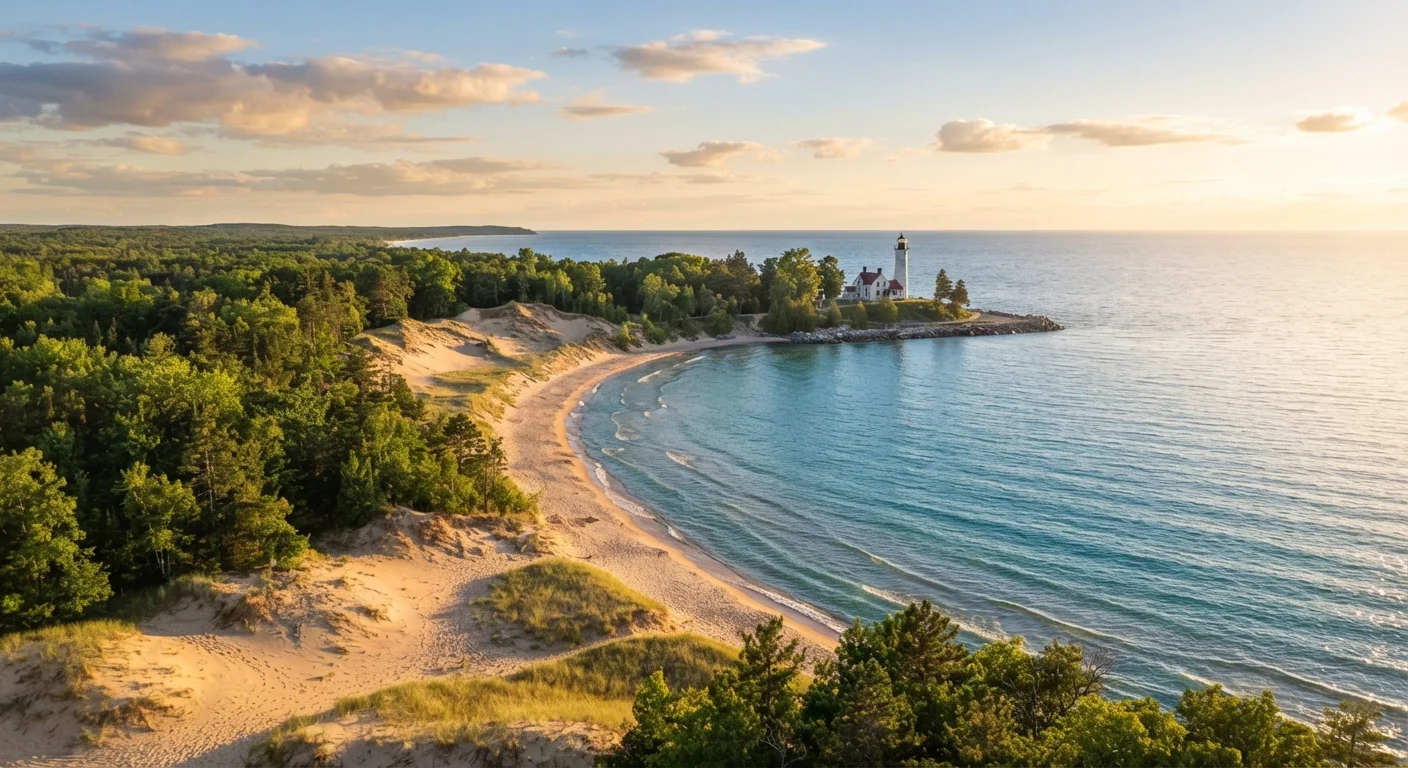
Photo credit: PrimeFaqs.com | Trending And Accurate Content
In this article
Lake Michigan, Superior, and Erie offer dunes, lighthouses, small cities, and shorelines that rival coastal destinations—without the crowds.
Key Takeaways
- The Great Lakes offer sandy beaches, towering dunes, and clear water that rivals many coastal destinations.
- Eight U.S. states border the lakes, making the region road-trip accessible for a large portion of the American population.
- Smaller port cities like Traverse City, Marquette, and Put-in-Bay deliver authentic, crowd-light experiences.
- Summer and early fall are peak seasons, but the region rewards shoulder-season visitors with lower costs and dramatic scenery.
- The region includes nationally designated park areas, scenic byways, and lighthouse trails worth planning around.
Why the Great Lakes Keep Getting Overlooked
Ask most Americans where they go for a beach trip and the answers cluster around Florida, the Carolinas, or California. The Great Lakes rarely enter the conversation - and that's a genuine missed opportunity. These lakes are vast. Lake Michigan alone has over 1,600 miles of shoreline. Superior is so large it creates its own weather patterns. Erie produces surf. Huron has Georgian Bay. The region's scale is genuinely hard to grasp until you're standing on a dune looking at an unbroken horizon of freshwater.
Part of the perception problem is branding. "Freshwater" doesn't conjure the same aspirational images as "coastal." But travelers who make the trip consistently describe a pleasant shock: clear water, sandy beaches, dramatic bluffs, and towns with real character - minus the parking nightmares and shoulder-to-shoulder crowds of peak-season coastal destinations.
Water Quality and Beach Advisories
Great Lakes beach conditions can vary due to seasonal algae blooms, bacterial levels, and weather-driven wave action. Before swimming, check local health department advisories or the U.S. EPA's beach monitoring resources. Most popular beaches post current conditions publicly during the summer season.
For readers curious how the Great Lakes experience compares to a classic American shore trip, our piece on Coastal New England in the off-season explores what quieter, less-commercialized shoreline travel actually looks like.
The Landscape Is More Varied Than You Expect
The Great Lakes region isn't one environment - it's several stacked together. On Lake Michigan's eastern shore, the Sleeping Bear Dunes National Lakeshore in Michigan drops 450-foot sand dunes directly into the water. Indiana Dunes National Park, just an hour from downtown Chicago, offers 15 miles of beach and a surprising mix of ecosystems. These are federally recognized landscapes worth serious planning time - and America's lesser-visited national parks make a strong case for exactly this kind of under-the-radar destination.
Move north to Lake Superior and the character shifts entirely. Pictured Rocks National Lakeshore in Michigan's Upper Peninsula features sandstone cliffs streaked with mineral colors rising 200 feet above the water. Isle Royale National Park - only reachable by ferry or floatplane - is one of the least-visited national parks in the lower 48, offering true wilderness backpacking and moose sightings. The lake itself runs cold year-round, but kayaking its coastline is considered among the finest paddling experiences in North America.
21%
Of Earth's surface fresh water held by the Great Lakes
According to the U.S. Environmental Protection Agency, the five Great Lakes collectively contain approximately 21% of the world's surface fresh water.
150+
Historic lighthouses in Michigan alone
Michigan has more lighthouses than any other U.S. state, making lighthouse touring a distinct regional travel activity along the Great Lakes shoreline.
1,600 mi
Miles of Lake Michigan shoreline
Lake Michigan's shoreline spans roughly 1,640 miles across four U.S. states, offering enormous variety in beach, dune, and coastal landscapes.
450 ft
Height of Sleeping Bear Dunes above lake level
The Sleeping Bear Dunes National Lakeshore in Michigan features perched dunes rising up to 450 feet above Lake Michigan, among the tallest freshwater dunes in the world.
Small Cities Worth Building a Trip Around
The Great Lakes region's mid-sized cities are genuine travel anchors - not just stopover points. Traverse City, Michigan, sits at the base of a bay on Lake Michigan and operates as a hub for cherry orchards, wineries, and access to the Leelanau Peninsula. Marquette, Michigan, perched on Lake Superior, has a walkable downtown, a brewery scene that punches above its weight, and proximity to both the Pictured Rocks and the Porcupine Mountains wilderness area.
On Lake Erie's Ohio shore, Put-in-Bay on South Bass Island draws day-trippers by ferry for its maritime history - Perry's Victory and International Peace Memorial stands here - alongside a lively but manageable summer scene. Meanwhile, Milwaukee on Lake Michigan offers world-class museums (the Milwaukee Art Museum's Calatrava-designed addition alone justifies a detour), a revitalized riverfront, and easy Amtrak access from Chicago.
The region also rewards road-trippers who enjoy discovery. The Lake Michigan Circle Tour is a designated scenic byway connecting all the lake's shoreline states and Ontario. Dozens of historic lighthouses - over 150 in Michigan alone - dot the route and make for compelling stops.
Planning Practical Realities and Seasonal Timing
The sweet spot for Great Lakes travel is late June through mid-October. Water temperatures on Lake Michigan typically peak in late July and August - still cooler than ocean destinations but refreshing rather than frigid. Fall arrives with vivid foliage and dramatically thinned crowds, particularly in northern Michigan and the Upper Peninsula. Accommodations that book solid in July often have availability - and lower rates - by late September.
Winter deserves a mention for a different kind of traveler. Ice formations along Lake Superior's Apostle Islands create sea caves accessible by foot when ice conditions allow. The region's snowfall also feeds a legitimate cross-country skiing and snowshoeing culture, particularly in Wisconsin and Michigan's UP. That said, always check current conditions through local or state park sources before planning winter outdoor activities.
For most visitors, a car is essential outside major cities. Distances between lakeside destinations can be significant, and public transit options are limited once you leave Chicago, Milwaukee, Cleveland, or Detroit. Ferry services to island destinations - Mackinac Island, South Bass Island - run seasonally, so confirm schedules directly with operators before planning around them.
Travelers who enjoy calibrating expectations against alternative American destinations might also appreciate the honest look at the Southwest's overlooked desert towns - another region where the less-obvious choices tend to deliver more than the headline destinations.
Frequently Asked Questions

Author
Travel & Trips Editorial Team
Travel & Trips Editorial Team is the collective byline for our editorial team and contributor network. Articles published under this byline or an editorial pen name are researched, written, and reviewed according to our editorial standards for clarity, consistency, and independence before publication.
View all articles →