
The Complete Guide to Crate Training: Purpose, Process, and Common Pitfalls
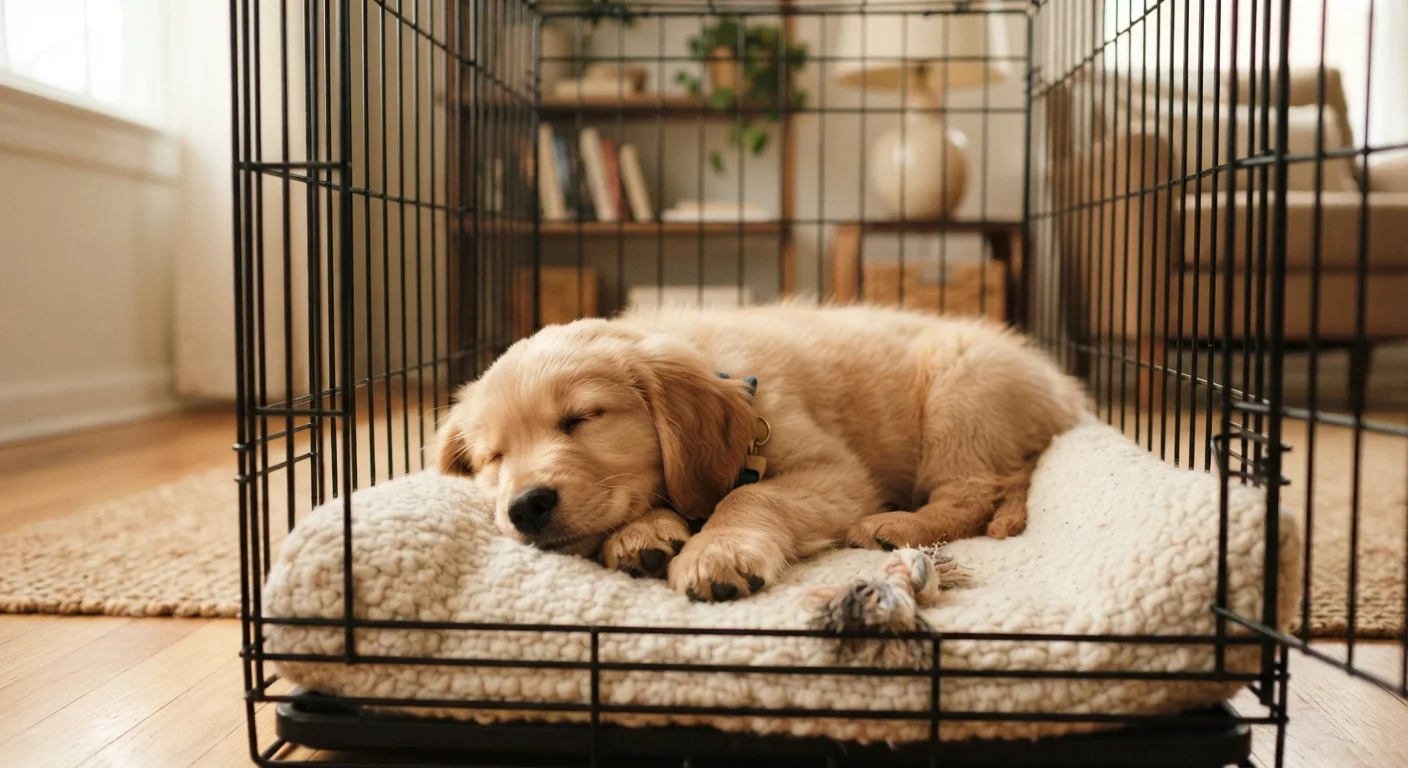
Photo credit: PrimeFaqs.com | Trending And Accurate Content
In this article
A well-introduced crate becomes a retreat, not a punishment. This end-to-end guide covers setup, timing, pacing, and how to avoid setbacks.
Key Takeaways
- A crate mimics a dog's natural denning instinct and should never be used as punishment.
- Size matters: the crate should be just large enough for your dog to stand, turn, and lie down.
- Gradual introduction - not forced confinement - is what makes crate training successful.
- Puppies need bathroom breaks every two to three hours and cannot stay crated all day.
- Most dogs are ready to have crate time phased out once they demonstrate consistent, calm behavior.
- Consistent routines and positive reinforcement are the two pillars of effective crate training.
Why Crate Training Works
Dogs are descended from den-dwelling animals. A small, enclosed space signals safety rather than confinement - provided that association is built correctly. Crate training leverages this instinct to give dogs a predictable retreat while also helping owners manage house-training, prevent destructive behavior, and ease travel stress.
It's worth being clear about what a crate is not: it is not a punishment tool, a babysitter, or a long-term solution for an under-exercised dog. Used humanely, it is one component of a broader approach to raising a settled, confident pet. If you're just getting started, the first-timer's guide to pet ownership covers the broader context of daily care and commitment that makes any training effort stick.
Stuff a rubber chew toy with your dog's regular kibble and freeze it the night before - this extends engagement time in the crate by 10 to 15 minutes and gives the session a built-in reward.
Mental effort and chewing are both calming for dogs. Combining them reduces the likelihood of stress vocalizations during early closed-door sessions.
Introduce a consistent verbal cue - such as 'crate' or 'kennel up' - from the very first session. Pair it every single time your dog enters so the word itself becomes a predictor of good things.
Consistent cue pairing accelerates the conditioned response. Dogs who hear the same word in the same context learn to move toward the crate rather than away from it.
Choosing and Setting Up the Right Crate
Three main crate styles are widely used: wire crates (good airflow and visibility), plastic airline-style crates (cozier and more den-like), and soft-sided fabric crates (lightweight but best for already-trained dogs). For most beginners, wire or plastic crates offer the easiest combination of durability and easy cleaning.
Size is critical. The crate should allow your dog to stand without crouching, turn in a complete circle, and lie stretched out - but no larger than that. Extra space encourages a puppy to use one corner as a bathroom. Many wire crates include a divider panel so you can expand the usable space as your puppy grows.
Line the floor with a washable mat or blanket and add one familiar-smelling item. Place the crate in a low-traffic but not isolated area - dogs are social animals and shouldn't feel banished. Before bringing a new dog home, review the room-by-room readiness guide to position the crate in a spot that supports a calm first week.
The Step-by-Step Introduction Process
Rushing this phase is the single most common mistake owners make. The goal is to build a positive emotional association before any closed-door confinement occurs.
- Open door, no pressure. Place the crate in the room with the door open. Let your dog investigate on their own terms. Toss treats or a favorite toy near - then just inside - the entrance. Repeat over several sessions without forcing entry.
- Feed meals at the threshold. Once your dog approaches willingly, begin feeding meals just inside the doorway. Gradually move the bowl deeper into the crate over successive meals until your dog steps fully inside to eat.
- Close the door briefly. After your dog enters comfortably to eat, close the door while they finish the meal, then open it immediately. Gradually extend the time the door stays closed by a few seconds each session.
- Build duration with you present. Ask your dog to go in, offer a chew or stuffed toy, and sit nearby reading or working. Work up to 10, then 20, then 30 minutes with you in the room before attempting any time alone.
- Practice short absences. Leave the room briefly, return calmly, and release your dog before any distress appears. Duration and alone time increase only when your dog remains settled.
For complementary foundation skills that support the calm focus crate training requires, see teaching sit, stay, and come.
Timing, Duration, and Daily Schedules
A consistent schedule helps your dog predict when crate time occurs and reduces anxiety. Crate sessions are most effective after exercise and a bathroom break - a tired, empty-bladdered dog settles far more readily than one with pent-up energy.
1 hr/month
Daytime crating limit for 8-week-old puppies
General guidance from veterinary and animal behavior organizations links bladder control to age, with roughly one hour per month of age as a daytime maximum.
4-5 hrs
Recommended max daily crate time for adult dogs
Most animal welfare and behavior experts advise against crating adult dogs for longer stretches during waking hours to protect physical and psychological wellbeing.
General duration guidelines by age:
- 8-10 weeks: Maximum one hour at a time during the day (excluding overnight)
- 11-14 weeks: Up to two hours
- 15-16 weeks: Up to three hours
- 6+ months: Up to four hours, though veterinary and behavioral guidance suggests adult dogs should not be crated more than four to five hours at a stretch during the day
Overnight crating is generally more successful because the dog's natural sleep cycle aligns with confinement. Even so, young puppies will need a middle-of-the-night bathroom break. Before each session, run through a quick readiness check - the training session readiness checklist is a practical reference for setting the right conditions.
Common Pitfalls and How to Avoid Them
Even well-intentioned owners fall into patterns that undermine progress. Here are the most frequent setbacks and their solutions:
- Using the crate as punishment
- Sending a dog to their crate after scolding creates a negative association that can undo weeks of work. The crate must always be a neutral or positive space.
- Ignoring crying as a strategy, without context
- If a dog is crying in a crate, the first question is whether they need a bathroom break. A dog signaling a genuine physical need should be let out calmly - without fanfare - and returned once the need is met. Prolonged distress signals that the introduction moved too fast.
- Crating too long, too soon
- Exceeding a puppy's physical or emotional capacity in the early stages sets back training and can increase anxiety. Progress is measured in days and weeks, not hours.
- Inconsistency between household members
- If one person always lets the dog out at the first whimper, the dog learns that persistence works. Everyone in the home needs to follow the same protocol.
- Removing the crate too early
- Some owners retire the crate the moment things seem to be going well, before the behavior is truly established. Patience during the consolidation phase prevents backsliding.
Signs Training Has Moved Too Fast
Excessive panting, drooling, pawing at the crate door, or prolonged vocalizing are signals that your dog is not yet comfortable at the current stage. If you see these signs consistently, go back one or two steps in the introduction process rather than pushing forward. Progress built on stress is fragile - progress built on calm is lasting.
When to Phase Out the Crate
Crating is not necessarily a lifelong practice. Many dogs reach a point where they can be trusted loose in the home - or a gated section of it - without destructive behavior or anxiety. Signs your dog may be ready include: consistently calm behavior when left alone, no destructive chewing or accidents, and the ability to settle on their own throughout the day.
Phase out access gradually. Start with short, supervised periods of freedom in one room. Expand access only when that room consistently goes well. Some dogs voluntarily continue using their crate as a resting spot long after formal training ends - leaving the door open and the crate available allows them that choice.
For broader guidance on building the kind of home environment that supports long-term good behavior, the Pet Care Basics hub offers resources on feeding, routines, and everyday care that complement everything covered here.
This article is for general informational and educational purposes only. For concerns about your individual dog's health, anxiety, or behavior, consult a licensed veterinarian or certified professional dog trainer.

Author
Pets & Animals Editorial Team
Pets & Animals Editorial Team is the collective byline for our editorial team and contributor network. Articles published under this byline or an editorial pen name are researched, written, and reviewed according to our editorial standards for clarity, consistency, and independence before publication.
View all articles →