
Personal Loan vs. Balance Transfer Card for Paying Down Debt
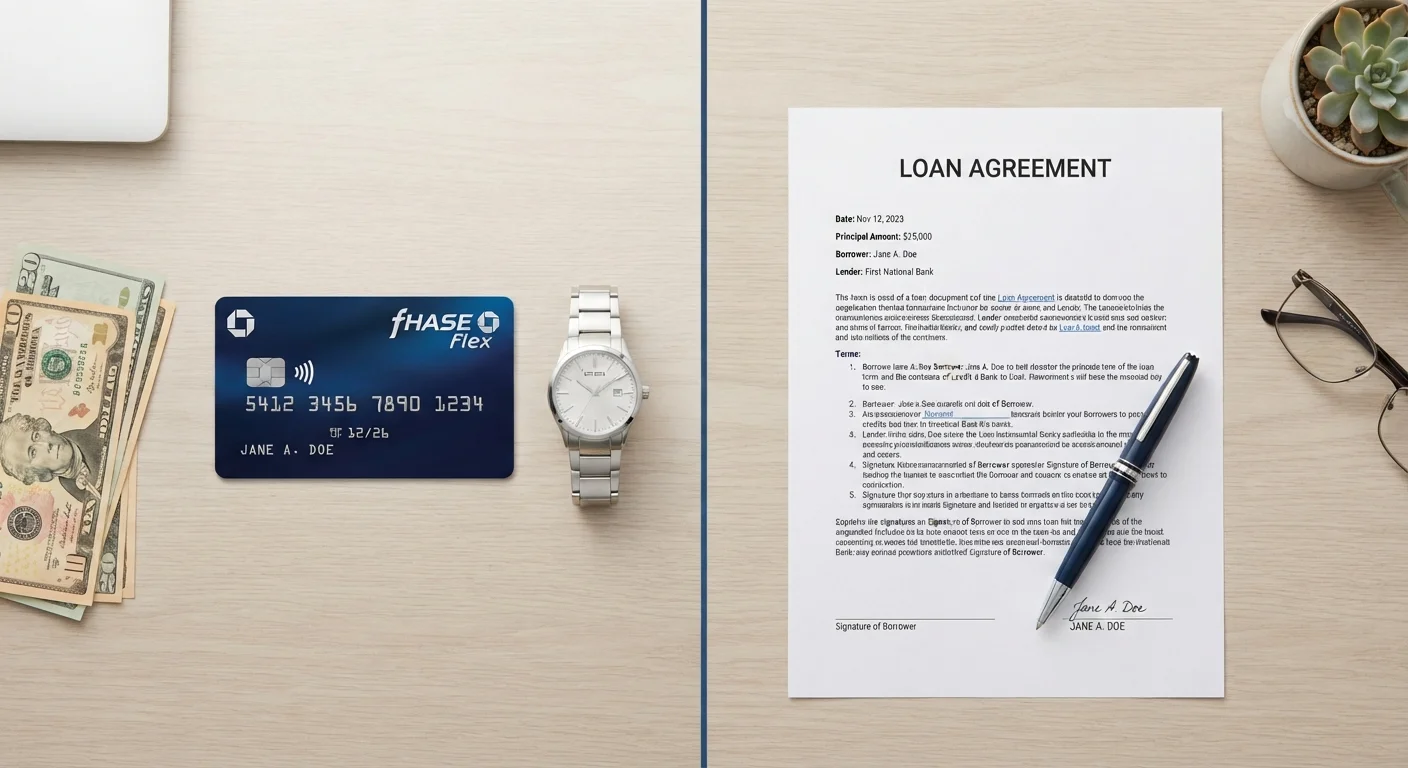
Photo credit: PrimeFaqs.com | Trending And Accurate Content
Two common tools for tackling high-interest debt, compared across key factors like fees, timelines, credit impact, and repayment structure.
Key Takeaways
- Personal loans offer fixed rates and set repayment schedules, making budgeting more predictable.
- Balance transfer cards typically offer a 0% introductory APR, but that rate expires - often within 12 to 21 months.
- Balance transfer fees (usually 3%-5% of the transferred amount) are an upfront cost often overlooked.
- Missing a payment on a balance transfer card can sometimes trigger the end of the promotional rate.
- Both options require a hard credit inquiry, which can temporarily lower your credit score.
- Your credit profile, debt amount, and repayment discipline should guide which tool fits your situation.
How Each Tool Works
A personal loan is an installment loan - a lender gives you a lump sum, which you repay in equal monthly installments over a fixed term (typically 24 to 84 months). The interest rate is usually fixed, meaning your payment and total cost are known from the start. Many borrowers use personal loans to consolidate high-interest credit card debt into one manageable payment.
A balance transfer card is a credit card that lets you move existing debt onto it, often at a 0% introductory APR for a set promotional period. During that window, no interest accrues - but once it ends, the card's standard APR applies to any remaining balance. Most cards charge a balance transfer fee of 3% to 5% of the amount transferred, due at the time of the transfer.
Both tools aim to reduce the total interest you pay, but they accomplish that through different mechanisms and carry different risks. Understanding those differences helps you match the right tool to your actual repayment capacity. For a broader look at structuring debt payoff alongside savings, see how to balance an emergency fund with debt repayment.
| Criterion | Personal Loan | Balance Transfer Card |
|---|---|---|
| Interest rate type | Fixed APR for loan term | 0% intro, then variable APR |
| Typical upfront fee | 1%-8% origination fee | 3%-5% transfer fee |
| Repayment structure | Fixed monthly installments | Flexible (minimum required) |
| Payoff timeline | Set term (24-84 months) | Open-ended after promo period |
| Promotional period risk | None - rate is fixed | Rate resets after 12-21 months |
| Credit utilization impact | Reduces revolving utilization | May lower or raise utilization |
| Best debt size | Larger balances, longer payoff | Moderate balances, quick payoff |
Key Differences in Cost and Structure
The most important cost comparison is between a personal loan's fixed interest rate and a balance transfer card's deferred interest structure. If you carry a $6,000 balance and qualify for a personal loan at 12% APR over 36 months, you'll pay a calculable amount of interest from day one. With a balance transfer card that charges a 3% fee upfront and offers 18 months at 0%, you pay $180 immediately - but nothing in interest if the balance is cleared within the promotional window.
The risk in a balance transfer is timing. If $2,000 remains when the promotional period ends and the card's standard APR resets to 24%, interest charges accelerate quickly. Many borrowers underestimate how much they need to pay monthly to reach zero before the window closes.
3%-5%
Typical balance transfer fee charged upfront
The Consumer Financial Protection Bureau notes that transfer fees are a common and often underestimated cost when evaluating balance transfer offers.
12-21 months
Common range for 0% APR promotional windows
Promotional periods vary by card and credit profile; the standard APR that applies afterward can be significantly higher than a fixed personal loan rate.
1%-8%
Typical origination fee range on personal loans
Origination fees reduce the net amount received or increase the total repaid; always compare the full APR - not just the interest rate - when evaluating loan offers.
Personal loans don't carry this expiration risk, but they do carry origination fees - typically 1% to 8% of the loan amount, deducted upfront or rolled into the loan balance. When comparing offers, always calculate the APR inclusive of fees, not just the stated interest rate. For guidance on prioritizing which debts to address first, see how to decide which debt to tackle first.
Credit Score Considerations
Both options affect your credit, but in different ways. Applying for either product triggers a hard inquiry, which may temporarily lower your score by a few points. Beyond that, the ongoing effects diverge.
A balance transfer card increases your total available revolving credit, which could lower your overall credit utilization ratio - a factor that generally benefits your score. However, opening a new account shortens your average account age. Closing the old card after transferring the balance can also reduce available credit and raise utilization again. For a detailed look at those trade-offs, see the trade-offs of closing an old credit card.
A personal loan adds an installment account to your credit mix, which scoring models may view favorably. Paying off revolving debt with an installment loan can reduce your credit utilization ratio materially, since the loan balance doesn't count as revolving debt the same way a credit card balance does. Consistent on-time payments on either product will support your score over time - and missed payments on either will cause damage.
If you're still weighing broader debt-payoff strategies, the debt avalanche and snowball methods offer a complementary framework for sequencing your balances.
This article is for general informational and educational purposes only and does not constitute personalised financial or credit advice. Consult a qualified financial professional before making decisions based on your specific circumstances.

Author
Personal Finance Editorial Team
Personal Finance Editorial Team is the collective byline for our editorial team and contributor network. Articles published under this byline or an editorial pen name are researched, written, and reviewed according to our editorial standards for clarity, consistency, and independence before publication.
View all articles →