
The Trade-Offs of Closing an Old Credit Card
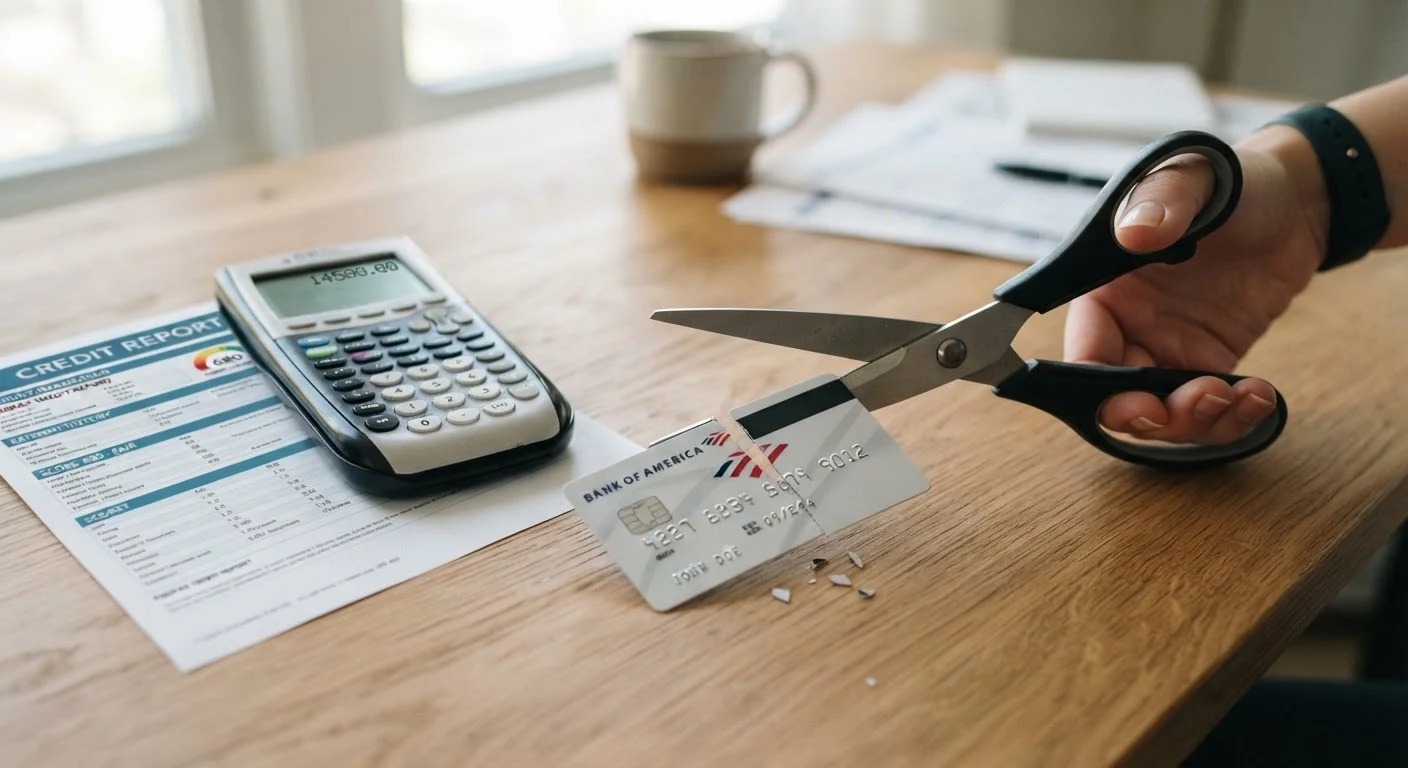
Photo credit: PrimeFaqs.com | Trending And Accurate Content
In this article
Closing a credit card seems simple, but it can affect your utilization ratio and credit history length. Here's a balanced look at when it makes sense.
Key Takeaways
- Closing an old card reduces your total available credit, which can raise your utilization ratio.
- Length of credit history matters - older accounts contribute positively to your score.
- Eliminating an annual fee or removing a spending temptation can be legitimate reasons to close.
- The credit score impact is often temporary, but timing matters if you plan to borrow soon.
- A card with no annual fee may be worth keeping open even if you rarely use it.
Preserves your total available credit limit
Keeping the card open maintains the credit limit in your utilization calculation, helping keep that ratio lower even if you carry balances on other cards.
Supports a longer average credit history
Older accounts raise your average account age, which positively influences scoring models. Your oldest cards carry the most weight in this calculation.
Costs nothing if there's no annual fee
A card with no annual fee can sit dormant without costing you anything, providing a passive credit benefit simply by remaining open.
Maintains a broader credit mix
Having multiple open revolving accounts in good standing demonstrates responsible management of available credit, which scoring models view favorably.
Eliminates a high annual fee eating into your budget
If the card charges $95 or more per year and the rewards or perks don't offset that cost, closing it frees up real money that outweighs the credit score benefit.
Removes access to a card tied to overspending patterns
For some people, having an available credit line is a behavioral risk. Closing the account can be a deliberate, practical boundary against accumulating unwanted debt.
Simplifies account management with minimal long-term harm
If your credit profile is already well-established with multiple accounts and low utilization, the impact of closing one older card may be modest and short-lived.
Reduces fraud exposure on an unused account
Accounts you rarely check are more vulnerable to unauthorized charges going unnoticed. Closing dormant cards reduces that surface area of risk.
Why This Decision Is More Complicated Than It Looks
Closing a credit card feels like a tidy financial move - one fewer account to track, one less temptation to overspend. But your credit score doesn't see it that way. Two of the most influential factors in your FICO score - credit utilization and length of credit history - are directly affected when you close an account, and not always favorably.
This doesn't mean closing a card is always wrong. It means the decision deserves more than a surface-level look. Understanding the trade-offs lets you weigh the actual impact against your real financial situation, rather than following a blanket rule in either direction. See our guide to how credit works for the broader context behind these scoring mechanics.
The Case for Keeping It Open
Before examining the downsides of closing, it helps to understand what an open card - even an idle one - is quietly doing for your score.
Preserves your total available credit limit
Keeping the card open maintains the credit limit in your utilization calculation, helping keep that ratio lower even if you carry balances on other cards.
Supports a longer average credit history
Older accounts raise your average account age, which positively influences scoring models. Your oldest cards carry the most weight in this calculation.
Costs nothing if there's no annual fee
A card with no annual fee can sit dormant without costing you anything, providing a passive credit benefit simply by remaining open.
Maintains a broader credit mix
Having multiple open revolving accounts in good standing demonstrates responsible management of available credit, which scoring models view favorably.
~30%
Share of FICO score tied to credit utilization
According to FICO's published scoring criteria, amounts owed - including utilization - account for roughly 30% of a standard FICO score.
15%
Share of FICO score tied to credit history length
FICO publicly states that length of credit history makes up approximately 15% of a standard score, making account age a meaningful factor.
One of the clearest arguments for keeping an old card open is its effect on credit utilization. This ratio compares your total revolving balances to your total available credit. When you close a card, that card's credit limit disappears from the available side of the equation, which can push your utilization percentage higher - even if your actual spending hasn't changed. Our deeper look at credit utilization and how it shapes your score explains exactly why this matters.
The age of your accounts also factors in. Credit scoring models reward a longer average account age, and your oldest cards anchor that average. Closing an account you've held for a decade can reduce your average age meaningfully, especially if your other accounts are relatively new.
When Closing Actually Makes Sense
Despite the credit score arguments for keeping cards open, there are real situations where closing is the right call.
Eliminates a high annual fee eating into your budget
If the card charges $95 or more per year and the rewards or perks don't offset that cost, closing it frees up real money that outweighs the credit score benefit.
Removes access to a card tied to overspending patterns
For some people, having an available credit line is a behavioral risk. Closing the account can be a deliberate, practical boundary against accumulating unwanted debt.
Simplifies account management with minimal long-term harm
If your credit profile is already well-established with multiple accounts and low utilization, the impact of closing one older card may be modest and short-lived.
Reduces fraud exposure on an unused account
Accounts you rarely check are more vulnerable to unauthorized charges going unnoticed. Closing dormant cards reduces that surface area of risk.
If a card carries a high annual fee and you're not getting enough value from rewards or benefits to offset it, closing can make straightforward financial sense. Similarly, if a particular card has become a source of debt-driven stress or compulsive spending, removing access is a reasonable harm-reduction strategy - even at a temporary cost to your score.
It's also worth noting that the credit impact of closing a card tends to be most acute in the short term. If you're not planning to apply for a mortgage, auto loan, or other significant credit in the near future, a modest dip in your score may be an acceptable trade-off. As discussed in our article on debt consolidation trade-offs, short-term credit score impacts often resolve as your overall credit behavior remains positive over time.
Closed Accounts Don't Vanish Immediately
When you close a credit card, the account doesn't disappear from your credit report right away. Closed accounts in good standing can remain on your report for up to 10 years, continuing to contribute to your credit history length during that time. This means the damage to your average account age tends to build gradually, not all at once - but it will eventually be felt once the account ages off your report.
Practical Steps Before You Decide
If you're weighing whether to close a specific card, walk through these considerations before acting:
- Check your current utilization. Calculate what your utilization ratio would look like without that card's credit limit. If it jumps above 30%, that's a warning sign worth taking seriously.
- Look at the card's age. If it's your oldest account, closing it carries more risk to your history length than closing a newer one would.
- Assess the annual fee honestly. If there's no annual fee, the cost of keeping the card open is essentially zero - and the passive credit benefit may outweigh any inconvenience.
- Consider timing. If you expect to apply for a major loan within the next six to twelve months, this is generally not the right time to close an old account.
- Redeem rewards first. If the card has accumulated points or cash back, redeem them before closing - they're typically forfeited when an account closes.
There's no universally correct answer here, and your specific credit profile matters. Consulting with a nonprofit credit counselor or a qualified financial professional can provide guidance tailored to your situation.
This article is for general informational and educational purposes only and does not constitute personalized financial or credit advice. For guidance specific to your circumstances, consider speaking with a licensed financial adviser or nonprofit credit counseling service.

Author
Personal Finance Editorial Team
Personal Finance Editorial Team is the collective byline for our editorial team and contributor network. Articles published under this byline or an editorial pen name are researched, written, and reviewed according to our editorial standards for clarity, consistency, and independence before publication.
View all articles →