
The 50/30/20 Rule vs. Envelope Budgeting: Which Structure Fits Your Life?
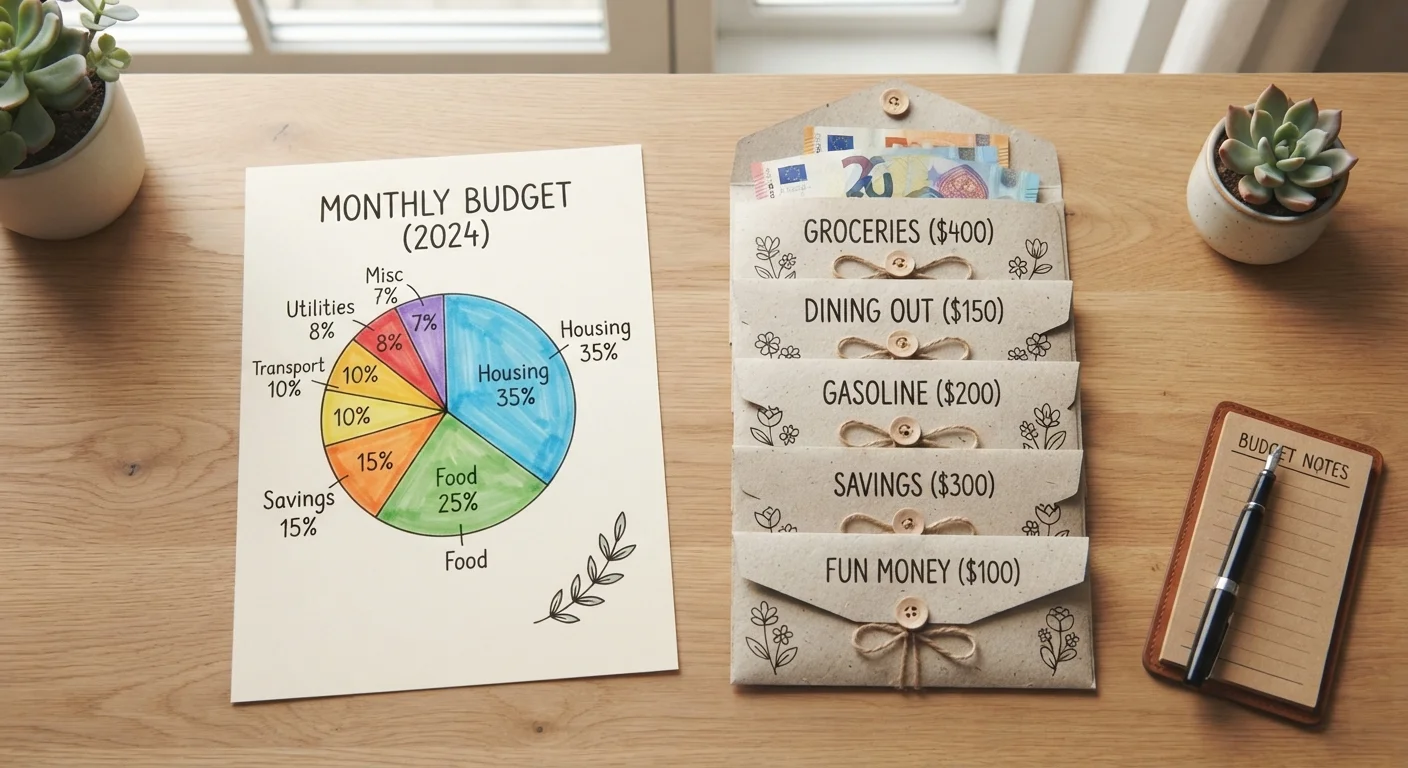
Photo credit: PrimeFaqs.com | Trending And Accurate Content
In this article
Two of the most popular budgeting frameworks side by side. See how the 50/30/20 rule and envelope method differ in structure, flexibility, and daily use.
Key Takeaways
- The 50/30/20 rule divides after-tax income into needs, wants, and savings using broad percentage targets.
- Envelope budgeting assigns fixed dollar amounts to specific spending categories each pay period.
- The 50/30/20 rule offers more flexibility; envelope budgeting delivers more category-level control.
- Both methods work best when built on an accurate picture of your fixed and variable expenses.
- Neither method is universally superior - the right choice depends on your income pattern and spending habits.
- Some people combine elements of both frameworks to get flexibility at the top level and control at the category level.
How Each Method Actually Works
Before comparing the two frameworks, it helps to understand exactly what each one asks of you in practice.
The 50/30/20 rule - popularized by Senator Elizabeth Warren and her daughter Amelia Warren Tyagi in their 2005 book All Your Worth - divides your monthly after-tax income into three broad categories: 50% toward needs (housing, utilities, groceries, minimum debt payments), 30% toward wants (dining out, subscriptions, entertainment), and 20% toward savings and debt repayment beyond minimums. The appeal is its simplicity. You don't need to track every grocery receipt; you monitor whether your spending stays within the right buckets overall.
Envelope budgeting works differently. At the start of each pay period, you assign a specific dollar amount to each spending category - groceries, gas, dining, clothing, and so on - then spend only what's in each envelope. Traditionally done with physical cash, the method is now widely practiced digitally through apps and spreadsheets. When the envelope is empty, spending in that category stops until the next period.
If you're new to budgeting entirely, see our step-by-step starting guide before choosing a method - knowing your baseline numbers makes either framework much easier to apply.
| Criterion | 50/30/20 Rule | Envelope Budgeting |
|---|---|---|
| Structure | 3 broad percentage-based buckets | Multiple fixed dollar-amount categories |
| Level of detail | High-level overview | Category-by-category tracking |
| Flexibility | High - movement within buckets is allowed | Low - each category has a hard cap |
| Setup effort | Low - three calculations needed | Moderate to high - requires category planning |
| Best income type | Stable, predictable monthly income | Any income type, including variable |
| Spending control | Bucket-level only | Precise, per-category control |
| Habit requirement | Monthly review sufficient | Frequent per-category check-ins needed |
| Good for beginners? | Yes - low friction entry point | Yes - if detail-oriented by nature |
Flexibility vs. Control: The Core Trade-Off
The fundamental difference between these two frameworks comes down to how much control you want over individual spending categories versus how much flexibility you want in daily decisions.
The 50/30/20 rule's broad buckets mean that as long as your total spending in each tier stays on target, how the money moves within that tier is largely up to you. A month where you spend more on groceries but less on dining out is fine - both sit in the "needs" or "wants" bucket and don't require rebalancing. This makes the method forgiving and low-maintenance, which is one reason it resonates with people building their first budget.
Envelope budgeting works in the opposite direction. Its strength is category-level precision: if you've allocated $400 to groceries and $150 to dining out, those limits are independent. Overspending on restaurants doesn't automatically reduce your grocery budget - it means you've gone over. That rigidity is also the method's greatest advantage for people who tend to overspend in specific areas, because the limit is concrete rather than conceptual.
Understanding how your spending breaks down between fixed and variable costs is important for both methods. Our explainer on fixed vs. variable expenses covers exactly why that distinction matters when setting category limits.
~74%
Americans living paycheck to paycheck
A 2023 LendingClub report found roughly 74% of U.S. consumers were living paycheck to paycheck, underscoring why a structured budgeting method matters for most households.
30%
Recommended cap on discretionary wants
The 50/30/20 rule designates 30% of after-tax income for wants - a guideline, not a guarantee, that may need adjustment based on individual cost-of-living pressures.
20%
Target savings and debt repayment share
Under the 50/30/20 framework, at least 20% of take-home pay should go toward building savings and paying down debt beyond minimum required payments.
Practical Fit: Income Type, Lifestyle, and Habit
Neither method fits every situation equally well. A few practical factors tend to determine which one is the better match.
Income stability matters more than most people expect. The 50/30/20 rule works most cleanly when your monthly take-home pay is predictable. If you freelance, work on commission, or have variable hours, calculating 50% of "income" becomes complicated when that number changes month to month. Envelope budgeting, by contrast, can be applied to whatever amount you actually receive - you simply fill the envelopes from what's available.
Spending behavior is the other key variable. If your problem is big-picture imbalance - spending too much overall relative to income - the 50/30/20 rule helps you see that clearly. If your problem is a specific category where spending tends to spiral (restaurants, online shopping, subscriptions), envelope budgeting gives you a harder boundary at the category level that a percentage framework doesn't replicate.
Time and effort also play a role. Envelope budgeting requires more setup and more frequent check-ins to track each category's remaining balance. The 50/30/20 rule can be managed with a single monthly review. If consistency is a challenge, the lower-friction method is usually the one you'll actually stick with.
For couples managing shared finances, envelope budgeting's defined categories can reduce disagreements about specific spending decisions. Our guide on budgeting as a couple explores how shared frameworks like these tend to play out in practice.
This article is for general informational and educational purposes only and does not constitute personalized financial advice. Consider consulting a qualified financial professional for guidance tailored to your specific situation.

Author
Personal Finance Editorial Team
Personal Finance Editorial Team is the collective byline for our editorial team and contributor network. Articles published under this byline or an editorial pen name are researched, written, and reviewed according to our editorial standards for clarity, consistency, and independence before publication.
View all articles →