
Fixed vs. Variable Expenses: Understanding the Building Blocks of Any Budget
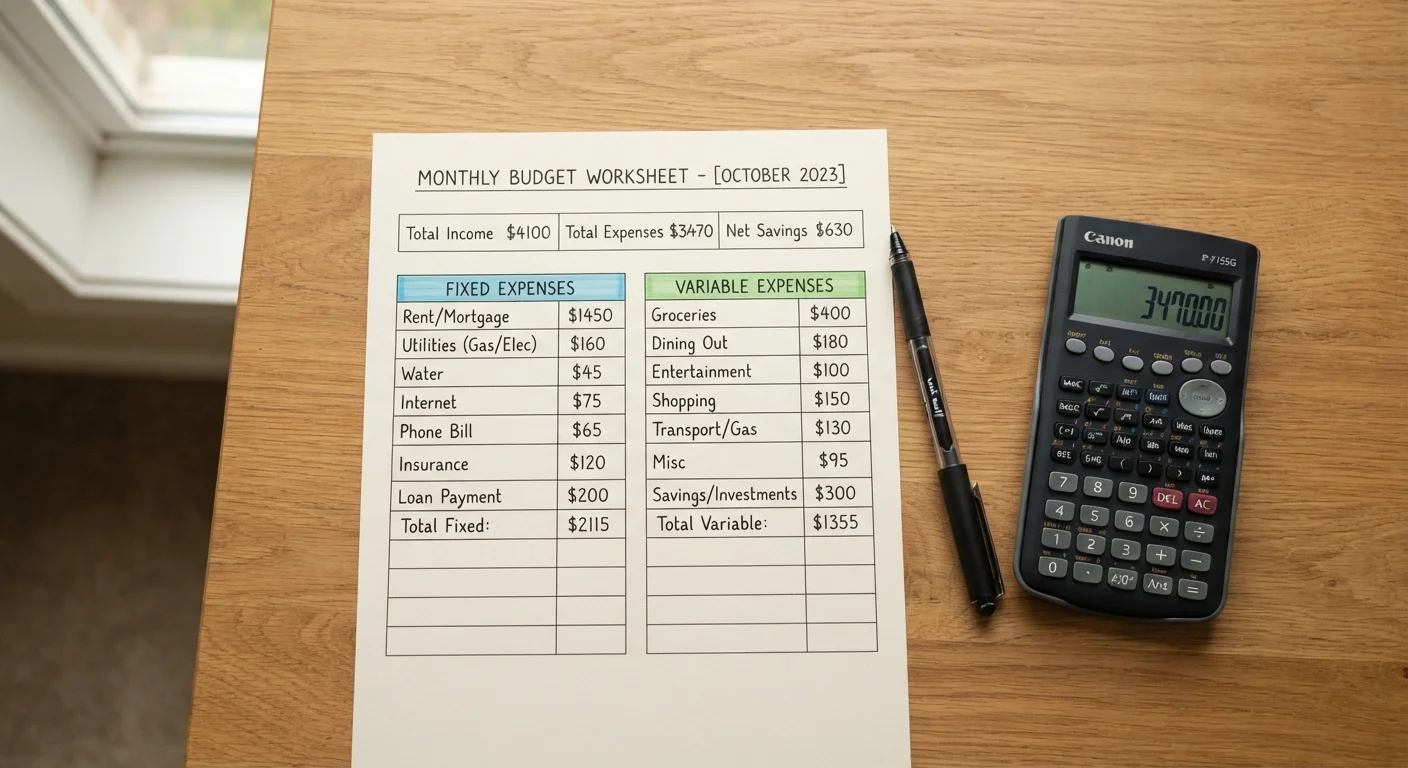
Photo credit: PrimeFaqs.com | Trending And Accurate Content
In this article
Fixed and variable costs behave differently in a budget. This explainer breaks down the distinction and why it matters when you're deciding where to cut back.
Key Takeaways
- Fixed expenses remain the same each month, making them easy to predict but hard to cut quickly.
- Variable expenses fluctuate and are generally the first place to look when trimming spending.
- Some costs - like utilities - are semi-variable: they recur monthly but in changing amounts.
- Knowing both categories helps you identify how much of your income is already committed before you spend a dollar.
- Reducing fixed costs usually requires a significant life change, such as moving or refinancing a loan.
Why This Distinction Is the Foundation of Good Budgeting
Before you can manage your money well, you need to understand your money's behavior. That starts with one fundamental split: costs that are locked in versus costs that move with your decisions.
Fixed expenses are predictable by design. You agreed to a set amount when you signed a lease, took out a loan, or subscribed to a service. That number shows up on your statement every month without variation. Variable expenses, by contrast, respond to what you actually do - how much you drive, cook at home, or choose to go out. They reflect your habits as much as your obligations.
This distinction matters because it tells you, immediately, how much of your paycheck is already spoken for. If your fixed costs total $2,400 and you take home $4,000 per month, you know you have $1,600 to allocate across variable spending, savings, and everything else. That clarity is the starting point for any realistic plan. If you're ready to put these categories to work, our step-by-step guide to building a budget from scratch walks you through the full process.
~33%
Average share of income spent on housing alone
U.S. Bureau of Labor Statistics Consumer Expenditure data consistently shows housing as the single largest fixed expense category for American households.
$6,081
Average annual household spending on food
According to the U.S. Bureau of Labor Statistics Consumer Expenditure Survey, food is one of the largest variable expense categories for American households.
What Counts as a Fixed Expense
Fixed expenses share one defining trait: the amount due doesn't change from period to period unless you take deliberate action to change it. Common examples include:
- Rent or mortgage payments
- Car loan or lease payments
- Student loan installments
- Insurance premiums (health, auto, renters, life)
- Set-rate subscriptions (streaming services, gym memberships at a flat fee)
- Minimum debt payments on fixed-rate loans
Because these costs are predictable, they're relatively easy to account for in a budget - but they're also harder to reduce on short notice. Lowering a fixed cost usually means renegotiating a contract, refinancing a loan, or making a significant lifestyle change like moving to a less expensive home. That's why financial educators often say fixed costs are where long-term financial health is won or lost: small reductions compound significantly over time.
List Your Fixed Costs Before Anything Else
When building or updating a budget, start by listing every fixed expense and its exact monthly amount. This gives you a clear picture of your committed spending floor - the minimum you owe regardless of what the month brings. Everything above that floor is where budgeting decisions actually happen.
What Counts as a Variable Expense
Variable expenses recur regularly but don't carry a fixed price tag. How much you spend depends on behavior, need, and circumstance. Typical examples include:
- Groceries
- Gasoline and transportation costs - see our car ownership hub for a fuller look at the costs of maintaining a vehicle
- Dining out and takeout
- Clothing and personal care
- Entertainment and hobbies
- Household supplies
Variable expenses are where most people find their budgeting leverage. Unlike fixed costs, they respond to small, immediate decisions - cooking more meals at home, delaying a discretionary purchase, or shopping with a list. For a comprehensive look at how these and other categories fit into a full household budget, see budget categories every household should account for.
Semi-Variable Expenses: The Category in Between
Not every cost fits neatly into one of two boxes. Semi-variable expenses - sometimes called mixed costs - arrive on a regular schedule but in amounts that vary. Utilities are the clearest example: your electric bill comes every month, but the amount reflects your actual usage. Other examples include:
- Water and gas utilities
- Phone bills with data overage charges
- Credit card minimum payments (which shift as your balance changes)
Watch for 'Creeping' Fixed Costs
Fixed expenses can quietly expand over time - a streaming subscription auto-renews at a higher rate, an insurance premium increases at renewal, or a promotional rate expires. Reviewing your fixed costs once or twice a year helps you catch these changes before they silently erode your monthly budget.
Budgeting for semi-variable expenses typically means tracking a few months of history and using an average as your planning figure. Some households prefer to slightly overestimate to build in a small cushion.
Using This Framework to Make Smarter Spending Decisions
Once you've sorted your expenses into these categories, you can make more targeted decisions about where adjustments are possible. When cash flow is tight, most people instinctively start with variable costs because those can be reduced quickly without breaking a contract or restructuring a financial commitment. That's a reasonable place to start - though it's worth also examining fixed costs for any that are no longer serving their original purpose.
Longer-term, reducing fixed expenses often produces larger and more durable savings. Refinancing a mortgage to a lower rate, for example, can save more per month than nearly any variable category. For guidance on building savings while managing debt, explore our saving and debt hub.
For households managing two incomes, the fixed-versus-variable framework also helps clarify how to divide shared obligations from discretionary spending - a topic covered in depth in our article on budgeting as a couple.
This article is for general informational and educational purposes only and does not constitute personalized financial advice. Consult a qualified financial professional for guidance tailored to your individual situation.
Frequently Asked Questions

Author
Personal Finance Editorial Team
Personal Finance Editorial Team is the collective byline for our editorial team and contributor network. Articles published under this byline or an editorial pen name are researched, written, and reviewed according to our editorial standards for clarity, consistency, and independence before publication.
View all articles →