
Reading Your Tire Sidewall Without a Manual
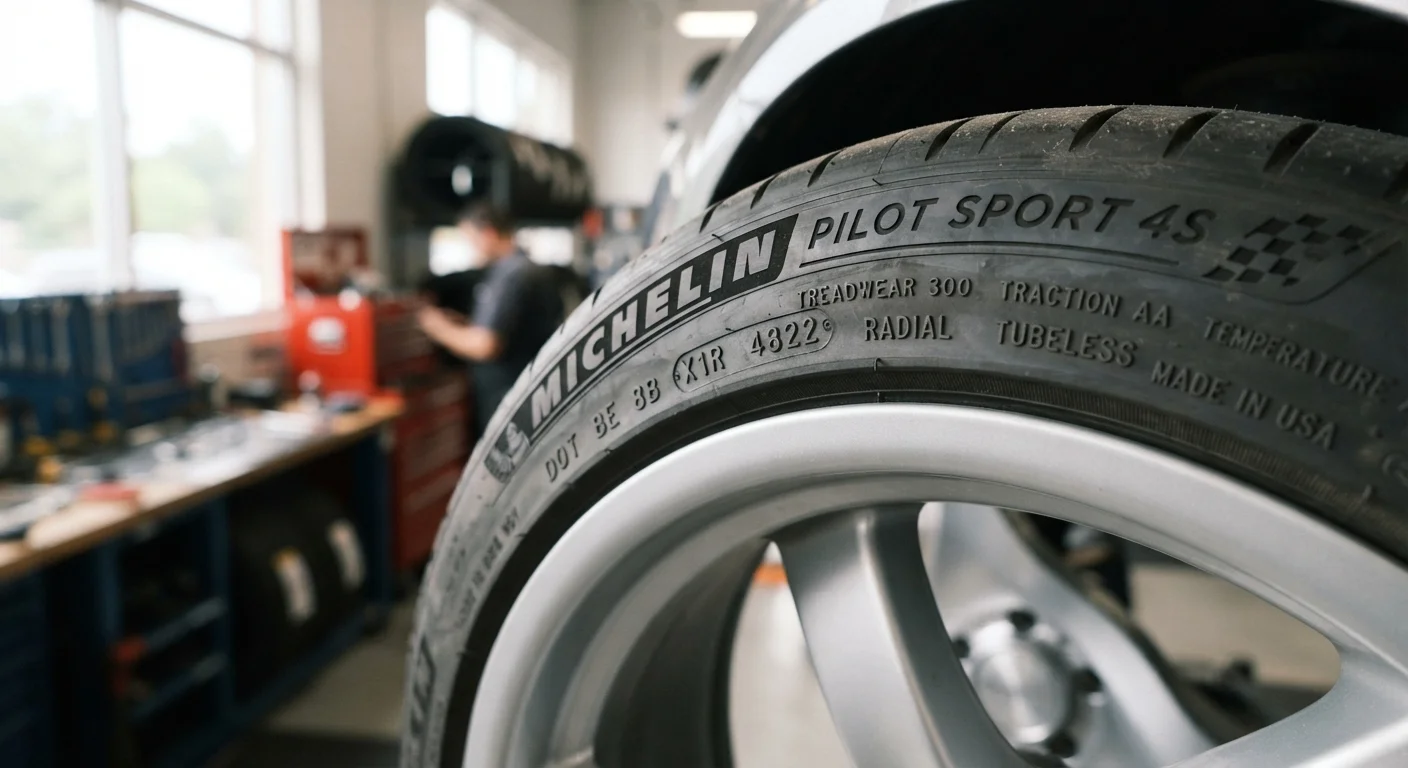
Photo credit: PrimeFaqs.com | Trending And Accurate Content
In this article
Those numbers and letters on your tire aren't random. Learn how to decode tire size, load rating, speed rating, and age markings.
Key Takeaways
- Tire sidewalls contain a standardized code that tells you size, load capacity, speed rating, and age.
- The DOT date code reveals how old a tire is - age matters even if tread looks fine.
- Mismatched or expired tires are a safety risk you can identify yourself without any tools.
- Your vehicle's recommended tire size lives on the door jamb placard, not just the manual.
What You'll Need Before You Start
Reading a tire sidewall requires no tools - just good lighting, a clean tire surface, and a few minutes. Kneel beside one of your tires and locate the outward-facing sidewall. Most of the critical markings are molded into the rubber in raised or recessed letters.
What you will need
If your tires are heavily caked with dirt or brake dust, wipe the sidewall with a damp cloth so the numbers are legible. This whole process takes about five minutes per tire.
Decoding the Tire Size String
The most prominent marking on any tire is the size code - a string that looks something like P215/65R16. Here's what each part means:
- P - The service type. "P" stands for passenger vehicle. "LT" means light truck. Some tires omit this letter entirely, indicating a European metric standard with slightly different load assumptions.
- 215 - Section width in millimeters. This is how wide the tire is from sidewall to sidewall at its widest point.
- 65 - Aspect ratio. This number is a percentage: the sidewall height is 65% of the section width. A lower number means a shorter, stiffer sidewall - common on performance vehicles.
- R - Construction type. "R" stands for radial, which is standard on virtually all modern passenger tires.
- 16 - Wheel diameter in inches. This must match your rim size exactly.
Your vehicle's door jamb sticker - on the driver's side door edge - lists the manufacturer-recommended tire size. If the tire on your car doesn't match that placard, it's worth having a qualified tire technician evaluate whether it's appropriate for your vehicle. For a broader look at vehicle documentation, see our guide on understanding your owner's manual.
Locate the full size code
Find the largest alphanumeric string on the sidewall - it will follow the format P215/65R16 or similar. Read left to right: service type, section width, aspect ratio, construction, and wheel diameter. Write it down or photograph it for reference.
Read the load index and speed rating
Immediately after the wheel diameter, note the two-character suffix such as 91H. Look up the load index number in a standard load index table (widely available from tire industry sources) to find the corresponding weight capacity. Confirm the letter speed rating meets your vehicle's requirement, which is listed in your owner's manual or door jamb placard.
Find and interpret the DOT date code
Scan the sidewall for the letters DOT followed by a longer alphanumeric string. The last four digits are what matter: the first two indicate the week of manufacture (01-52), and the last two indicate the year. For example, 0421 means the tire was made in the 4th week of 2021.
Compare your findings to the door jamb placard
Open the driver's side door and locate the sticker on the door edge or jamb. It lists the vehicle manufacturer's recommended tire size and inflation pressure. Confirm that the tires currently on your vehicle match the listed size code. If they don't match, consult a qualified tire technician before your next highway trip.
Load Index, Speed Rating, and Age
After the size string, you'll typically see two more characters - for example, 91H. These are the load index and speed rating.
The load index (the number) corresponds to the maximum weight the tire can safely support when properly inflated. A load index of 91 equates to roughly 1,356 lbs per tire. These values follow a standardized chart published by tire industry organizations - you don't need to memorize the table, but the number on your replacement tire should meet or exceed the number on your current tire.
The speed rating (the letter) indicates the maximum sustained speed the tire is designed to handle. Common ratings include S (112 mph), T (118 mph), H (130 mph), V (149 mph), and W (168 mph). Again, a replacement tire's speed rating should match or exceed the original. Never downgrade a speed rating without consulting a tire professional - it affects vehicle handling and safety at highway speeds.
Tread Depth Isn't the Whole Story
A tire can look perfectly fine and still be unsafe due to age-related rubber degradation. Sidewall cracking, brittleness, or a DOT date older than six to ten years are warning signs worth discussing with a tire professional - even if the tread hasn't worn down to the wear bars.
Finally, look for the DOT code - a sequence beginning with "DOT" and ending in a four-digit number such as 2319. Those last four digits are the week and year of manufacture: week 23 of 2019 in this example. Many industry safety guidelines suggest replacing tires that are six to ten years old regardless of tread depth, because rubber degrades with age even when a tire looks serviceable. Check all four tires - a used car may have mismatched ages across its wheels.
Once you understand what your tires are telling you, the logical next step is knowing how to maintain them properly. Our guide on tire rotation, balancing, and alignment explains how these three services differ and when each is needed. And if you want to sharpen your overall vehicle literacy, the Driving & Safety hub covers essential road-safety fundamentals.

Author
Automotive Basics Editorial Team
Automotive Basics Editorial Team is the collective byline for our editorial team and contributor network. Articles published under this byline or an editorial pen name are researched, written, and reviewed according to our editorial standards for clarity, consistency, and independence before publication.
View all articles →