
Keeping a Vehicle Maintenance Log: Why the Paper Trail Matters
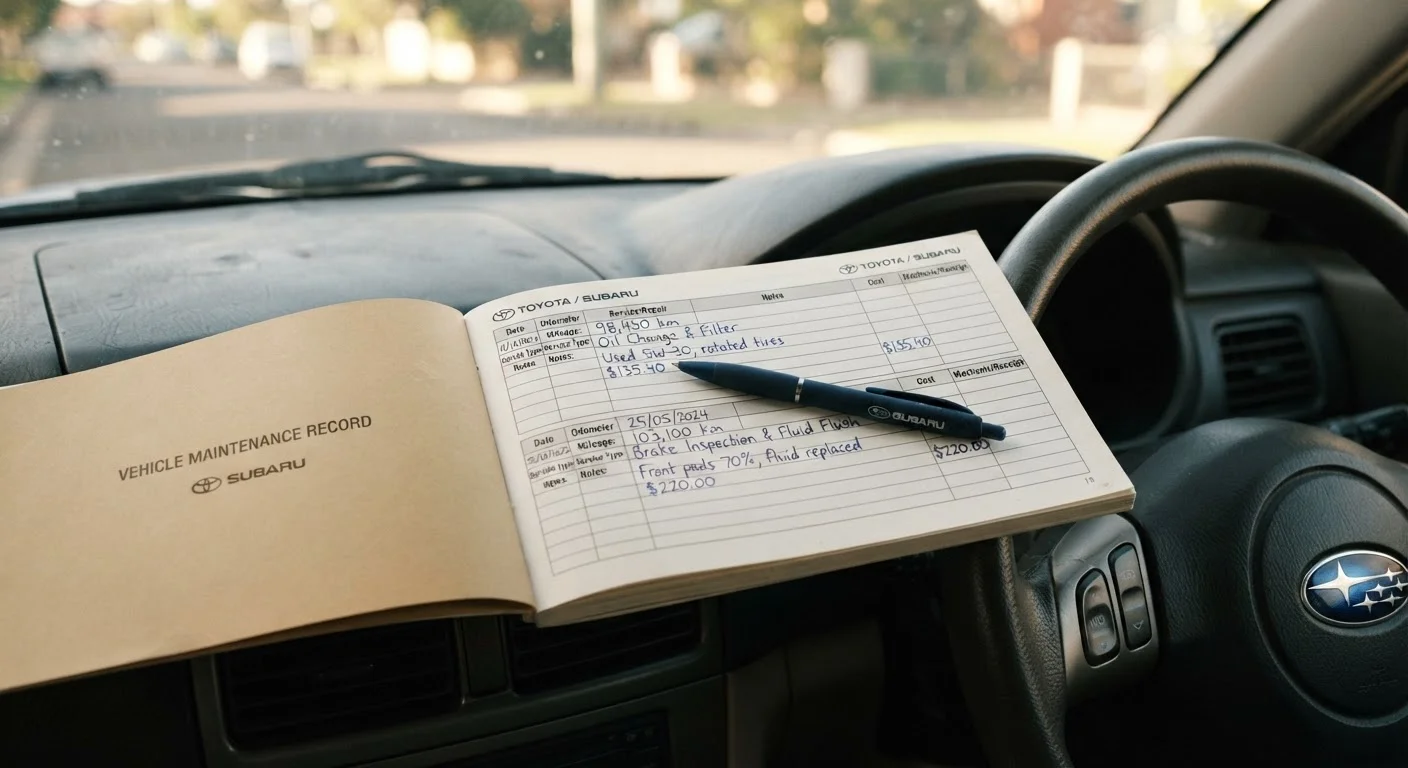
Photo credit: PrimeFaqs.com | Trending And Accurate Content
In this article
A consistent maintenance record helps you catch patterns, stay on schedule, and document your car's history for future reference.
Key Takeaways
- A maintenance log creates a chronological record of every service your vehicle has received.
- Documented history can support warranty claims, mechanic diagnoses, and resale negotiations.
- Logs help you spot recurring problems or service intervals that your vehicle is approaching.
- Both paper notebooks and digital apps can work - consistency matters more than format.
- Every entry should include the date, mileage, service performed, and cost paid.
What a Maintenance Log Actually Does for You
A vehicle maintenance log is exactly what it sounds like: a running record of every oil change, tire rotation, brake inspection, and repair your car has been through. What it does for you, though, goes well beyond simple record-keeping.
Without a log, your car's service history exists only in fragmented receipts, faded stickers, and your own memory. That's a liability - not just organizationally, but financially. Mechanics rely on service history to make informed diagnoses. Warranty administrators may require documented proof of maintenance. And when you eventually sell the vehicle, a written record can be one of the most persuasive things you show a potential buyer.
If you're newer to ownership, the first-time owner's orientation covers the core tasks worth logging from day one. Starting the habit early is far easier than reconstructing a history later.
What to Record - and How to Record It
Every log entry should answer four basic questions: When? (date), Where are you in the vehicle's life? (odometer mileage), What happened? (service or repair description), and What did it cost? (parts, labor, or both).
You don't need specialized forms. A small notebook kept in the glovebox works. So does a spreadsheet, a notes app, or a dedicated vehicle maintenance app. What matters is that entries are made consistently - ideally on the same day as the service - and that the log stays with the car rather than getting filed away at home.
Your owner's manual lists manufacturer-recommended service intervals for your specific vehicle. Cross-referencing those intervals with your log entries is the clearest way to see what's due and what's been handled.
Patterns the Log Reveals Over Time
One of the less obvious benefits of a maintenance log is pattern recognition. A single brake inspection tells you little. Three brake inspections over 18 months, logged with mileage, tells you exactly how fast your pads are wearing and whether that rate is normal for your driving habits.
The same applies to fluid top-offs, battery replacements, and recurring warning lights. When a mechanic asks, "Has this happened before?" a log gives you a factual answer instead of a guess. That precision can shorten diagnostic time and prevent unnecessary repairs.
Drivers trying to keep a high-mileage vehicle running reliably find maintenance logs especially valuable - patterns in a well-documented car are far easier to act on before they become expensive failures. The most costly overlooked repairs are often ones that showed early warning signs in previous service records.
Keeping the Habit When Life Gets Busy
The single most common reason maintenance logs fall apart is friction - the service gets done but recording it feels like an extra step nobody gets around to. A few structural choices reduce that friction significantly.
Keep the log physically inside the vehicle. Attach a pen to the notebook. If you use a digital tool, choose one that lets you make an entry in under a minute. Set a phone reminder for the approximate date of your next scheduled service so the log doesn't go dormant between visits.
The broader habits of smart car ownership share this same principle: small, consistent actions protect against large, avoidable costs. A maintenance log is one of the lowest-effort, highest-return habits a driver can build - and one that compounds in value the longer you maintain it.
This article provides general informational guidance about vehicle record-keeping practices. It is not a substitute for advice from a qualified mechanic regarding your specific vehicle's condition or service needs.

Author
Automotive Basics Editorial Team
Automotive Basics Editorial Team is the collective byline for our editorial team and contributor network. Articles published under this byline or an editorial pen name are researched, written, and reviewed according to our editorial standards for clarity, consistency, and independence before publication.
View all articles →