
Passport vs. Passport Card: Which One You Actually Need
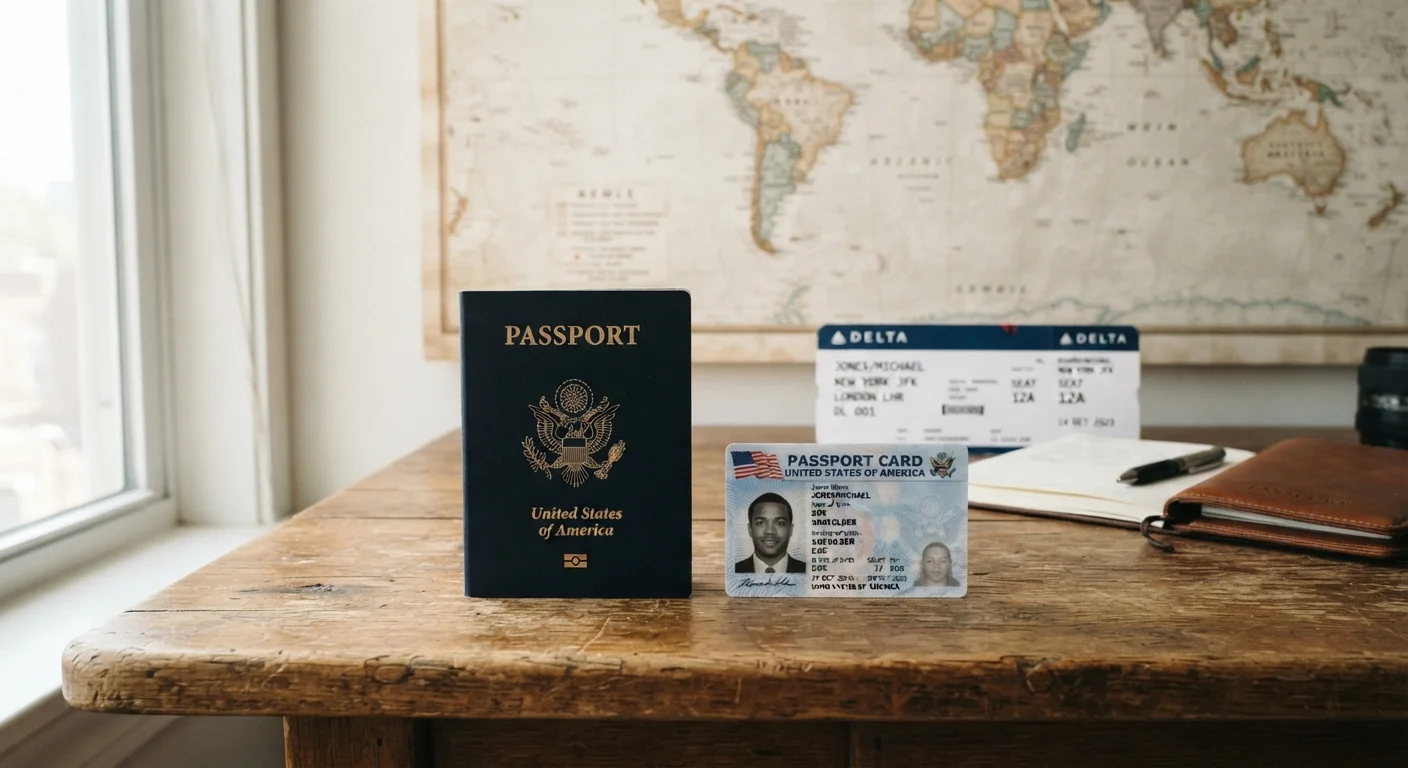
Photo credit: PrimeFaqs.com | Trending And Accurate Content
In this article
A clear side-by-side look at U.S. passport books and passport cards—what each covers, where each is accepted, and how to decide.
Key Takeaways
- The passport book is accepted for all international travel, including air travel; the card is not valid for international flights.
- The passport card works at land and sea border crossings with Canada, Mexico, Bermuda, and the Caribbean.
- Passport cards cost significantly less than books and are easier to carry daily.
- Both documents require the same application process through the U.S. Department of State.
- Many travelers apply for both simultaneously to cover every scenario without paying full fees twice.
- Always verify entry requirements with official government sources before departing - rules can change.
What Each Document Actually Is
The U.S. Passport Book is the standard 28- or 52-page booklet issued by the U.S. Department of State. It serves as your primary identity document abroad, accepted for every mode of international travel - air, land, and sea - by virtually every country in the world.
The U.S. Passport Card, introduced in 2008, is a credit-card-sized document valid only for travel by land or sea between the United States and Canada, Mexico, Bermuda, and the Caribbean. It cannot be used for international air travel under any circumstances. Think of it as a limited-purpose credential designed specifically for cross-border commuters and regional cruise travelers.
Both are issued by the State Department, carry the same 10-year validity for adults (5 years for children under 16), and require the same DS-11 or DS-82 application forms. The core difference isn't prestige - it's pure geography and mode of transport. Before you commit, it helps to honestly map out your travel habits. Our pre-trip planning checklist can help you think through exactly what documents your upcoming trips will require.
| Criterion | Passport Book | Passport Card |
|---|---|---|
| International air travel | ✓ Accepted worldwide | ✗ Not valid |
| Land border crossings (Canada & Mexico) | ✓ Accepted | ✓ Accepted |
| Sea ports of entry (Caribbean, Bermuda) | ✓ Accepted | ✓ Accepted |
| Physical size | Standard booklet | Wallet/credit-card size |
| Validity (adults) | 10 years | 10 years |
| Application process | DS-11 or DS-82 form | Same DS-11 or DS-82 form |
| Additional fee when applying together | Full application fee | Reduced add-on fee |
| Best use case | All international travel | Land/sea border crossings only |
Cost, Convenience, and the Case for Carrying Both
Cost is where the passport card earns serious attention. As of the State Department's current fee schedule, a passport book for a first-time adult applicant runs considerably more than the card. When you apply for both simultaneously, you pay only the card's add-on fee rather than two full application fees - making it a relatively inexpensive way to add a backup credential to your wallet.
The card's wallet-friendly size is a genuine practical advantage. Frequent land-border crossers - residents of border states, snowbirds driving into Mexico, Canadians who commute - often prefer carrying the card daily and keeping the book safely at home, reducing the risk of losing their primary travel document.
145M+
Valid U.S. passports in circulation
According to U.S. State Department data, over 145 million Americans hold a currently valid passport book or card.
$65
Approximate add-on fee for passport card
When applying for a passport card alongside a book for the first time, applicants pay a reduced add-on execution fee per State Department published rates - verify current fees at travel.state.gov.
10-13 weeks
Routine processing time estimate
The State Department has noted that routine passport processing can take 10-13 weeks; expedited service reduces this, but timelines vary and should be confirmed before applying.
That said, the book's versatility is hard to argue with. If your travel plans ever shift from a road trip to an international flight, or if you find yourself at an unexpected airport re-routing, the book has you covered. For most American travelers, especially those just getting started, planning their first international trip, the passport book should be the foundational document, with the card as an optional add-on.
How to Decide - and What to Verify Before You Go
The decision comes down to three honest questions: Where are you going? How are you getting there? How often do you travel? If your answer involves any international flight, the book is non-negotiable. If you're a frequent land-border crosser who rarely flies internationally, the card alone might serve you well - though most travel advisors suggest keeping at least a valid book somewhere accessible.
One scenario where both documents make clear sense: closed-loop cruises. Many cruises departing from U.S. ports that stay within the Western Hemisphere technically permit re-entry with just a passport card. But if an emergency requires you to fly home mid-cruise from a foreign port, only the book will get you on that flight. The U.S. Department of State recommends that cruise passengers carry a valid passport book for exactly this reason.
Whatever you decide, always verify entry requirements directly with official government sources - the U.S. State Department's travel website and the destination country's embassy or consulate - before you depart. Requirements for specific documents, visas, and health records can change. Review our verification checklist to make sure nothing slips through the cracks before you leave home.
This article provides general travel information for educational purposes. Always confirm current entry requirements, document validity rules, and travel advisories through official U.S. government and destination-country sources before traveling.

Author
Travel & Trips Editorial Team
Travel & Trips Editorial Team is the collective byline for our editorial team and contributor network. Articles published under this byline or an editorial pen name are researched, written, and reviewed according to our editorial standards for clarity, consistency, and independence before publication.
View all articles →