
How Compound Interest Works - Against You in Debt, For You in Savings
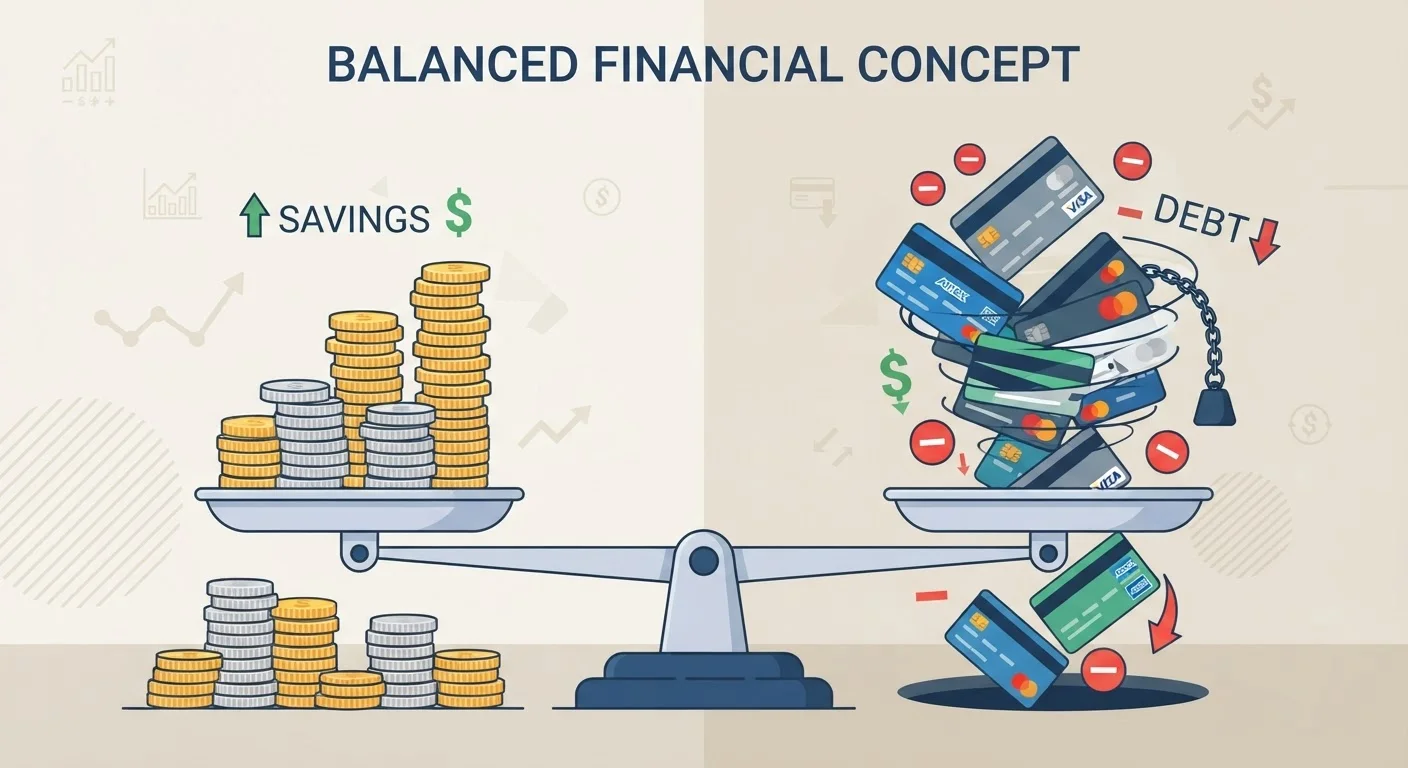
Photo credit: PrimeFaqs.com | Trending And Accurate Content
In this article
The same force that grows your savings over time can deepen your debt. A clear explanation of compound interest and why direction matters.
Key Takeaways
- Compound interest grows your balance by charging or crediting interest on previously earned or accrued interest.
- On savings accounts, compounding works in your favor - your money earns more the longer it stays invested.
- On credit card and loan debt, compounding works against you - unpaid interest becomes new principal that itself accrues interest.
- The frequency of compounding (daily, monthly, annually) significantly affects how fast balances change.
- Paying more than the minimum on debt and starting savings early are the most direct ways to harness compounding's direction.
The Same Math, Two Very Different Outcomes
Compound interest doesn't care whether it's helping you or hurting you. It simply does what math dictates: it calculates interest on a growing base, not just on the original amount. That one distinction - base that grows versus base that stays fixed - is what makes compounding so consequential.
When you deposit money into a savings account, interest is added to your balance. Next period, interest is calculated on that new, slightly larger balance. The cycle repeats. Over years and decades, the growth becomes significant and increasingly self-sustaining.
Debt runs the same cycle in reverse. When you carry a credit card balance and don't pay it in full, unpaid interest is added to your balance. That higher balance is then subject to more interest the following period. The longer a balance goes unpaid, the faster it can grow - even without any new spending.
Daily
How often most credit cards compound interest
Most major credit card issuers apply a daily periodic rate to your outstanding balance, making unpaid balances grow faster than monthly compounding would suggest.
~$1,000+
Extra interest paid on a $3,000 balance with minimum payments
Consumer finance analyses consistently show that making only minimum payments on a $3,000 credit card balance at a typical APR can add well over $1,000 in interest charges before the balance is cleared.
10+ years
Compounding advantage of starting savings a decade earlier
Widely cited retirement planning projections illustrate that beginning contributions a decade earlier - even at lower amounts - often produces comparable or greater balances than starting later with higher contributions.
How Compounding Works Against You in Debt
Credit cards are among the most aggressive compounders consumers encounter. Many apply interest daily using a daily periodic rate derived from the card's APR. If your APR is 24%, your daily rate is roughly 0.066%. Applied to a $3,000 balance every day, that adds up to meaningful charges well before the end of the month - and if you only make the minimum payment, most of it covers interest rather than principal.
The practical result is that balances can feel nearly impossible to reduce. Minimum payments are typically calculated as a small percentage of the outstanding balance, which means they shrink as the balance shrinks - but slowly, and while interest continues accumulating. Paying only minimums on high-rate revolving debt can extend repayment by years and multiply the total cost of what you borrowed.
Structured loans - mortgages, auto loans - generally don't compound in the same way. However, interest is still recalculated each month on the remaining principal, so the earlier payments in an amortization schedule are weighted more heavily toward interest. Understanding this helps explain why extra payments made early in a loan's life have an outsized impact on total cost.
Pay More Than the Minimum Whenever Possible
Even a modest increase above the minimum payment on a credit card can dramatically reduce the total interest you pay and shorten the repayment timeline. If you can direct an extra $25-$50 per month to a high-rate balance, the compound math shifts meaningfully in your favor. Every dollar applied to principal is a dollar that will no longer generate interest charges.
For a deeper look at which balances to attack first, see our guide to prioritizing high-interest vs. low-interest debt.
How Compounding Works For You in Savings
On the savings side of the ledger, compounding is a patient but powerful ally. A savings account that compounds interest monthly adds earned interest to your balance each month. The next month's interest is calculated on that larger amount. The difference in any single month is small, but extended over years, the effect is substantial.
This is why financial educators consistently emphasize starting early. A person who begins saving in their mid-20s - even with modest amounts - can accumulate more over time than someone who waits until their late 30s and contributes larger amounts. Time is the variable that maximizes compound growth. The longer the money compounds, the greater the return.
Retirement accounts, savings accounts with competitive yields, and certificates of deposit all leverage this mechanism. The key is consistency: regular contributions combined with leaving the balance undisturbed allow compounding to do the heavy lifting. Withdrawing funds frequently or spending interest earned resets the growth cycle and diminishes the long-term benefit.
Balancing Both: A Practical Lens
Understanding that compound interest is directional - helpful or harmful depending on context - frames one of the most common personal finance questions: should you save or pay down debt first?
The clearest answer comes from comparing rates. If your credit card charges 22% annually and your savings account yields 4%, compound interest is working against you at a rate that far outpaces what it's adding to your savings. In that scenario, directing extra dollars toward the high-rate debt produces a guaranteed return equivalent to that interest rate - something no savings account can reliably match.
That said, eliminating all savings to pay down debt isn't always wise. Unexpected expenses don't pause for your debt payoff plan. Most financial educators suggest maintaining at least a small emergency cushion alongside debt repayment. Our article on building an emergency fund while carrying debt walks through that trade-off in detail.
For structured approaches to tackling multiple balances, the debt avalanche and debt snowball methods each use interest rate logic in different ways to accelerate payoff. And if you're considering liquidating savings to clear a balance in one move, work through the considerations in our checklist: before you dip into savings to pay off debt.
Compound interest doesn't stop working while you decide. The sooner you direct it intentionally - reducing the balances it's penalizing, increasing the savings it's rewarding - the more that math works in your favor.
This article is for general informational and educational purposes only and does not constitute personalized financial advice. Consult a qualified financial professional for guidance specific to your situation.
Frequently Asked Questions

Author
Personal Finance Editorial Team
Personal Finance Editorial Team is the collective byline for our editorial team and contributor network. Articles published under this byline or an editorial pen name are researched, written, and reviewed according to our editorial standards for clarity, consistency, and independence before publication.
View all articles →