
Common Myths About Debt That May Be Holding Your Finances Back
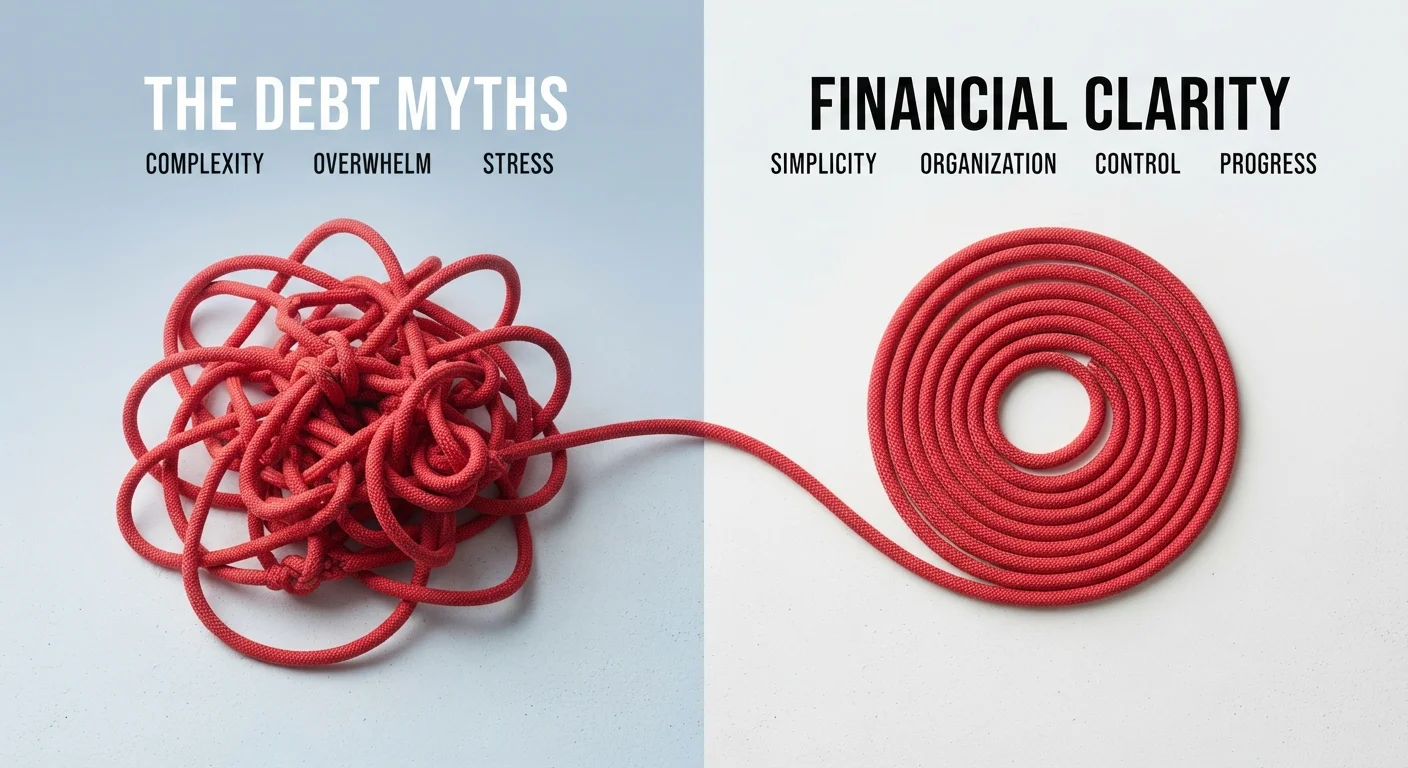
Photo credit: PrimeFaqs.com | Trending And Accurate Content
From 'all debt is bad' to 'you must be debt-free to save' — these widespread misconceptions can lead to poor financial decisions.
Key Takeaways
- Not all debt is harmful - low-interest, purposeful debt can support long-term financial goals.
- You don't need to be completely debt-free before starting to save or build an emergency fund.
- Paying only the minimum balance isn't always reckless, but it significantly extends repayment timelines.
- Carrying a credit card balance does not improve your credit score - it costs you interest.
- Debt repayment and saving can happen simultaneously with the right strategy and budget.
Why Debt Myths Are Financially Costly
Misconceptions about debt don't just create anxiety - they can drive real financial mistakes. Someone who believes all debt must be eliminated before saving may never build an emergency fund, leaving them one unexpected bill away from taking on even more high-interest debt. Someone who thinks carrying a credit card balance builds credit may pay unnecessary interest for years without any actual benefit to their score.
These myths tend to persist because they contain a grain of intuitive logic. Of course debt sounds bad. Of course paying it off sounds responsible. But personal finance rarely rewards all-or-nothing thinking. Understanding what's actually true about debt - and what isn't - can help you make more confident, balanced decisions. For a broader look at how misconceptions can derail financial planning from the start, see our piece on common budgeting myths.
Myth
All debt is bad and should be avoided or eliminated as fast as possible.
Fact
Debt is a tool. Used deliberately, low-interest debt - such as a mortgage or subsidized student loan - can help build wealth or access education that increases earning potential.
The blanket belief that all debt is harmful leads some people to pay off low-rate loans aggressively while neglecting retirement contributions or an emergency fund - a trade-off that often costs more in the long run. Financial planning generally distinguishes between debt that finances appreciating assets or skills and debt that finances consumption at high interest rates. Context and cost matter far more than the mere presence of a balance.
Myth
You must be completely debt-free before you start saving money.
Fact
Building savings while carrying manageable debt is generally the recommended approach - especially for establishing an emergency fund.
If you delay saving until every balance is cleared, you leave yourself without a financial buffer. A single emergency - a car repair, a medical bill, an unexpected job loss - can force you back into high-interest debt, erasing your progress. Most financial guidance suggests maintaining at least a basic emergency reserve even while actively repaying debt. The Budgeting Basics hub offers practical frameworks for allocating money to both goals simultaneously.
Myth
Carrying a small credit card balance improves your credit score.
Fact
Carrying a balance does not help your credit score and costs you interest. Paying your statement in full each month is both cheaper and better for your credit profile.
This myth is widespread but demonstrably false. Credit scoring models reward on-time payments and a low credit utilization ratio - neither of which requires carrying a balance that accrues interest. Paying in full each billing cycle avoids interest charges entirely while still demonstrating responsible credit use. There is no scoring benefit to paying interest to your card issuer.
Myth
Making the minimum payment is fine as long as you pay something each month.
Fact
Minimum payments keep your account in good standing but dramatically extend repayment time and increase total interest paid - sometimes by thousands of dollars.
Minimum payment structures are typically designed to keep balances revolving, not to help borrowers pay off debt efficiently. On a $5,000 balance at 20% APR, paying only the minimum could take well over a decade to resolve and cost more in interest than the original balance. Paying as much above the minimum as your budget allows - even a modest additional amount - meaningfully shortens the repayment timeline and reduces total cost.
Myth
Debt consolidation always saves money and solves the underlying problem.
Fact
Consolidation can lower your interest rate and simplify payments, but it doesn't address spending habits - and it can backfire if it extends your repayment term significantly.
Consolidating multiple high-rate debts into a single lower-rate loan can be genuinely useful, but the math depends on the new interest rate, loan term, and any associated fees. Extending repayment over a longer period to lower monthly payments may reduce the monthly burden while increasing lifetime interest costs. More importantly, consolidation doesn't correct the habits or circumstances that created the debt - without behavioral change, balances can rebuild on top of the new loan.
Balancing Debt Repayment and Saving
One of the most practical shifts you can make is recognizing that paying down debt and building savings are not mutually exclusive goals. A common framework is to prioritize high-interest debt aggressively while maintaining at least a small monthly contribution to an emergency fund. Even a modest cash cushion - often cited as one to three months of essential expenses - can prevent a setback from becoming a debt spiral.
78%
Americans living paycheck to paycheck
According to LendingClub's 2023 consumer survey, a significant majority of U.S. adults report having little or no financial cushion between income and expenses.
20%+
Average credit card APR
Federal Reserve data has shown average credit card interest rates exceeding 20% APR in recent years, making high-rate balances among the most costly forms of consumer debt.
The order in which you tackle different debts also matters considerably. A mortgage at 4% interest and a credit card at 22% APR are not the same financial problem and shouldn't be treated identically. Our guide on prioritizing high-interest versus low-interest debt walks through how interest rates, loan types, and tax treatment affect the right sequence for your situation.
Before making any large lump-sum payment from savings, it's also worth pausing to consider the full picture. Check these factors before dipping into savings to pay off debt - the decision isn't always as straightforward as it appears. And if you've paid off debt before only to rebuild it, you may be caught in a pattern worth examining: traps that keep people cycling in and out of debt are often behavioral, not just mathematical.
High-Interest Debt Demands Priority Attention
Not all debt deserves the same urgency. Credit card balances carrying double-digit interest rates can compound quickly and cost far more than the original purchase if left unaddressed. While building savings in parallel is important, directing extra dollars toward your highest-rate balances first - before lower-rate obligations like auto loans or mortgages - is a widely supported approach for minimizing total interest paid. Always verify what's right for your specific situation with a licensed financial adviser.
This article is for general informational and educational purposes only and does not constitute personalized financial advice. Consult a qualified financial professional regarding your specific circumstances.

Author
Personal Finance Editorial Team
Personal Finance Editorial Team is the collective byline for our editorial team and contributor network. Articles published under this byline or an editorial pen name are researched, written, and reviewed according to our editorial standards for clarity, consistency, and independence before publication.
View all articles →