
The Five Factors Behind Every FICO Score
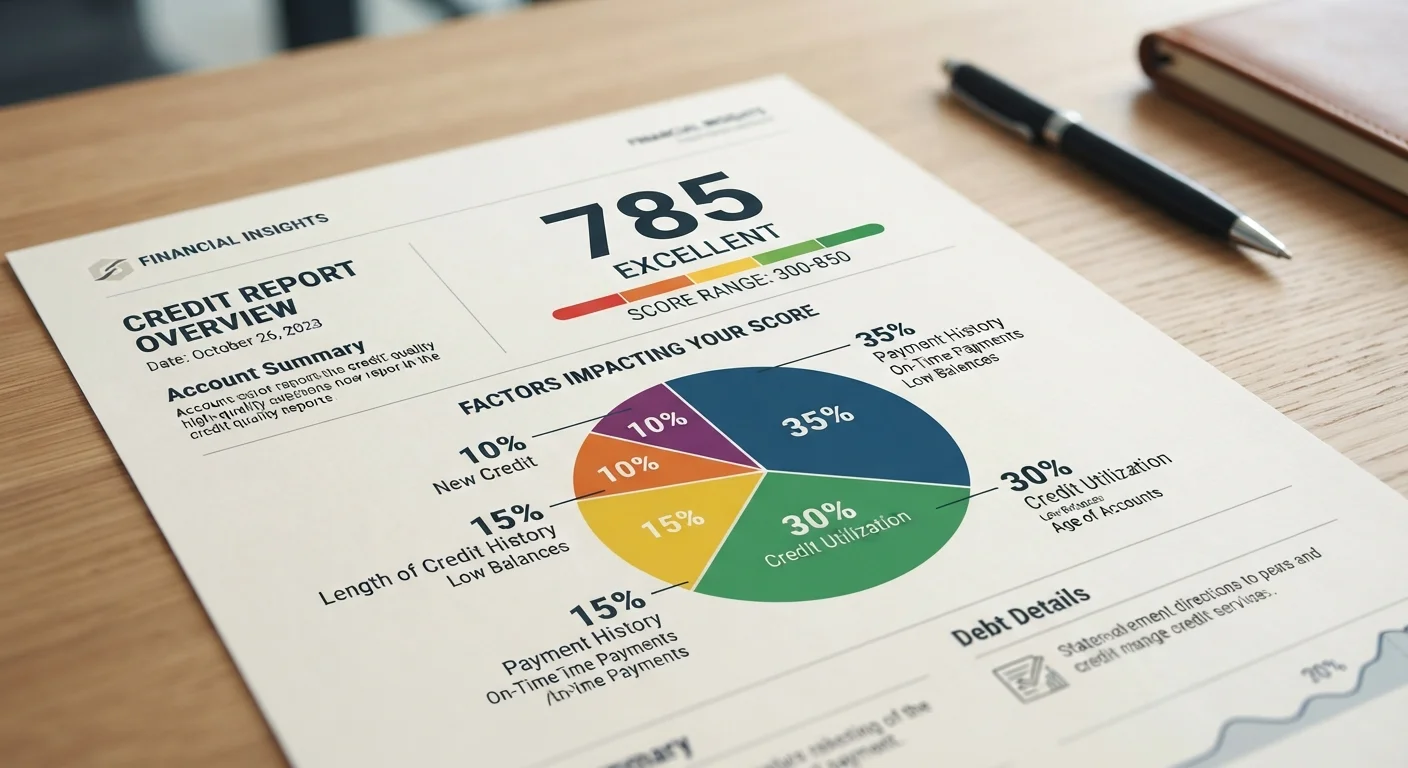
Photo credit: PrimeFaqs.com | Trending And Accurate Content
In this article
Payment history, utilization, length of history — each factor carries a different weight. Here's how FICO actually calculates your three-digit number.
Why the Five-Factor Framework Matters
Your FICO score - the three-digit number most lenders rely on - isn't a mystery box. It's a weighted formula built from five specific categories of credit behavior. Understanding each category, and the weight it carries, gives you a clear map for building or protecting your score over time.
FICO scores range from 300 to 850. The higher your score, the more favorably lenders tend to view your application - often translating to lower interest rates and better approval odds. As explained in our article what your credit score actually measures, a score reflects patterns in your borrowing history, not your income, wealth, or overall financial health.
Here's how FICO weighs each of the five factors, according to FICO's published scoring guidelines.
Breaking Down Each Factor
1. Payment History - 35%
The single largest factor. Lenders want to know whether you pay on time. Late payments, collections, charge-offs, bankruptcies, and foreclosures all damage this category. Even one payment reported 30 or more days late can have a meaningful negative impact. Consistent, on-time payments across all accounts - credit cards, loans, and installment plans - strengthen this factor over time.
2. Amounts Owed (Credit Utilization) - 30%
This measures how much of your available revolving credit you're currently using. A $3,000 balance on a card with a $10,000 limit represents 30% utilization. Most credit guidance suggests keeping utilization below 30%, though lower is generally better. This factor is highly responsive - paying down balances can improve it relatively quickly. See our deeper look at credit utilization and how it's calculated for more detail on thresholds and common misconceptions.
3. Length of Credit History - 15%
FICO considers how long your oldest account has been open, how long your newest account has been open, and the average age of all accounts. Longer histories generally help your score. This is why closing an old account - even one you don't use - can sometimes reduce your average account age and nudge your score downward.
4. Credit Mix - 10%
Having a variety of account types - revolving credit (cards), installment loans (auto, mortgage, student), and retail accounts - signals to lenders that you can manage different borrowing structures. This factor carries less weight and shouldn't push you to open account types you don't need. It rewards existing variety rather than demanding it.
5. New Credit - 10%
When you apply for credit, a hard inquiry is recorded on your report. Multiple hard inquiries within a short window - especially for different types of credit - can slightly lower your score. FICO does allow for rate-shopping: multiple mortgage or auto loan inquiries made within a short period (typically 14-45 days depending on the FICO version) are often counted as a single inquiry.
This article is for general informational purposes only and does not constitute personalized financial or credit advice. Consult a qualified financial professional for guidance specific to your situation.
Using This Framework to Your Advantage
Because payment history and amounts owed together account for 65% of your score, those two areas deserve the most attention. Autopay can help you protect payment history. Paying down revolving balances - even partially - can improve your utilization ratio before a major credit check.
The remaining 35% - history length, credit mix, and new credit - are worth understanding, but they typically respond more slowly to deliberate action. Avoid applying for multiple new accounts in a short period if you're preparing for a significant financial milestone like a home loan application. For a practical checklist, see checking your credit before a major financial milestone.
It's also worth remembering that lenders evaluate far more than your FICO score. Income, debt-to-income ratio, and employment history all factor into underwriting decisions - as covered in our guide on how banks decide whether to approve a loan application. And some habits that seem harmless - like carrying small balances or avoiding credit altogether - can quietly erode a solid score over time. Learn more in habits that quietly damage a good credit score.

Author
Personal Finance Editorial Team
Personal Finance Editorial Team is the collective byline for our editorial team and contributor network. Articles published under this byline or an editorial pen name are researched, written, and reviewed according to our editorial standards for clarity, consistency, and independence before publication.
View all articles →