
Plant-Based Protein vs. Animal Protein: Nutritional Differences Worth Knowing
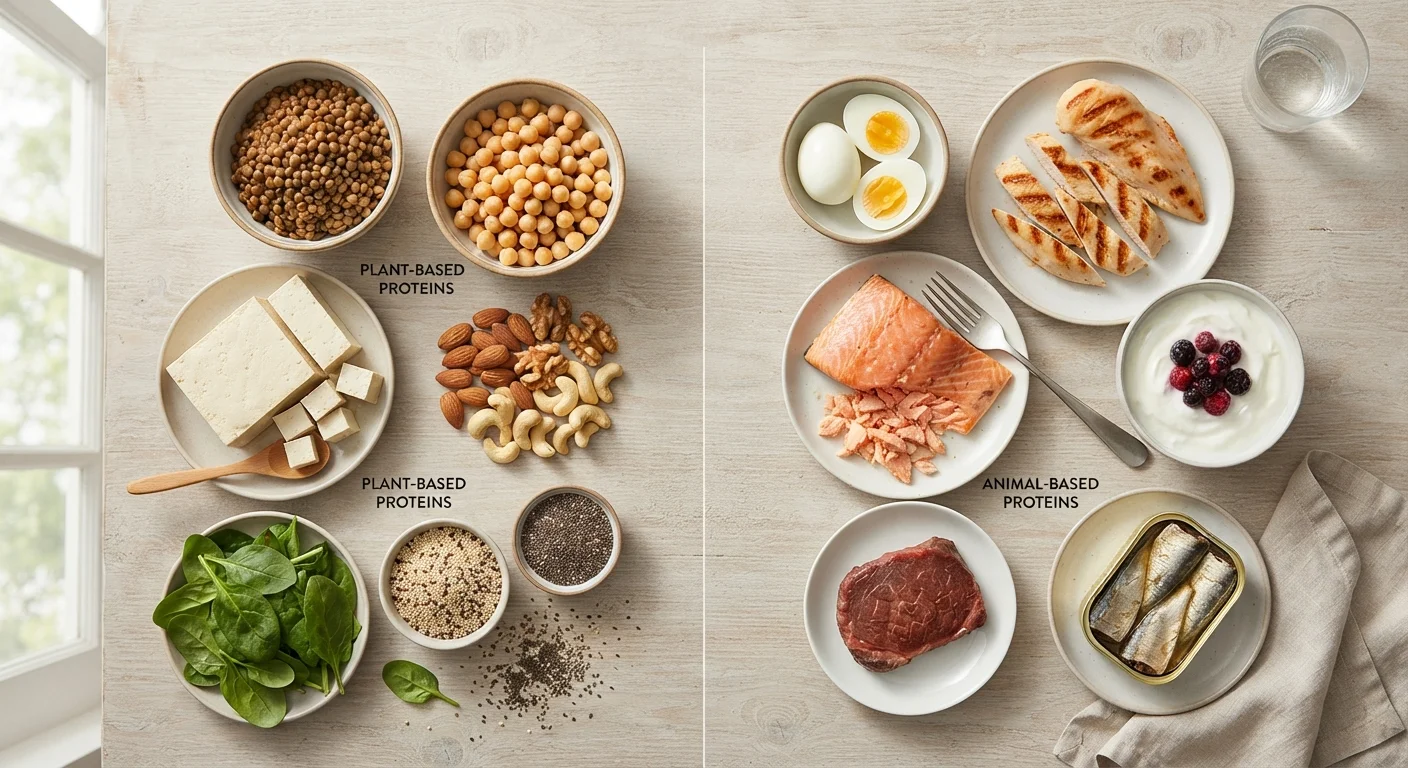
Photo credit: PrimeFaqs.com | Trending And Accurate Content
In this article
A side-by-side look at how plant and animal proteins compare on amino acid profiles, bioavailability, and broader dietary patterns.
Key Takeaways
- Animal proteins contain all nine essential amino acids; most plant proteins are low in one or more.
- Protein bioavailability - how efficiently the body absorbs and uses it - is generally higher for animal sources.
- Combining varied plant proteins throughout the day can meet essential amino acid needs without animal foods.
- Plant proteins typically deliver additional fiber, antioxidants, and phytonutrients absent from most animal sources.
- Neither source is inherently superior; overall dietary pattern and food quality matter most.
- Consult a registered dietitian before making significant dietary changes, especially for specific health conditions.
What Makes a Protein 'Complete'?
Proteins are made of amino acids - organic compounds your body uses to build muscle, produce enzymes, and support immune function, among dozens of other roles. Of the 20 amino acids involved in human biology, nine are considered essential: your body cannot synthesize them, so they must come from food.
This is where the plant-versus-animal distinction becomes nutritionally meaningful. Animal proteins - meat, poultry, fish, eggs, and dairy - are complete proteins, meaning they contain all nine essential amino acids in proportions the human body can readily use. Most plant proteins are incomplete, meaning they are low or limited in at least one essential amino acid. For example, grains tend to be low in lysine, while legumes tend to be low in methionine.
Soy and quinoa are notable exceptions: both are complete plant proteins, which is one reason they feature prominently in plant-based nutrition discussions. For everyone else eating a plant-forward diet, the solution is variety - pairing different plant foods across meals naturally covers the full essential amino acid spectrum, a concept well-supported by nutrition science. See how to build a balanced plate for practical guidance on combining food groups effectively.
Bioavailability: How Much Protein Does Your Body Actually Use?
Eating protein and absorbing protein are two different things. Bioavailability refers to how efficiently the body digests, absorbs, and utilizes the protein in a given food. Nutrition scientists use several scoring systems to measure this - the most widely accepted is the PDCAAS and the newer DIAAS, both developed under Food and Agriculture Organization guidelines.
On these scales, animal proteins such as eggs, milk, and whey consistently score at or near the maximum, indicating very high digestibility and amino acid utilization. Many plant proteins score lower, partly because plant cell walls and compounds called antinutrients - including phytates and tannins - can interfere with digestion and mineral absorption.
Antinutrients in Context
The term 'antinutrient' can sound alarming, but these compounds are naturally occurring and found in many nutritious whole foods. Soaking dried beans overnight, cooking legumes thoroughly, and fermenting foods like tempeh or miso are traditional preparation methods that substantially reduce antinutrient content. For most people eating a varied diet, antinutrients do not pose a meaningful nutritional problem.
Cooking, soaking, fermenting, and sprouting plant foods can meaningfully reduce antinutrient levels, improving protein and mineral availability. These are not reasons to avoid plant proteins, but they are worth knowing when building a diet around them.
| Criterion | Plant-Based Protein | Animal Protein |
|---|---|---|
| Amino acid completeness | Usually incomplete (soy/quinoa excepted) | Complete - all 9 essential amino acids |
| Bioavailability (DIAAS) | Generally lower; varies by source | Generally higher; eggs and dairy score highest |
| Fiber content | High - legumes and grains are rich sources | None |
| Saturated fat | Low in most sources | Higher in red/processed meats; lower in fish |
| Vitamin B12 | Not naturally present; supplementation needed | Naturally abundant |
| Iron type | Non-heme (lower absorption rate) | Heme iron (higher absorption rate) |
| Phytonutrients & antioxidants | Present and varied | Largely absent |
| Antinutrient considerations | Phytates, tannins may reduce absorption | Not applicable |
Beyond Amino Acids: What Else Comes With Your Protein?
Protein never arrives alone - it comes packaged with fats, carbohydrates, vitamins, minerals, and other bioactive compounds that vary significantly between sources.
Animal proteins are often rich in vitamin B12, heme iron (a highly absorbable form), zinc, and long-chain omega-3 fatty acids (particularly in fatty fish). Red and processed meats, however, are also associated with higher saturated fat intake; large observational studies have linked high consumption of processed meats with increased cardiovascular risk, though the overall dietary pattern matters considerably.
Plant proteins arrive bundled with dietary fiber, phytonutrients, and antioxidants not found in animal foods. Fiber supports gut microbiome health, blood sugar regulation, and satiety. Legumes in particular deliver iron and zinc, though in non-heme forms that are less readily absorbed than their animal-sourced counterparts. Pairing plant iron sources with vitamin C-rich foods can enhance absorption.
Understanding how food quality fits into these considerations is useful - whole foods versus processed foods explores why source quality matters as much as nutrient composition.
~30%
Higher DIAAS score typical for animal vs. plant proteins
According to FAO/WHO technical guidance, animal proteins such as eggs and dairy consistently score closer to 1.0 on the DIAAS scale, while many plant proteins score in the 0.6-0.8 range.
~29 g
Fiber gap in average American diet
The U.S. Dietary Guidelines Advisory Committee notes most Americans consume roughly 10-15 g of fiber daily, well below the recommended 25-38 g - a gap plant protein foods can help address.
2x
Iron absorption: heme vs. non-heme
Research published in nutritional science literature estimates heme iron (found in animal foods) is absorbed at roughly 15-35%, compared to 2-20% for non-heme iron from plant sources, depending on dietary context.
Putting It Together: Practical Takeaways
The evidence does not support a blanket conclusion that one protein source is universally healthier than the other. What research does consistently point to is the importance of overall dietary pattern: diets rich in a variety of whole foods - whether omnivorous, plant-forward, or fully plant-based - tend to produce better health outcomes than diets built around heavily processed versions of either protein type.
For practical day-to-day eating, a few principles are well-grounded:
- Prioritize whole or minimally processed sources of both plant and animal protein when possible.
- If relying primarily on plant proteins, eat a variety of sources - legumes, whole grains, nuts, seeds, soy - throughout the day rather than depending on a single food.
- If you eat animal proteins, consider the broader nutritional package: fatty fish, eggs, and low-fat dairy tend to have strong overall nutrient profiles.
- People with specific health conditions, pregnancy, or other circumstances should seek personalized guidance from a registered dietitian or qualified healthcare provider.
This article is for general informational and educational purposes only and does not constitute medical or dietary advice. Always consult a qualified healthcare professional or registered dietitian before making significant changes to your diet.

Author
Health & Wellness Editorial Team
Health & Wellness Editorial Team is the collective byline for our editorial team and contributor network. Articles published under this byline or an editorial pen name are researched, written, and reviewed according to our editorial standards for clarity, consistency, and independence before publication.
View all articles →