
Bilingual Upbringing and Academic Development: What the Research Finds
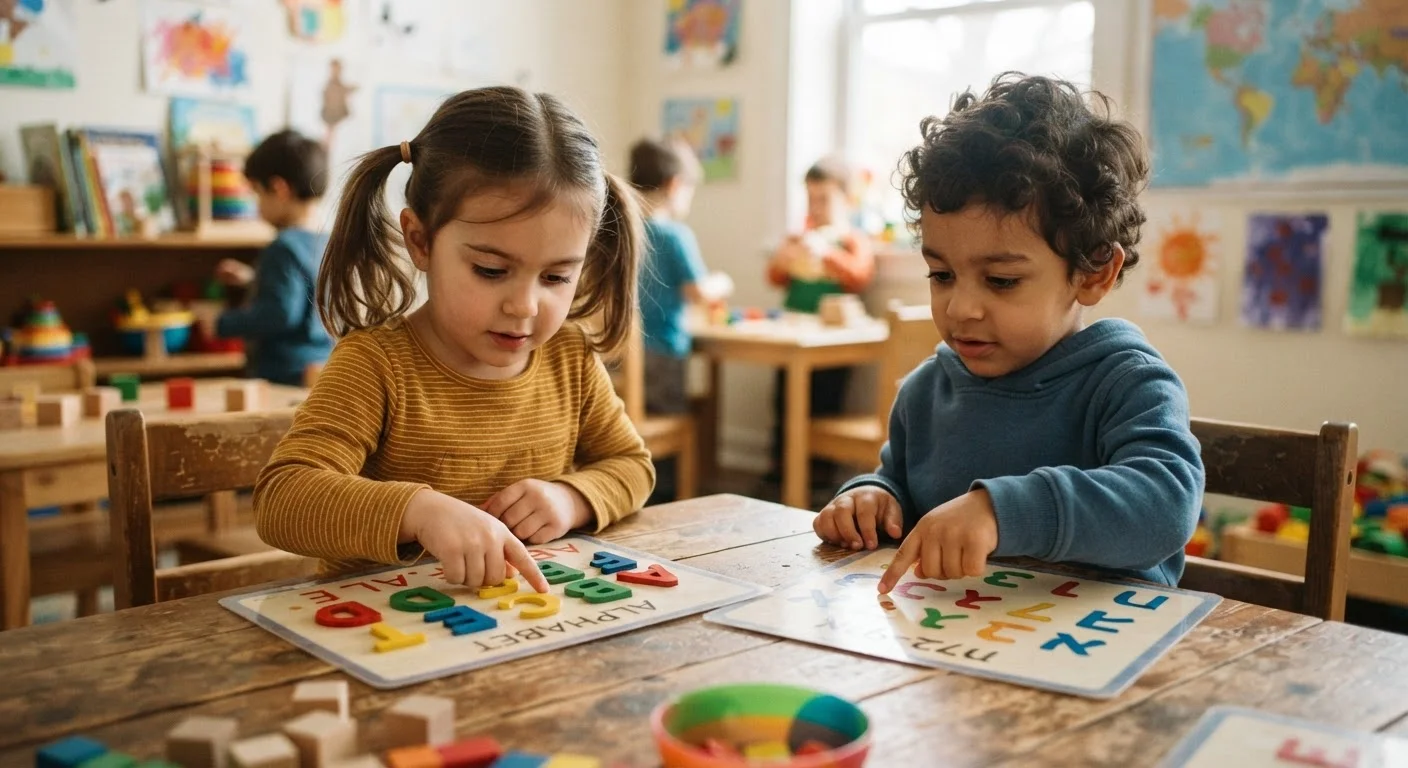
Photo credit: PrimeFaqs.com | Trending And Accurate Content
In this article
Growing up with two languages affects cognition and learning in complex ways. A look at what studies actually show—and what's still debated.
Key Takeaways
- Bilingual children often develop strong executive function skills, including attention control and mental flexibility.
- Early vocabulary in each language may be smaller individually, but total conceptual vocabulary is typically comparable to monolingual peers.
- Academic outcomes for bilingual children vary widely based on language support quality at home and school.
- There is no credible evidence that raising a child bilingually causes language delays or learning difficulties.
- The 'bilingual advantage' in cognition is real but modest-context, consistency, and support matter more than bilingualism alone.
What Researchers Actually Mean by 'Bilingual Development'
The phrase "bilingual upbringing" covers a wide spectrum. A child raised by one Spanish-speaking parent and one English-speaking parent at home has a very different experience from a child who speaks only Mandarin at home and encounters English for the first time in kindergarten. Researchers carefully distinguish between these pathways because the cognitive and academic effects can differ.
Most studies focus on children who use both languages regularly and meaningfully-not those with occasional exposure. When reading research headlines about bilingualism, it is worth checking which population was studied, because findings for heritage language speakers, dual-language school students, and internationally mobile families do not always generalize to one another.
Understanding this variability is the first step for parents who want to apply research findings to their own household. Just as popular education theories don't always hold up under scrutiny, claims about bilingualism deserve the same careful look.
Cognitive Effects: Where the Evidence Is Strong
The most consistently replicated finding in bilingualism research involves executive function-the set of mental skills that include attention, working memory, and the ability to switch between tasks. Managing two language systems requires the brain to constantly monitor which language is appropriate and suppress the other. Some researchers argue this ongoing mental exercise strengthens general cognitive control.
2+
Languages actively managed by the bilingual brain simultaneously
Neurolinguistic research shows that both languages remain active in a bilingual speaker's mind even when only one is being used, requiring constant cognitive management.
~20%
U.S. children who speak a language other than English at home
According to U.S. Census Bureau data, roughly one in five school-age children in the United States lives in a household where a language other than English is spoken.
Modest
Size of executive function advantage in bilingual children
A 2019 meta-analysis in Psychological Bulletin found that bilingual executive function advantages, while real, are smaller than earlier studies suggested and vary by task and population.
Studies using tasks that measure inhibitory control-the ability to ignore irrelevant information-have found advantages in bilingual children compared with monolingual peers in certain contexts. However, a 2019 meta-analysis published in Psychological Bulletin found that while executive function advantages are real, their size is modest and highly dependent on study design. Parents should understand this as a genuine but limited benefit, not a transformative cognitive boost.
One area that draws less controversy is metalinguistic awareness-the ability to think about language itself as a system. Bilingual children, having observed that the same object can have two entirely different names, often demonstrate earlier insight into the arbitrary nature of language. This awareness is linked to stronger reading comprehension skills in the early grades.
Academic Outcomes: The Nuanced Picture
When it comes to grades, test scores, and long-term academic achievement, bilingualism alone is not a reliable predictor. Research repeatedly shows that socioeconomic status, parental education level, and the quality of literacy instruction in school are far stronger drivers of academic outcomes than whether a child speaks one or two languages.
Dual-language immersion programs-where students receive instruction in two languages throughout the school day-have produced encouraging results in several large-scale studies. Children in well-implemented dual-language programs often match or slightly exceed monolingual peers in reading and math by the upper elementary grades, even when the earlier grades show slightly slower progress in the language of testing. The key phrase is well-implemented: program quality, teacher training, and sustained commitment matter enormously.
For bilingual children who are also navigating a learning difference, the research is reassuring: bilingualism does not worsen outcomes for children with dyslexia, language processing differences, or ADHD. Parents concerned about both issues can explore how to approach evaluation and advocacy for children with learning differences alongside language planning.
What Parents Can Do: Practical Takeaways from the Research
The most actionable lesson from the bilingualism literature is that consistency and richness of exposure matter more than following any single method. Children acquire language through meaningful interaction, not passive hearing. Talking, reading, storytelling, and play in both languages all build robust proficiency.
Support Both Languages Actively at Home
Research consistently shows that passive exposure-such as background television in a second language-is far less effective than interactive conversation and shared reading. Aim for regular, engaged use of both languages across different daily activities. Even 20 to 30 minutes of intentional home-language reading each day can meaningfully support proficiency and literacy.
Maintaining the home language is especially important when the surrounding community uses a different one. Research on heritage language maintenance shows that children who lose active proficiency in their home language before consolidating it can experience academic disruption rather than advantage. Prioritizing books, conversation, and even media in the home language is a practical protective measure.
Language-rich play is itself a powerful development tool. Play-based learning approaches build vocabulary and narrative skills that transfer across languages. Parents do not have to choose between structured language exposure and playful learning-the two complement each other well throughout early childhood.
Finally, for parents interested in the broader question of how children's minds develop under different conditions, the evidence on bilingualism connects naturally to conversations about what educational research actually supports versus what is popular but overstated. The honest answer with bilingualism is: it offers real, if modest, cognitive benefits, it does not harm development, and it enriches children's cultural and communicative worlds in ways no study can fully quantify.
Frequently Asked Questions

Author
Education & Learning Editorial Team
Education & Learning Editorial Team is the collective byline for our editorial team and contributor network. Articles published under this byline or an editorial pen name are researched, written, and reviewed according to our editorial standards for clarity, consistency, and independence before publication.
View all articles →