
What Happens to Your Body During a Sudden Stop (And Why Headrests Matter)
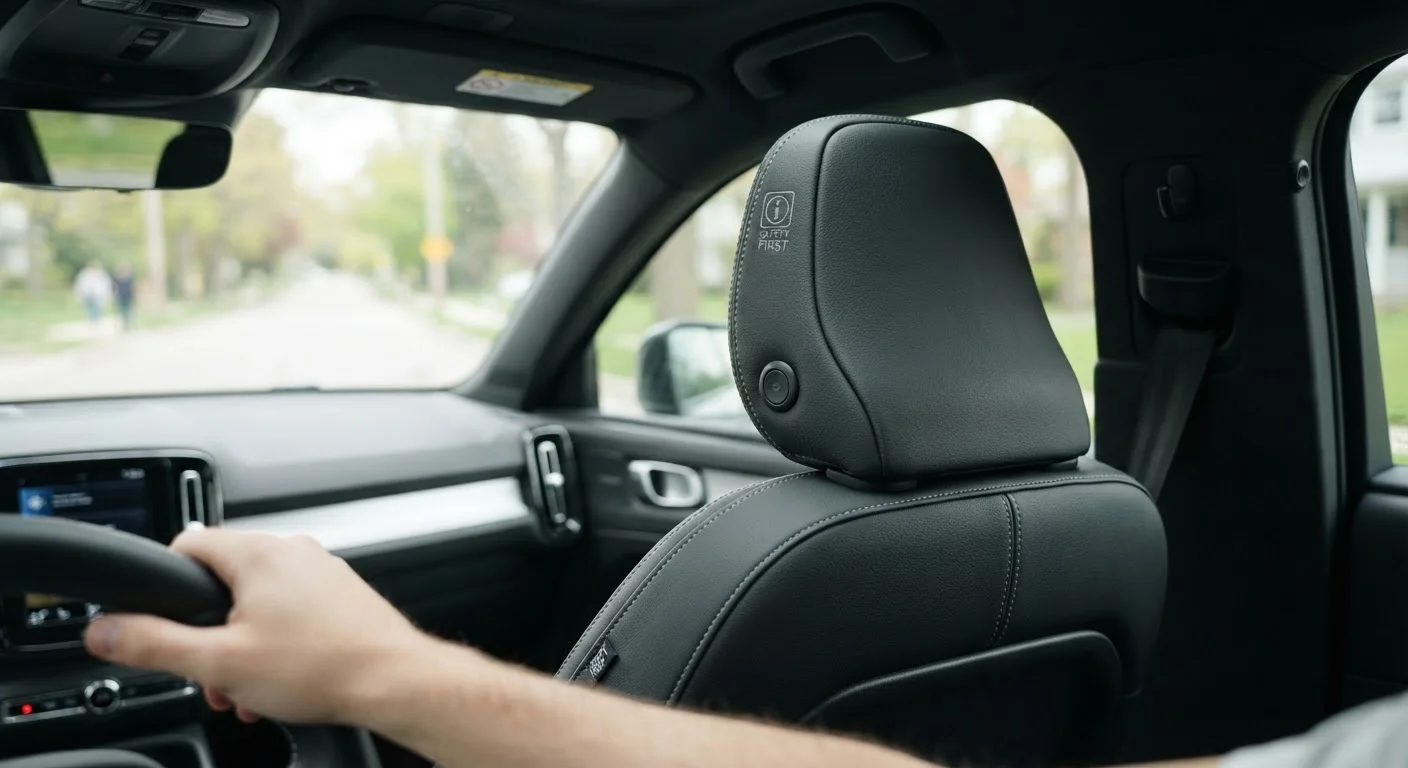
Photo credit: PrimeFaqs.com | Trending And Accurate Content
In this article
The physics of a crash affect every part of your body. Understand what forces are at play and why proper headrest position is a real safety factor.
Key Takeaways
- Your body keeps moving forward at the car's original speed the moment a sudden stop begins.
- Whiplash can occur at impact speeds as low as 5 to 10 mph in rear-end collisions.
- A mispositioned headrest can make neck injuries worse rather than better.
- Headrests are restraint devices, not comfort padding - their height and angle matter.
- Seat belts and headrests work together as a system; neither alone provides full protection.
The Physics of a Sudden Stop
Newton's first law - that an object in motion stays in motion - is abstract until you're sitting in a car that stops in under a second. When a vehicle collides or brakes hard, the car decelerates almost instantly. Your body, however, does not. It continues traveling at the original speed until the seat belt, airbag, dashboard, or headrest applies force to slow it down.
That transfer of force is the root cause of most collision injuries. The faster the original speed and the shorter the stopping distance, the greater the force on your body's tissues. In a rear-end collision specifically, the sequence works in reverse: the struck vehicle lurches forward while the occupant's torso is pushed back into the seat - but the head, unsupported, lags behind momentarily before snapping forward. This whip-like motion is what causes whiplash injuries.
~5 mph
Minimum speed for potential whiplash injury
Research published in medical and biomechanics literature indicates that rear-end impacts at speeds as low as 5 mph can produce whiplash-type forces on the cervical spine.
10-12 lbs
Average human head weight
This is the load the cervical spine must manage during sudden deceleration - a key reason the neck is so vulnerable in collisions.
< 0.5 sec
Typical duration of a collision event
Most vehicle impacts last well under half a second, leaving no time for voluntary muscular bracing to meaningfully protect the spine.
What Happens to Each Part of Your Body
Head and neck: The neck is the most vulnerable region in a sudden stop. The cervical spine (the upper seven vertebrae) supports the full weight of the head - roughly 10 to 12 pounds - and is designed for flexibility, not impact absorption. In a rear collision, the neck hyperextends backward, then hyperflexes forward. Ligaments, muscles, and discs absorb forces they aren't built to handle at speed.
Torso: A properly worn seat belt distributes deceleration force across the chest and pelvis - the body's strongest structures. Without it, the torso slams into the steering wheel, dashboard, or continues forward until the windshield stops it. Even with a belt, rib bruising and sternum soreness are common in significant impacts.
Knees and lower body: In a front collision, knees frequently strike the dashboard before a driver's body moves back. This often results in patella fractures or knee ligament damage. Bracing hard against the brake pedal can transmit force up the leg into the hip joint.
Check Your Position Before Every Long Drive
Take 30 seconds when you get in the car to confirm your headrest is at head height and your seat belt sits flat across the chest and lap - not tucked under your arm or behind your back. These are passive safety measures that require no action during an actual crash to be effective, but only if they're set correctly beforehand.
Why Headrest Position Is a Real Safety Factor
Most drivers treat the headrest as a comfort feature. It isn't - it's a head restraint, and its positioning is a genuine safety variable. A headrest set too low acts as a fulcrum, increasing the bending force on the neck rather than supporting the head. A headrest angled too far back creates a gap that allows the head to travel before contact, extending the duration of neck hyperextension.
The general guidance from safety researchers is that the top of the headrest should be at or near the top of your skull, and the horizontal distance between your head and the restraint should be minimal - ideally no more than 2 to 4 inches. Many newer vehicles include active head restraints that move forward automatically on impact to close that gap, but only if the fixed position allows them to engage correctly.
Adjusting the headrest takes under 30 seconds and requires no tools. For most vehicles, you press a release button on the side of the restraint and slide it to the correct height. Check your owner's manual for model-specific instructions.
How Headrests and Seat Belts Work Together
Neither a headrest nor a seat belt works as well in isolation. The seat belt manages torso movement in the forward direction; the headrest manages head and neck movement in the rearward direction. Together, they reduce the total range of uncontrolled motion the body experiences during a collision.
This is also why simply wearing a belt while ignoring headrest position leaves a meaningful safety gap - and vice versa. If you've examined your own seatbelt habits recently, it's worth also checking the common misconceptions about seat belt safety that may affect how reliably you and your passengers buckle up.
Passengers in rear seats are equally at risk in a sudden stop, yet rear headrests are often left in lowered positions or removed entirely for visibility. If rear-seat passengers are present, their headrests should be adjusted the same way as front-seat restraints.
This article is for general educational purposes and does not constitute medical or safety engineering advice. If you have been in a collision and are experiencing pain or discomfort, consult a qualified healthcare professional promptly.
Frequently Asked Questions

Author
Automotive Basics Editorial Team
Automotive Basics Editorial Team is the collective byline for our editorial team and contributor network. Articles published under this byline or an editorial pen name are researched, written, and reviewed according to our editorial standards for clarity, consistency, and independence before publication.
View all articles →