
Seat Belt Myths That Keep Drivers from Buckling Up
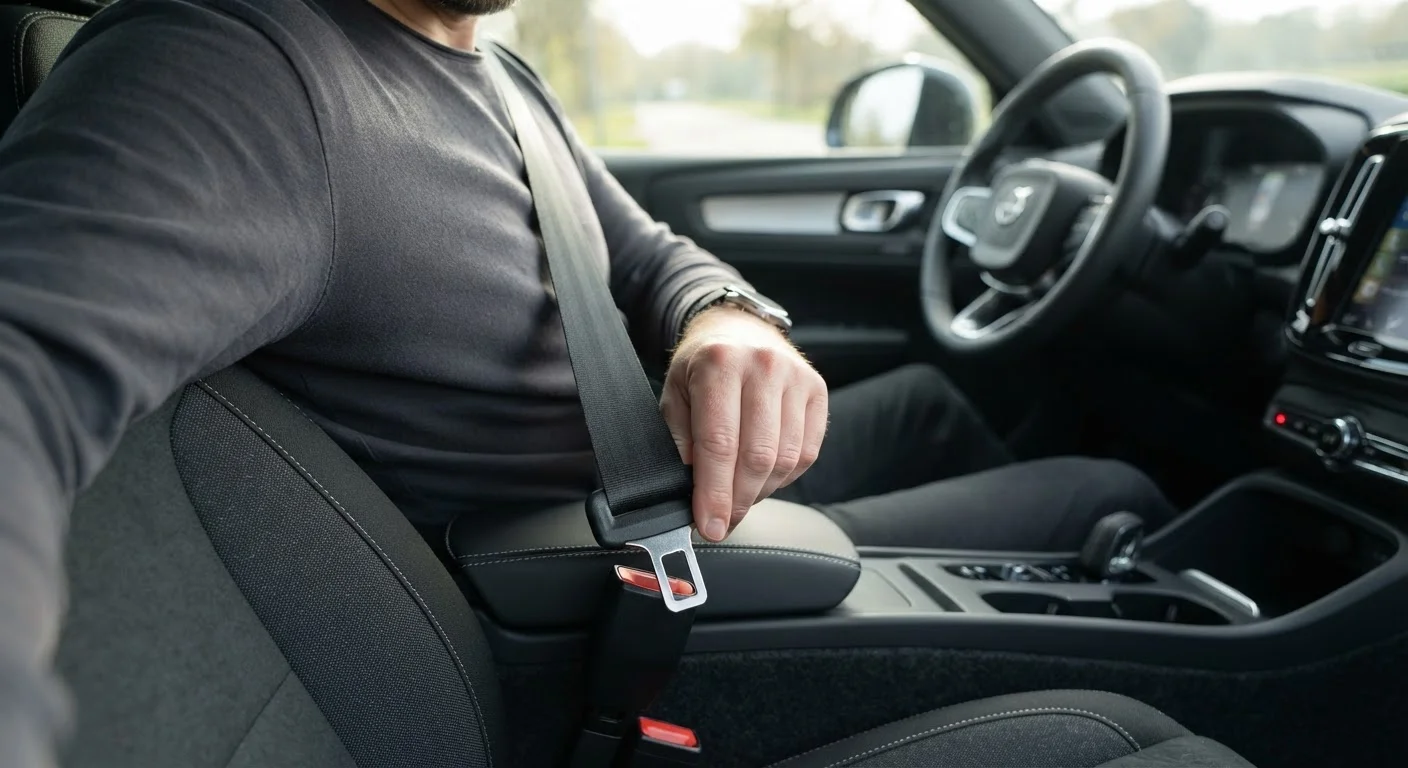
Photo credit: PrimeFaqs.com | Trending And Accurate Content
Some widely repeated beliefs about seat belts are flat-out wrong. Separate fact from fiction on one of the most important safety habits in every vehicle.
Key Takeaways
- Seat belts remain the single most effective protection against crash fatalities in passenger vehicles.
- Several widely believed seat belt myths are contradicted by decades of crash research and safety data.
- Modern seat belts are engineered to work with airbags, not against them.
- Short trips and low speeds are not excuses to skip buckling up - most fatal crashes happen close to home.
- Proper belt fit matters: adjust position across the chest and hips, never behind the back or under the arm.
Why Seat Belt Myths Persist
Despite decades of public safety campaigns and consistent crash data, a surprising number of American drivers still skip the seat belt - sometimes because of a story they heard, a fear they can't shake, or a misplaced sense of confidence in short, familiar routes. Myths about seat belts are particularly stubborn because they often contain a kernel of logic that makes them feel plausible, even when the full picture tells a very different story.
Understanding where these misconceptions come from - and why the evidence contradicts them - is one of the most direct ways to reinforce a habit that safety researchers consistently identify as one of the most life-preserving choices a driver can make. If you're working to build stronger habits behind the wheel, see our guide to safer driving habits for a broader framework.
Myth
I'm only going a few miles - I don't need a seat belt for short trips.
Fact
Distance has no meaningful relationship to crash risk. A significant proportion of fatal crashes occur within a short distance of the driver's home.
Familiarity with a route can actually increase risk by encouraging inattention. Traffic conflicts, pedestrian crossings, and intersections exist regardless of how short the journey is. U.S. crash data compiled by the National Highway Traffic Safety Administration (NHTSA) has consistently shown that many serious accidents happen on local roads at everyday speeds - not on highways during long road trips. Buckling up should be automatic every time, without a distance threshold in mind.
Myth
Seat belts can trap you in a car after a crash - it's safer to be thrown clear.
Fact
Being thrown from a vehicle dramatically increases the likelihood of a fatal injury. Seat belts keep occupants inside the protective shell of the vehicle.
The idea of being "thrown clear" implies landing safely, but in reality ejection exposes an occupant to impact with pavement, other vehicles, or fixed objects with forces far exceeding what the vehicle's structure would have absorbed. NHTSA data has repeatedly indicated that unbelted occupants who are ejected face a substantially higher fatality risk than those who remain inside the vehicle. In water-submersion scenarios - the scenario most often cited for this myth - an unbelted driver who is stunned or injured by the initial crash is far less capable of self-rescue than one who remained conscious and positioned because of their belt.
Myth
Airbags protect me enough - the seat belt is redundant.
Fact
Airbags are designed as a supplemental restraint system, meaning they are engineered to work in combination with a seat belt, not as a replacement.
Without a seat belt, an occupant can slide under or be thrown toward an airbag as it deploys at high speed, which can cause serious injury rather than prevent it. Front airbags typically deploy in moderate-to-severe frontal crashes and do not provide protection in rollover crashes or rear impacts. Side curtain airbags cover a limited zone. The seat belt is what keeps the occupant in the right position for every type of crash so that all restraint systems can work as intended together.
Myth
Wearing a seat belt is uncomfortable, and discomfort means it's fitted incorrectly - so I leave it off.
Fact
Initial discomfort is usually a fit issue, not a sign that the belt is wrong for you. Nearly all modern vehicles offer adjustable anchors and other features to improve comfort without compromising safety.
Most vehicles include a height-adjustable shoulder belt anchor at the B-pillar (the structural post between the front and rear door). Moving this anchor up or down can eliminate pressure on the neck. Seat position, seatback angle, and even aftermarket belt positioning clips - provided they are designed for comfort only and do not alter the belt's path across the body - can also help. If a belt consistently doesn't fit despite adjustments, speaking with a dealer about vehicle-specific solutions is worth the effort. Leaving the belt off is not a safe workaround for a fit problem.
Myth
A seat belt will break my ribs or cause internal injuries in a crash.
Fact
While seat belts can cause bruising or, in severe crashes, minor rib injuries, those outcomes are far less serious than the head, neck, and whole-body injuries that result from not wearing one.
Modern seat belts incorporate load limiters and pretensioners that manage the forces applied to the chest during a crash, reducing injury risk compared with older designs. Any bruising from a belt after a crash is evidence that the belt absorbed energy that would otherwise have reached your head, spine, or internal organs. The comparison is not between a belt injury and no injury - it is between a belt-related bruise and an unbelted occupant's far higher risk of catastrophic harm.
Myth
Backseat passengers don't need seat belts - they're already protected by the front seats.
Fact
Unbelted rear passengers are a serious hazard to themselves and to front-seat occupants in a crash.
In a frontal collision, an unbelted rear passenger continues forward at the speed of the vehicle and can strike the back of the front seat - or the front-seat occupant - with significant force. This is sometimes called the "unbelted rear passenger" problem, and it is a recognized factor in fatal crashes. Rear-seat belts are designed to manage rear-occupant forces during exactly these events. All occupants in all seating positions should be buckled on every trip.
Getting the Most From Your Seat Belt
Knowing the facts clears away resistance - but proper technique ensures the seat belt can do its job. The lap belt should sit low and firm across the hips and upper thighs, not across the soft abdomen. The shoulder belt goes across the center of the chest and collarbone, not tucked behind the back or under the arm. Both of those workarounds redirect crash forces to unprotected areas and significantly reduce the belt's effectiveness.
Never Modify How a Belt Sits Across Your Body
Tucking the shoulder belt behind your back or under your arm may feel more comfortable, but it removes the belt from the load-bearing path it was designed to follow. In a crash, the forces that the shoulder belt would have absorbed are instead applied to the abdomen or spine. If belt fit is a persistent issue, address it through the vehicle's built-in adjustments or by speaking with a qualified technician - never by rerouting the belt.
Pregnant drivers should position the lap portion under the belly and the shoulder belt between the breasts and to the side of the bump - and should always follow the guidance of their healthcare provider. Booster seats and child safety seats have their own fit requirements governed by age, height, and weight; consult the manufacturer's instructions and applicable state law for proper installation.
It's also worth understanding that the forces acting on your body during a sudden stop are significant even at moderate speeds. Our companion piece on what happens to your body during a sudden stop explains the physics in plain terms and why restraint systems matter from head to headrest.
Myths about safety don't only show up in automotive contexts - similar patterns of misinformation affect everything from fitness to personal finance. The discipline of checking a belief against evidence rather than assuming it's true is a transferable skill worth practicing in every area of life.

Author
Automotive Basics Editorial Team
Automotive Basics Editorial Team is the collective byline for our editorial team and contributor network. Articles published under this byline or an editorial pen name are researched, written, and reviewed according to our editorial standards for clarity, consistency, and independence before publication.
View all articles →