
Group Classes vs. Private Lessons: How to Pick the Right Training Format
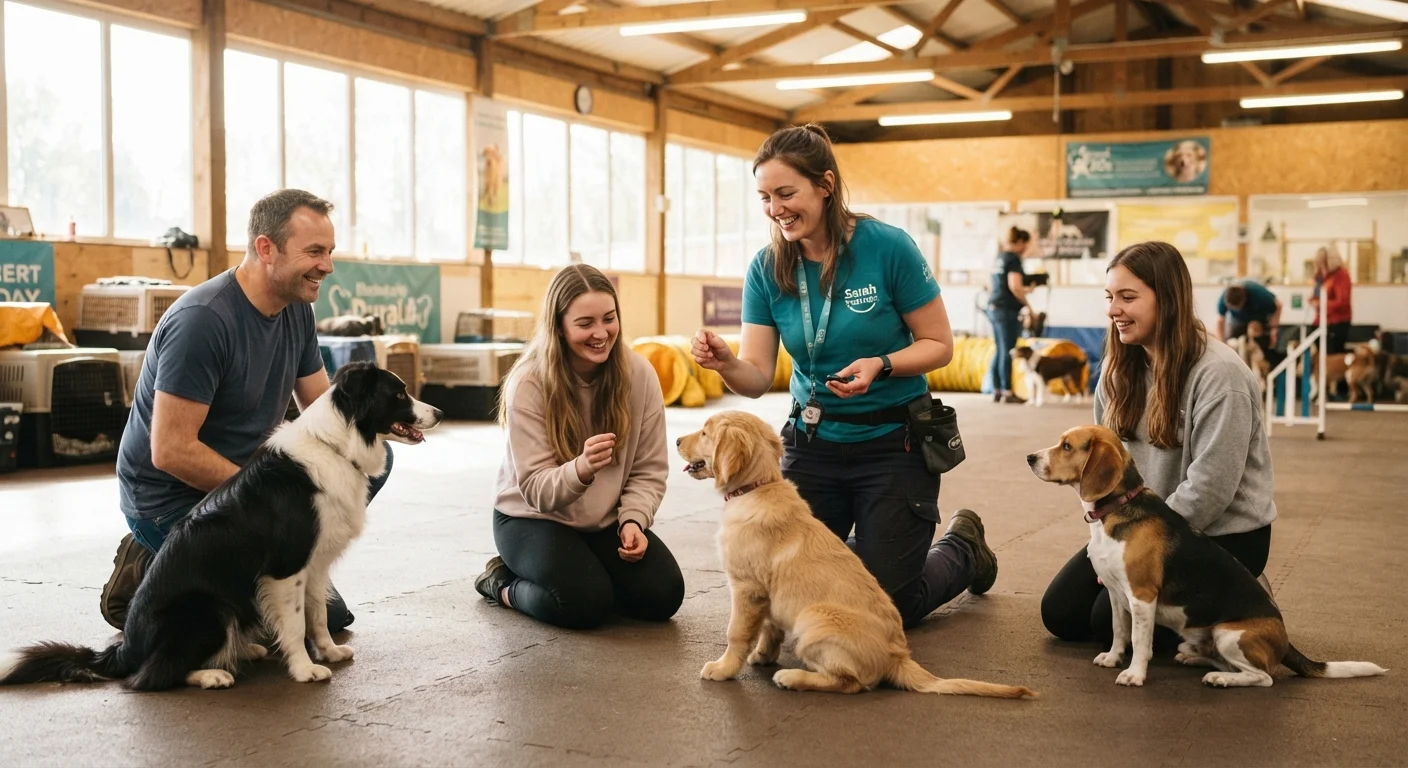
Photo credit: PrimeFaqs.com | Trending And Accurate Content
In this article
Both formats have genuine merits. Compare the learning environments, social benefits, and scenarios where each approach tends to excel.
Key Takeaways
- Group classes build real-world social skills by exposing dogs to controlled distractions alongside other animals and people.
- Private lessons allow trainers to tailor every exercise to a specific dog's temperament, history, and behavioral challenges.
- Cost and scheduling flexibility generally favor group classes, while reactive or fearful dogs often benefit more from one-on-one sessions.
- Many owners find the most effective approach combines both formats at different stages of training.
- The trainer's credentials and methods matter more than the format - always look for humane, force-free techniques.
What Each Format Actually Looks Like
Group classes typically involve four to eight dog-and-handler teams meeting on a regular schedule - weekly sessions over four to eight weeks are common. A trainer leads the class through structured exercises, offering corrections and encouragement to the group while individual dogs practice skills like sit, stay, loose-leash walking, and recall around real-world distractions.
Private lessons, by contrast, are one-on-one sessions between a trainer, the owner, and the dog - sometimes conducted in the owner's home, which allows the trainer to observe behavior in the environment where problems most often occur. Sessions are fully customizable: the agenda, pace, and techniques revolve entirely around that team's specific needs.
The distinction parallels broader questions about learning format that come up in human education too. Just as self-paced and instructor-led courses serve different learners, the training format that works best often depends on how the student - in this case, the dog and owner together - absorbs and applies new information.
Where Group Classes Shine
One of the most underappreciated benefits of group training is structured socialization. Dogs learn to focus on their handlers despite nearby distractions - other dogs, unfamiliar people, unpredictable sounds - which closely mirrors the real world. This kind of proofing (training a behavior until it holds up under distractions) is genuinely difficult to replicate at home.
Group classes also tend to be more affordable, and the shared learning environment can be motivating for owners. Watching another dog master a skill - or struggle with the same one your dog is working on - builds perspective and patience. Many owners report that the peer community formed in group classes keeps them accountable and consistent, which is one of the most important factors in training success.
| Group Classes | Private Lessons | |
|---|---|---|
| Cost | Lower per session | Higher per session |
| Socialization opportunity | High - built into format | Low - requires separate effort |
| Customization | Limited - shared curriculum | High - fully tailored |
| Best for reactive dogs | Generally not recommended | Well-suited with proper planning |
| Scheduling flexibility | Fixed class schedule | More flexible by arrangement |
| Owner peer support | Strong community element | None - one-on-one only |
| Distraction proofing | Excellent - real-world distractions | Limited to training environment |
Group classes are particularly well-suited to puppies going through socialization windows (generally up to about 16 weeks of age, though continued exposure matters beyond that), and to adult dogs who are confident, curious, and not overwhelmed by novel stimuli.
When Private Lessons Make More Sense
Dogs who struggle with reactivity - lunging, barking, or snapping at other dogs or people - are often poor candidates for group settings, at least initially. Putting a reactive dog in close proximity to other animals can raise stress levels to a point where learning becomes impossible. A private trainer can implement a careful, systematic desensitization plan tailored to the dog's specific triggers without the unpredictability of a group environment.
Private lessons also benefit owners who need more individualized coaching. If a handler has physical limitations, is working with a large or powerful dog, or simply learns better with direct, one-on-one feedback, a private trainer can adapt their teaching style accordingly. The format shares something with the broader dynamic explored in matching learning formats to different adult learner needs - the most effective environment is the one where both the handler and the dog can genuinely absorb and apply what's being taught.
Consider Starting with a Consultation
Many certified trainers offer an initial evaluation session before recommending a format. This gives the trainer a chance to assess your dog's temperament and your handling skills, and gives you a chance to evaluate their methods. A brief consultation often provides enough information to make a confident decision between group and private training - and some trainers will recommend a combination of both.
Choosing a Trainer: What to Look For Regardless of Format
The format matters far less than the trainer's methods. Whether you're enrolling in a group class or booking private sessions, look for trainers who use positive reinforcement - rewarding desired behaviors rather than punishing unwanted ones. This approach is supported by current animal behavior science and is associated with better outcomes and lower stress for dogs.
Relevant credentials to look for include certification through organizations such as the Certification Council for Professional Dog Trainers (CCPDT) or membership in the International Association of Animal Behavior Consultants (IAABC). Neither credential guarantees a perfect fit, but they indicate a commitment to continuing education and ethical standards.
Ask prospective trainers about their methods before committing. A reputable trainer will welcome the question and explain their approach clearly. Be cautious of any trainer who relies heavily on aversive tools like prong collars, shock collars, or intimidation-based techniques - these methods carry documented risks to dog welfare and the human-animal bond.
This article is for general informational purposes only and does not constitute professional veterinary or animal behavior advice. For dogs with significant behavioral concerns, consult a certified animal behaviorist or your veterinarian.

Author
Pets & Animals Editorial Team
Pets & Animals Editorial Team is the collective byline for our editorial team and contributor network. Articles published under this byline or an editorial pen name are researched, written, and reviewed according to our editorial standards for clarity, consistency, and independence before publication.
View all articles →