
Reading a Credit Card Statement Without Getting Lost
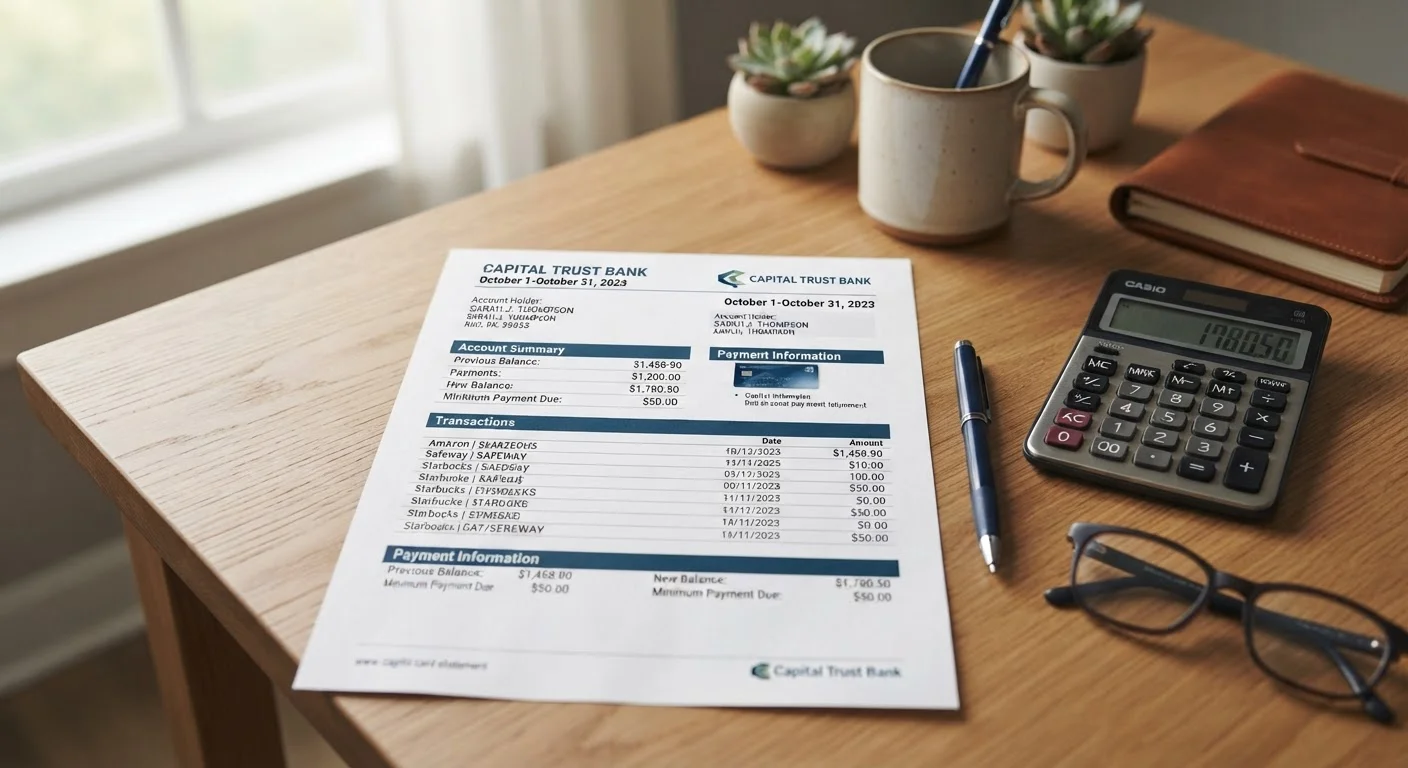
Photo credit: PrimeFaqs.com | Trending And Accurate Content
In this article
Minimum due, statement balance, APR, billing cycle — a credit card statement is full of numbers. This guide explains what each one means and why it matters.
Key Takeaways
- Your statement balance and minimum payment due are two very different numbers with very different consequences.
- APR (Annual Percentage Rate) determines how much interest you pay when you carry a balance.
- The billing cycle end date affects when purchases appear and when interest may begin accruing.
- Paying only the minimum can extend debt repayment by years and significantly increase total interest paid.
- Reviewing your statement monthly helps you catch errors, fraud, and fee surprises early.
Why Your Statement Deserves More Than a Glance
Most people open their credit card statement just long enough to find the minimum payment and move on. That habit is understandable - statements can run several pages - but it leaves a lot of useful financial information on the table. Your statement is, in effect, a monthly financial report: it tells you what you spent, what it's costing you, and whether anything unusual has happened to your account.
Spending five to ten minutes reading your statement closely each month builds a concrete understanding of your credit costs, gives you early warning of fraud or billing errors, and supports better decisions around when and how much to pay. This guide walks you through each meaningful section of a standard statement, step by step. It is general financial education - for guidance tailored to your specific situation, consult a licensed financial professional.
What you will need
If you want broader context on how credit products work before diving into statement details, the Understanding Credit guide is a helpful starting point.
Set Up Alerts for Statement Availability
Most card issuers allow you to enable email or text notifications when your monthly statement is ready. This habit ensures you never miss a due date and gives you the maximum time to review transactions before payment is required.
Working Through Your Statement: The Six Key Sections
Credit card statements follow a fairly consistent structure across issuers, though the exact layout and labels vary. The steps below map to the most common organization. Pull up your statement - paper or digital - and work through each section in order.
Monthly Credit Card Statement
The primary document you will read and interpret - available by mail or through your card issuer's online portal.
Calculator or Spreadsheet
Useful for verifying totals, estimating interest charges, or calculating how long payoff will take.
Locate the Account Summary Section
Every statement opens with an account summary - a snapshot of your account's current status. Here you will find your previous balance (what you owed at the start of the billing period), new charges added during the cycle, payments and credits applied, and your new balance - the total you owe as of the statement closing date.
These four figures should balance: Previous Balance + New Charges − Payments & Credits = New Balance. If the math doesn't add up, contact your issuer.
Identify Your Payment Due Date and Minimum Payment
These two numbers appear prominently - often in a shaded box - because they're what the issuer most wants you to act on. The payment due date is the deadline; pay at least the minimum by this date to avoid a late fee and a potential penalty APR.
The minimum payment due is the smallest amount the issuer will accept without penalizing you. It is typically calculated as a flat dollar floor (often around $25-$35) or a small percentage of your balance - whichever is greater. Meeting the minimum preserves your account standing but does not stop interest from accruing on the remainder of your balance.
Understand the Billing Cycle and Closing Date
The billing cycle is the period covered by the statement - typically 28 to 31 days. The statement closing date is the last day of that cycle; any purchases made after this date appear on your next statement.
Between the closing date and your due date lies the grace period - the window during which you can pay your full balance without incurring interest on new purchases. Grace periods are typically 21 to 25 days and are only available if you paid your previous balance in full. If you carried a balance forward, interest may begin accruing on new purchases immediately.
Find and Interpret Your APR
APR stands for Annual Percentage Rate - the yearly cost of borrowing expressed as a percentage. Most statements list multiple APRs: one for purchases, one for cash advances (typically higher), and sometimes a promotional or penalty rate.
To estimate your monthly interest charge, divide your APR by 12 and multiply by your average daily balance. For example, a 24% APR equals roughly 2% per month. On a $1,000 balance, that's approximately $20 in interest for one month alone. For a deeper reference on terminology like APR, see key financial terms every consumer should know.
Review the Transaction List for Accuracy
The bulk of your statement is a line-by-line log of every transaction during the billing cycle: purchases, returns, fees, and interest charges. Read through each entry and confirm you recognize every charge by matching amounts and merchant names to your own records or receipts.
Look specifically for: duplicate charges, unfamiliar merchants (potential fraud or subscription renewals you forgot about), annual fees, and foreign transaction fees. Disputing an error is far easier when caught within the billing cycle - most issuers require disputes to be filed within 60 days of the statement date.
Check Your Credit Limit and Available Credit
Your statement will show your credit limit (the maximum your issuer allows you to borrow) and your available credit (the difference between your limit and current balance). These numbers matter beyond just knowing your spending room.
Your credit utilization ratio - the percentage of your limit currently in use - is a significant factor in how your credit score is calculated. Generally, keeping utilization below 30% is considered favorable. For a fuller picture of what drives your score, see what your credit score actually measures.
Minimum Payment Is Not the Safe Choice
Paying only the minimum due keeps your account in good standing but does not protect you from growing debt. Interest continues to compound on your remaining balance each billing cycle. Over time, making only minimum payments can mean repaying far more than your original purchases. See why minimum payments extend debt for the full math.
Once you're comfortable reading your statement accurately, the natural next question is what to do with the information. Understanding how interest compounds and how long debt lingers under minimum payments is a powerful motivator - the math behind minimum payments makes the stakes concrete.
This article is for general informational and educational purposes only and does not constitute personalized financial advice. Consult a licensed financial professional for guidance specific to your situation.

Author
Personal Finance Editorial Team
Personal Finance Editorial Team is the collective byline for our editorial team and contributor network. Articles published under this byline or an editorial pen name are researched, written, and reviewed according to our editorial standards for clarity, consistency, and independence before publication.
View all articles →