
Tank vs. Tankless Water Heaters: What Homeowners Should Understand Before Replacing
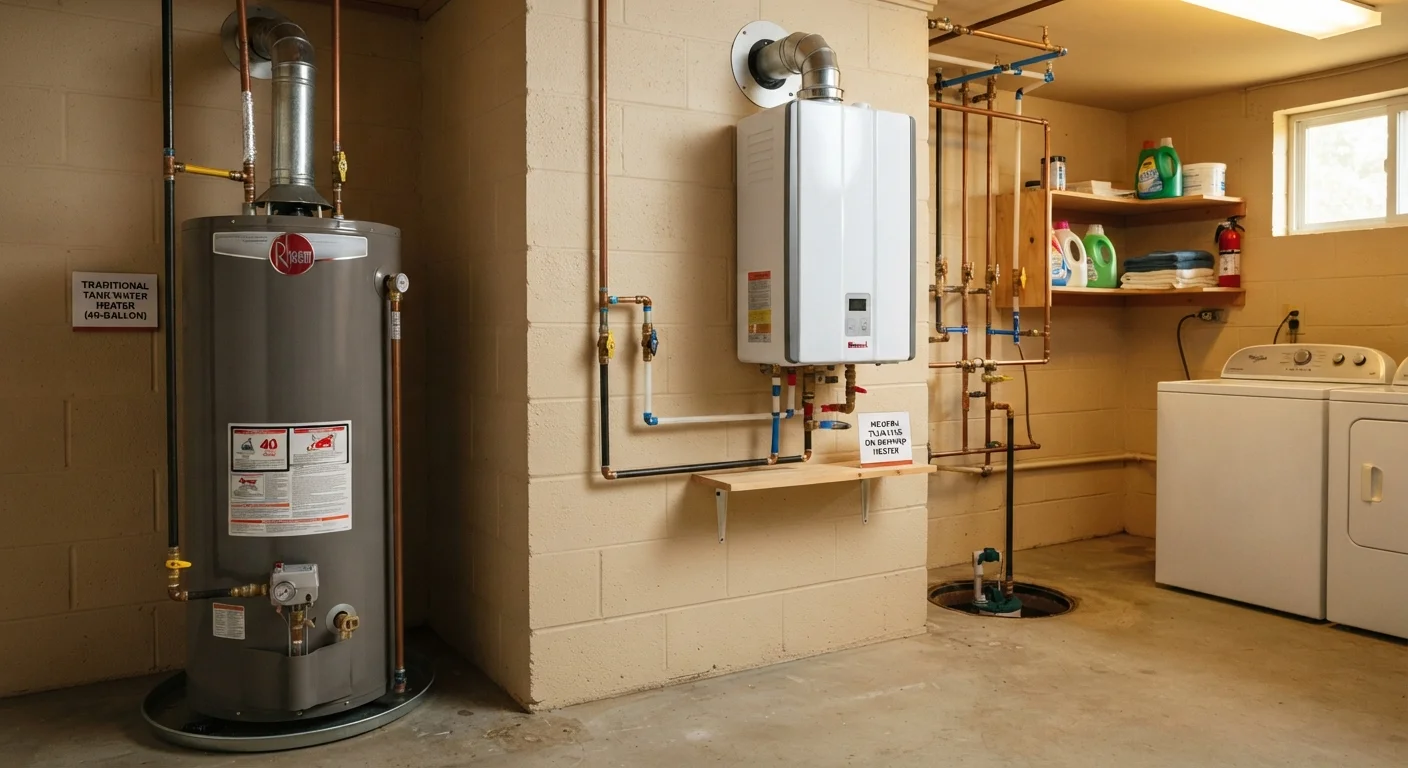
Photo credit: PrimeFaqs.com | Trending And Accurate Content
In this article
Replacing a water heater means choosing between two very different systems. Compare how they work, their trade-offs, and what suits different households.
Key Takeaways
- Tank heaters store heated water continuously, while tankless units heat water only when needed.
- Tankless models typically cost more upfront but can reduce energy use over time.
- Tank units are easier and cheaper to install, especially as direct replacements.
- Tankless heaters generally last longer - often 20 years versus 10-15 for tank models.
- Household size, water usage patterns, and fuel availability all affect which system makes sense.
- Both types require professional installation; gas models may need venting modifications.
How Each System Works
Understanding the core mechanics of each system helps homeowners set realistic expectations before making a decision.
A tank water heater maintains a reservoir of heated water - typically 30 to 80 gallons - ready to use at any time. The heating element (electric coil or gas burner) cycles on and off continuously to keep that stored water at a set temperature. This constant reheating, even when no hot water is being used, is called standby heat loss and represents the system's primary inefficiency.
A tankless water heater (also called an on-demand or instantaneous heater) has no storage tank. Instead, it activates only when a hot water tap opens, rapidly heating water as it flows through a heat exchanger. Once the tap closes, the unit shuts off entirely. This eliminates standby heat loss but introduces a physical constraint: the unit can only heat water as fast as its rated flow rate allows.
| Criterion | Tank Water Heater | Tankless Water Heater |
|---|---|---|
| How it heats water | Stores and reheats a fixed supply | Heats water on demand, as needed |
| Upfront cost | Lower purchase and install cost | Higher cost; may need upgrades |
| Energy efficiency | Standby heat loss reduces efficiency | No standby loss; more efficient |
| Typical lifespan | 10-15 years | Up to 20 years or more |
| Space required | Large floor footprint | Compact; wall-mounted |
| Hot water supply | Limited by tank capacity | Continuous, limited by flow rate |
| Installation complexity | Straightforward like-for-like swap | May require venting or wiring changes |
Installation, Costs, and Lifespan
Replacement decisions often hinge on what's practical for your home's existing setup, not just the sticker price.
Upfront costs differ considerably. Tank units generally cost less to purchase and install, particularly when replacing an existing tank system with the same fuel type. Tankless installations often require additional work - upgrading gas lines, increasing electrical capacity, or reconfiguring venting - which adds to labor costs.
Operating costs tend to favor tankless systems over time, since you're not paying to keep water hot around the clock. However, actual savings vary based on household usage patterns, local energy rates, and the unit's efficiency rating.
Lifespan is a meaningful difference. Tank heaters typically last 10-15 years with proper maintenance, including annual flushing to reduce sediment buildup. Tankless models are often rated for 20 years or more, though components like heat exchangers may need servicing.
Permits and Professional Installation
Replacing a water heater - whether tank or tankless - almost always requires a permit in the United States, particularly for gas or significant electrical work. Your licensed plumber or contractor should pull the necessary permits and schedule any required inspections. Skipping this step can create liability issues when selling your home and may void manufacturer warranties.
Both system types require professional installation. Gas-fired models involve fuel connections and venting that must meet local building codes. Always verify permit requirements with your local municipality before work begins.
Matching the Right System to Your Household
No single system is universally superior - the right choice depends on your home's specific demands and constraints.
10-15 yrs
Average lifespan of a tank water heater
The U.S. Department of Energy notes tank water heaters generally last between 10 and 15 years with routine maintenance.
24-34%
Potential energy savings with tankless
The U.S. Department of Energy estimates on-demand heaters can be 24-34% more energy efficient for homes using 41 gallons or less of hot water daily.
~20 yrs
Expected lifespan of a tankless unit
Tankless water heaters are generally rated for up to 20 years, roughly twice the service life of a conventional tank model.
Household size and usage timing matter significantly. Families who run the dishwasher, shower, and laundry simultaneously may find that a properly sized tank unit delivers more consistent results than a single tankless heater. However, installing multiple tankless units in parallel can address this - at additional cost.
Fuel source availability shapes your options. Natural gas tankless heaters tend to have higher flow rates than electric models. If your home isn't connected to a gas line, a high-capacity electric tankless heater may require a significant electrical panel upgrade.
Climate plays a role too. Tankless units in colder climates may struggle to achieve target output temperatures in deep winter because incoming groundwater is colder - potentially reducing flow rate during peak demand. This is worth discussing with a licensed plumber familiar with your region.
Before committing, have a qualified plumber assess your current setup, fuel source, and daily usage patterns. That evaluation will give you a far more accurate picture than any general comparison can provide.

Author
Home & Garden Editorial Team
Home & Garden Editorial Team is the collective byline for our editorial team and contributor network. Articles published under this byline or an editorial pen name are researched, written, and reviewed according to our editorial standards for clarity, consistency, and independence before publication.
View all articles →