
Weighing the Trade-Offs of Self-Help Apps for Mental Wellness
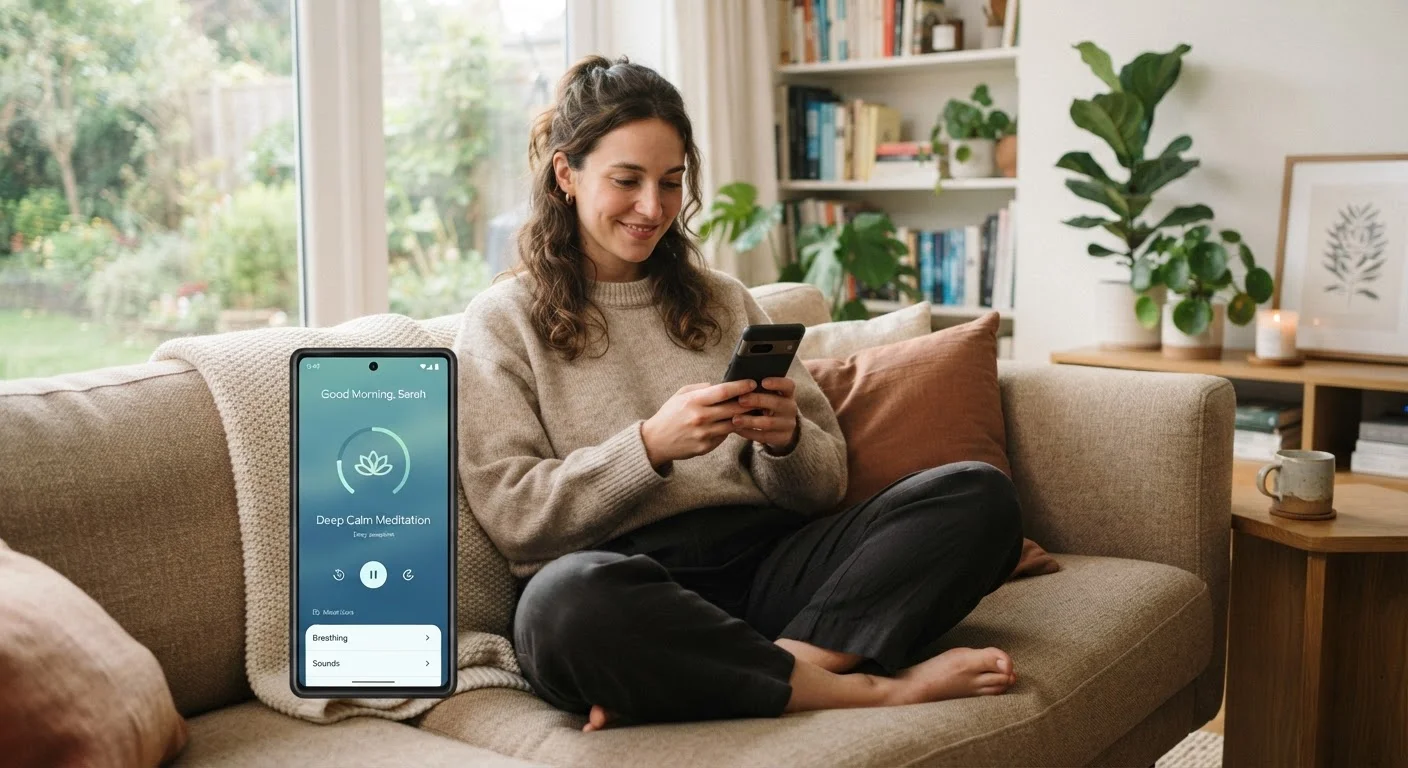
Photo credit: PrimeFaqs.com | Trending And Accurate Content
In this article
Mental wellness apps offer convenience but come with limitations. A balanced look at what they can and can't replace in a broader support plan.
Key Takeaways
- Mental wellness apps can provide useful tools like guided meditation and mood tracking for everyday stress.
- They are not a substitute for professional therapy or clinical treatment of diagnosed conditions.
- Privacy and data security vary significantly across apps - reviewing policies before use is advisable.
- Apps work best as one layer of a broader mental health support plan, not as a standalone solution.
- People with moderate-to-severe symptoms should consult a licensed mental health professional.
Available anytime without appointments or waitlists
Apps provide immediate access to coping tools during off-hours when professional support isn't reachable, which can help people manage acute moments of stress or anxiety in real time.
Low cost compared to traditional therapy
Many apps are free or available at a modest subscription cost, making mental wellness resources accessible to people who face financial or insurance barriers to professional care.
Grounded in established psychological techniques
Reputable apps incorporate frameworks such as CBT, mindfulness-based stress reduction, and behavioral activation - approaches supported by a substantial body of peer-reviewed research.
Reduces stigma and lowers the barrier to starting
The private, judgment-free nature of app-based tools can make it easier for people who are reluctant to seek professional help to begin building mental wellness habits.
Supports habit-building through reminders and tracking
Built-in mood logs, streak tracking, and push notifications can help users build consistent routines - a factor that research associates with better long-term psychological outcomes.
Cannot diagnose or treat clinical mental health conditions
Apps lack the clinical assessment capability of licensed professionals and are not appropriate as a primary intervention for diagnosed conditions such as major depressive disorder, PTSD, or panic disorder.
Quality and evidence base vary widely across the market
The app marketplace is largely unregulated from a clinical standpoint, meaning many apps use therapeutic-sounding language without meaningful research supporting their specific effectiveness.
Privacy protections may be weaker than clinical care
Consumer wellness apps are not uniformly subject to HIPAA, and data-sharing practices differ significantly - users may not always understand how their sensitive mental health data is used.
Risk of substituting apps for necessary professional care
Individuals experiencing moderate-to-severe symptoms may delay seeking professional help if they believe an app is sufficient, which can allow treatable conditions to worsen over time.
Lacks the human therapeutic relationship
The therapeutic alliance - a collaborative, trust-based relationship with a skilled clinician - is one of the strongest predictors of positive therapy outcomes, and no digital tool currently replicates it.
What Mental Wellness Apps Actually Offer
Mental wellness apps have proliferated rapidly, covering everything from guided meditation and cognitive behavioral therapy (CBT)-inspired exercises to mood journaling, sleep coaching, and breathing techniques. For many busy American adults, their appeal is straightforward: a professionally-designed support tool available at any hour, without a waitlist, a copay, or a commute.
These apps typically draw from established psychological frameworks. Mindfulness-based stress reduction, CBT thought records, and behavioral activation are all approaches with a meaningful research base - and many apps translate these into accessible daily exercises. For someone dealing with everyday work stress or low-level anxiety, a five-minute guided breathing session or a structured mood log can genuinely be helpful. They also carry no social stigma and no scheduling friction, making them a natural starting point for people who haven't yet connected with professional care.
For a broader picture of how these tools fit into a sustainable routine, the end-to-end mental wellness overview covers the full range of strategies from stress management to knowing when to seek help.
Available anytime without appointments or waitlists
Apps provide immediate access to coping tools during off-hours when professional support isn't reachable, which can help people manage acute moments of stress or anxiety in real time.
Low cost compared to traditional therapy
Many apps are free or available at a modest subscription cost, making mental wellness resources accessible to people who face financial or insurance barriers to professional care.
Grounded in established psychological techniques
Reputable apps incorporate frameworks such as CBT, mindfulness-based stress reduction, and behavioral activation - approaches supported by a substantial body of peer-reviewed research.
Reduces stigma and lowers the barrier to starting
The private, judgment-free nature of app-based tools can make it easier for people who are reluctant to seek professional help to begin building mental wellness habits.
Supports habit-building through reminders and tracking
Built-in mood logs, streak tracking, and push notifications can help users build consistent routines - a factor that research associates with better long-term psychological outcomes.
Where Apps Fall Short
Despite their convenience, mental wellness apps carry limitations that anyone considering them should weigh honestly. The most significant is clinical scope: no app can diagnose a mental health condition, conduct a comprehensive psychological assessment, or adapt a treatment plan to a person's evolving circumstances the way a licensed therapist can. The human therapeutic relationship - built on trust, nuance, and real-time responsiveness - remains central to evidence-based mental health treatment in ways that current technology does not replicate.
Apps also vary enormously in research backing. Some are built with clinical advisors and validated screening tools; many are not. The marketplace contains apps that use therapeutic-sounding language without rigorous evidence supporting their effectiveness. Without regulation equivalent to that applied to medical devices, it can be difficult for consumers to distinguish between the two.
It's also worth noting that for people experiencing moderate-to-severe depression, anxiety disorders, trauma, or suicidal ideation, self-help apps are not an appropriate primary intervention. Relying on an app in place of seeking professional care can delay treatment that may be genuinely necessary. As research on social connection and mental health consistently shows, human connection - not digital tools - forms a foundational pillar of psychological wellbeing.
Cannot diagnose or treat clinical mental health conditions
Apps lack the clinical assessment capability of licensed professionals and are not appropriate as a primary intervention for diagnosed conditions such as major depressive disorder, PTSD, or panic disorder.
Quality and evidence base vary widely across the market
The app marketplace is largely unregulated from a clinical standpoint, meaning many apps use therapeutic-sounding language without meaningful research supporting their specific effectiveness.
Privacy protections may be weaker than clinical care
Consumer wellness apps are not uniformly subject to HIPAA, and data-sharing practices differ significantly - users may not always understand how their sensitive mental health data is used.
Risk of substituting apps for necessary professional care
Individuals experiencing moderate-to-severe symptoms may delay seeking professional help if they believe an app is sufficient, which can allow treatable conditions to worsen over time.
Lacks the human therapeutic relationship
The therapeutic alliance - a collaborative, trust-based relationship with a skilled clinician - is one of the strongest predictors of positive therapy outcomes, and no digital tool currently replicates it.
Privacy, Data, and Informed Consent
Mental health data is among the most sensitive personal information a person can share, and the privacy practices of wellness apps deserve careful attention. Unlike clinical records, which are protected under HIPAA in the United States, data collected by consumer wellness apps may not carry the same legal protections. Some apps share aggregated or anonymized user data with third parties for research or advertising purposes.
A Note on HIPAA and App Data
HIPAA (the Health Insurance Portability and Accountability Act) protects health information held by covered entities such as healthcare providers and insurers. Consumer wellness apps generally do not qualify as covered entities, meaning the data you share with an app may not receive the same federal protections as clinical records. The Federal Trade Commission (FTC) has published guidance encouraging consumers to review how health apps handle personal data before use.
Before downloading any mental wellness app, it is worth spending a few minutes reading the app's privacy policy - specifically, what data is collected, how long it is stored, whether it is shared with third parties, and whether users can delete their data. Opting for apps that are transparent about their data practices and that have undergone independent security audits is a reasonable starting point.
Getting the Most From Apps Without Over-Relying on Them
The most effective approach treats mental wellness apps as one tool among several, not a comprehensive care plan. Pairing app-based exercises with other evidence-supported habits - regular physical activity, consistent sleep, meaningful social connection, and periodic professional check-ins - produces better outcomes than any single strategy in isolation.
Structured self-reflection can reinforce whatever app-based habits you build. The monthly emotional wellness self-check provides a practical framework for reviewing your sleep, relationships, stress levels, and emotional patterns on a regular basis. Similarly, journaling approaches for stress relief can complement the mood-tracking features many apps offer, giving you a richer picture of your patterns over time.
It's also worth periodically asking whether your current coping strategies - including app use - are genuinely helping. The signs that coping strategies may be working against you is a useful resource for recognizing when a habit that feels supportive is actually stalling progress.
10,000+
Mental health apps available in major app stores
Research published in npj Digital Medicine has noted that thousands of mental health apps exist in consumer marketplaces, but only a small fraction have been subjected to rigorous clinical evaluation.
~20%
U.S. adults with mental illness who receive treatment
According to SAMHSA's National Survey on Drug Use and Health, a significant majority of adults with a mental illness do not receive treatment in a given year, underscoring the access gap that apps attempt to address.
This article is for general informational purposes only and does not constitute medical or mental health advice. If you are experiencing significant psychological distress, please consult a licensed mental health professional.

Author
Health & Wellness Editorial Team
Health & Wellness Editorial Team is the collective byline for our editorial team and contributor network. Articles published under this byline or an editorial pen name are researched, written, and reviewed according to our editorial standards for clarity, consistency, and independence before publication.
View all articles →