
Structured Homework Routines That Support Focus Without Power Struggles
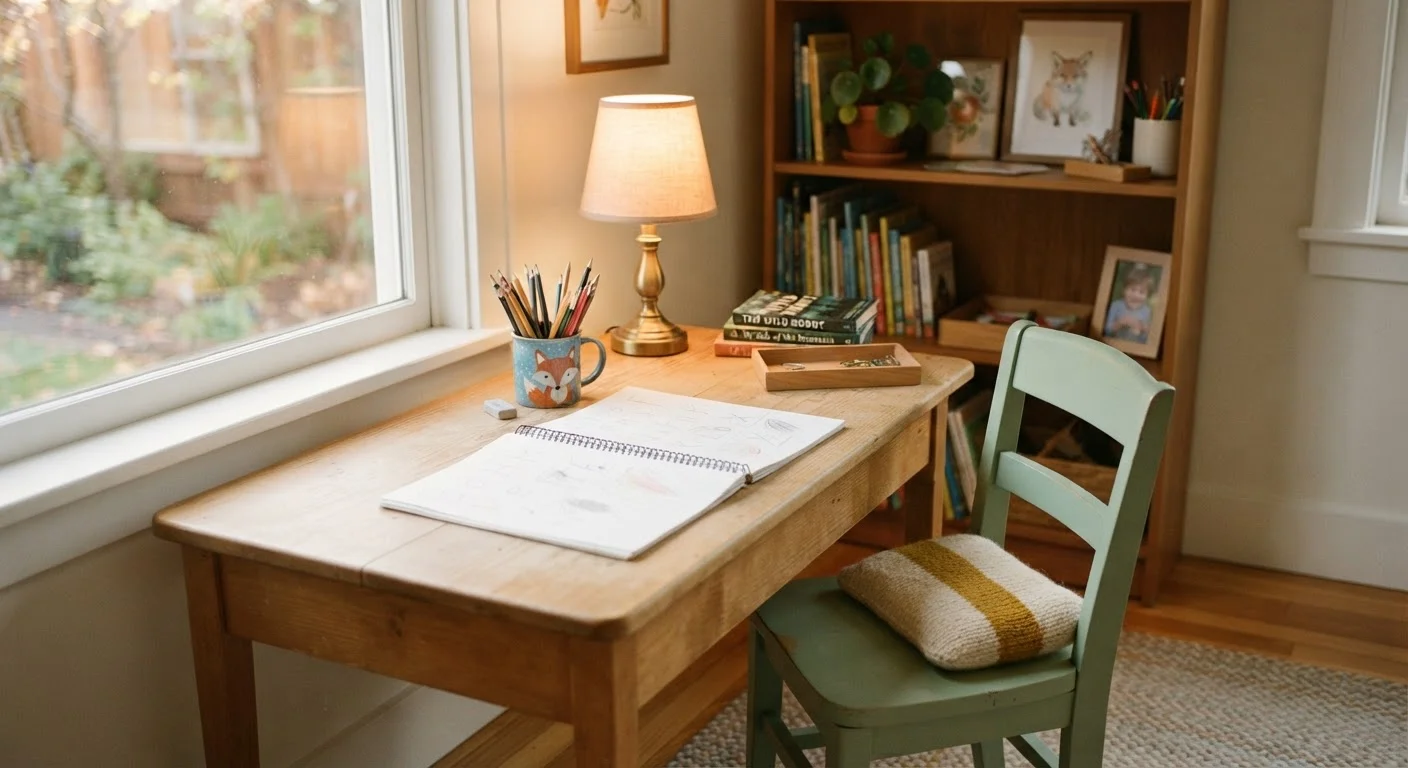
Photo credit: PrimeFaqs.com | Trending And Accurate Content
In this article
A consistent homework environment can reduce daily conflict. Learn practical strategies backed by child development research.
Key Takeaways
- Predictable timing and location reduce resistance more effectively than reminders or rewards alone.
- Children regulate focus better when they have input in designing their own routine.
- Parental presence and calm matter more than direct involvement in homework content.
- Short, structured breaks improve sustained attention during homework sessions.
- Consistent routines reduce daily negotiation, lowering stress for the whole household.
Why Homework Routines Break Down - and What Actually Helps
Most homework conflicts aren't really about the homework itself. They're about unpredictability, fatigue, and the perception that work is being imposed rather than shared. When children don't know when homework will happen, how long it will take, or what support is available, avoidance becomes a reasonable coping strategy from their perspective.
Child development research consistently points to structure and autonomy as two key factors in children's self-regulation. A well-designed homework routine addresses both: it provides enough structure to reduce anxiety while leaving room for the child to feel in control of their own experience.
Let Your Child Have a Say
Research in child development consistently shows that children who feel some ownership over their routines are more likely to follow through without conflict. Ask your child whether they prefer homework right after school or after a short break - and genuinely honor their preference when possible. Small choices build buy-in.
The goal of a homework routine is not compliance - it's the gradual internalization of focused work habits that will serve children well beyond school. When parents approach routine-building collaboratively, they model the very skills - planning, persistence, and self-management - that homework is meant to develop.
Avoid Hovering During Independent Work
Being available is different from being ever-present. Sitting beside your child and jumping in at the first sign of struggle can quietly erode their confidence over time. See our guide on habits that undermine academic confidence for a closer look at well-meaning behaviors to watch for.
Setting Up for Success: Space, Time, and Tools
Before walking through the steps, it helps to understand what you're actually setting up. A homework routine has three structural layers: when it happens, where it happens, and what supports are in place. Each layer, when consistent, reduces the daily negotiation that drains parents and children alike.
What you will need
Having the right materials on hand isn't about creating a perfect study environment - it's about removing friction. When a child has to search for supplies or wait for a device to charge, the transition breaks down before it even begins.
Analog or digital timer
Used to structure focused work intervals and break periods, making time visible and predictable for children.
Homework planner or assignment notebook
Helps children track what's due and in what order, reducing decision fatigue at the start of each session.
Noise-canceling headphones or white noise app
Reduces auditory distractions in busy households, supporting sustained concentration.
Consistent snack and water
Light nourishment before starting supports attention and reduces irritability during homework sessions.
For families navigating fully remote or hybrid schedules, the strategies for remote learning environments offer additional context for when the boundary between school and home is less defined.
Homework Routines Are Not One-Size-Fits-All
What works for a second-grader will likely not work for a middle schooler. Children's developmental needs, school demands, and after-school schedules vary widely. Use this guide as a framework to adapt - not a rigid prescription. If your child has learning differences, attention challenges, or a complex school situation, consulting with a teacher or school counselor can help tailor the approach.
Following the Steps: How to Build the Routine
The steps below represent a practical sequence for establishing a homework routine from scratch - or resetting one that has stopped working. Move through them in order when first building the routine, then revisit individual steps as your child's needs evolve across grade levels.
Choose a Consistent Time That Fits Your Child's Energy
Identify a daily window when your child is alert but not exhausted. For many school-age children, this means allowing 20-30 minutes of downtime after school before beginning homework. For others - particularly older students with activities - a post-dinner window may work better.
Consistency matters more than the specific time you choose. When homework happens at the same time each day, the brain begins to anticipate the transition, reducing the mental friction of getting started.
Designate a Specific, Distraction-Reduced Workspace
The space doesn't need to be elaborate. What matters is that it's used consistently for homework and that distractions - particularly screens - are removed or turned off during the session. A kitchen table, desk, or quiet corner with good lighting all work.
Keep supplies within reach so the routine doesn't begin with searching for a pencil. If space is limited, a small portable box that travels with your child to their spot can serve the same purpose as a dedicated desk.
Use a Simple Pre-Homework Ritual to Signal the Start
A brief, repeatable ritual cues the brain that focused work is beginning. This might be as simple as: snack, unpack bag, review the planner, set a timer. The sequence itself becomes the signal - similar to how behavioral science describes environment design and habit stacking as tools for reducing resistance.
The same principle applies to adult routines. The behavioral foundations of sustainable habits apply equally well to children's learning routines.
Structure the Session With Timed Work Intervals
Rather than setting a single open-ended homework block, break the session into structured intervals. A common approach for elementary-aged children is 15-20 minutes of focused work followed by a 5-minute movement break. Older children may sustain 25-30 minutes before needing a reset.
Using a visible timer - where the child can see time passing - reduces the sense of open-endedness that often fuels avoidance. It also teaches children to self-regulate by making time concrete rather than abstract.
Stay Available Without Taking Over
Position yourself nearby during homework time - reading, cooking, or doing your own work - so your child knows help is accessible without you inserting yourself into every problem. When they ask for help, ask a clarifying question first rather than providing the answer directly.
This approach supports productive struggle, which child development research links to stronger long-term learning and academic confidence. If communication with the school about workload or expectations would help, our guide on making parent-teacher communication work offers practical guidance.
Close the Session With a Clear, Positive Ending
End homework time at a predictable point - ideally when the timer signals completion or when the task list is done. Acknowledge the effort, not just the outcome. A brief, calm phrase like "Good work staying focused today" communicates that persistence is valued.
Packing up the bag and putting materials away signals closure and helps with transition to the rest of the evening. A predictable end to homework also supports a smoother wind-down later in the night - a pattern explored further in our guide on building an evening wind-down routine.
Expect the first one to two weeks to require more active support and more patience. Routines take time to become automatic. Research on habit formation suggests that consistency during the early period - even imperfect consistency - matters more than perfection.

Author
Education & Learning Editorial Team
Education & Learning Editorial Team is the collective byline for our editorial team and contributor network. Articles published under this byline or an editorial pen name are researched, written, and reviewed according to our editorial standards for clarity, consistency, and independence before publication.
View all articles →