
Public School vs. Homeschooling: A Balanced Look at Two Different Paths
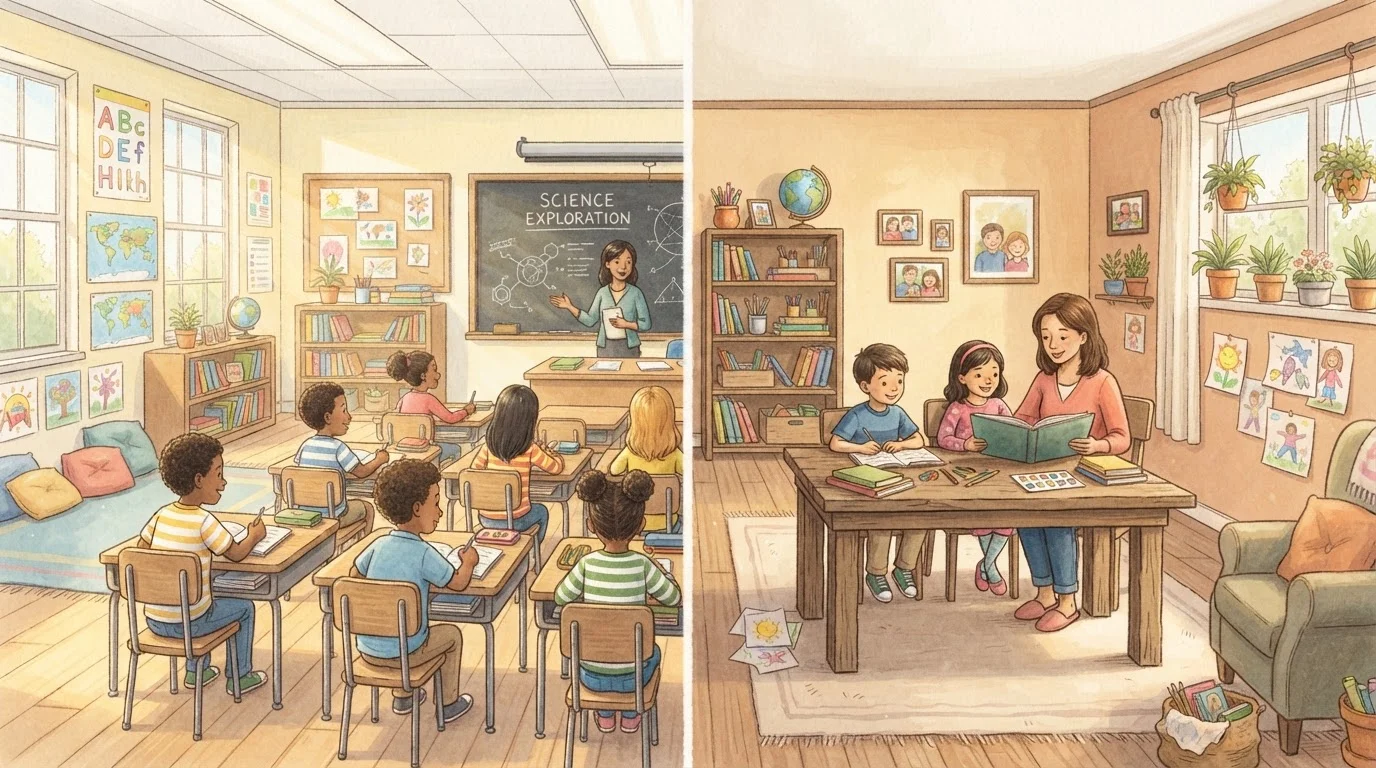
Photo credit: PrimeFaqs.com | Trending And Accurate Content
In this article
Neither path is right for every child. Compare the academic, social, and practical trade-offs of public school and homeschooling.
Key Takeaways
- Public school offers credentialed teachers, peer socialization, and structured curricula at no direct tuition cost.
- Homeschooling allows curriculum customization and flexible pacing but requires significant parental time and planning.
- Research on academic outcomes is mixed - both paths can produce strong results depending on execution and support.
- Homeschooled students can pursue college admissions successfully, though documentation requirements may differ.
- Neither option is universally superior; the right choice depends on a child's learning needs and family circumstances.
- Legal requirements for homeschooling vary significantly by state - parents must verify their local regulations.
Academic Experience: Structure vs. Flexibility
Public schools follow state-approved curricula delivered by licensed teachers who have subject-matter training and ongoing professional development. Students move through standardized grade levels, which provides clear benchmarks and allows educators to identify learning gaps early. The tradeoff is reduced flexibility - instruction is paced for a class, not an individual child.
Homeschooling inverts this arrangement. Parents or hired tutors can select from a range of curricula - from boxed programs to Charlotte Mason approaches to eclectic self-designed plans - and adjust pacing as the child needs. A student who masters fractions quickly isn't held back; one who struggles with reading gets more time. Research published in peer-reviewed journals, including work compiled by education researchers like Brian Ray of the National Home Education Research Institute, suggests homeschooled students often perform at or above grade-level averages on standardized assessments, though critics note those samples may skew toward more resourced families.
| Criterion | Public School | Homeschooling |
|---|---|---|
| Curriculum | State-mandated, standardized | Family-selected, customizable |
| Instruction | Licensed, credentialed teachers | Parent, tutor, or co-op instructors |
| Pacing | Grade-level, class-wide | Individualized per child |
| Socialization | Built-in, daily peer interaction | Requires intentional planning |
| Cost to family | No tuition; minimal fees | Curriculum costs + parental time |
| Extracurriculars | Broad on-site programs | Community-based, varies widely |
| Legal requirements | Enrollment, attendance laws apply | Varies significantly by state |
| Flexibility | Fixed schedule and calendar | Highly adaptable schedule |
For families weighing an entirely digital alternative, our overview of the tradeoffs of learning entirely online covers a related set of considerations.
Social Development: Peers, Community, and Real-World Readiness
One of the most frequently raised concerns about homeschooling is socialization. Public schools immerse children in a diverse peer community daily, providing natural opportunities to navigate conflict, build friendships, and develop collaborative skills. Extracurricular programs - sports teams, theater, debate clubs - add structured social experiences that many families value.
Homeschooling families counter that social development doesn't require a school building. Many homeschooled children participate in co-ops (groups of homeschooling families who share teaching responsibilities), community sports leagues, religious organizations, and local enrichment classes. The quality and breadth of social experience in homeschooling, however, depends heavily on intentional effort from parents to create those opportunities - it doesn't happen automatically.
~3.3M
Homeschooled students in the U.S.
The National Center for Education Statistics estimated approximately 3.3 million K-12 students were homeschooled in the United States as of its most recent survey.
~90%
Students enrolled in public schools
Roughly 90 percent of American K-12 students attend public schools, according to federal education data, making it the dominant educational pathway.
50 states
States where homeschooling is legal
Homeschooling is permitted in all 50 states, though regulations governing notice, testing, and curriculum approval differ substantially by jurisdiction.
Building strong communication with educators is also relevant for public school families. Our article on what makes parent-teacher communication actually work offers practical guidance.
Practical Realities: Cost, Time, and Legal Requirements
Public school is tuition-free for families, funded through state and local taxes. Costs are limited to supplies, activities fees, and transportation. Parents delegate the core responsibility of daily instruction to credentialed professionals.
Homeschooling carries real costs that often go underestimated. Curriculum materials can run from a few hundred to over a thousand dollars per year depending on the approach chosen. More significantly, one parent typically must reduce or eliminate paid work to provide instruction - an opportunity cost that doesn't appear on a curriculum invoice. Legal requirements add another layer: homeschooling is legal in all 50 states, but regulations vary considerably. Some states require notice to a local school district, portfolio reviews, or standardized testing; others impose minimal requirements. Families must research their specific state's rules before beginning.
College admissions is another practical consideration. Homeschooled students are admitted to selective universities, but documentation requirements differ. Our guide on what high schoolers misunderstand about college admissions addresses common misconceptions relevant to all students, including those who have been homeschooled.
This article provides general educational information only. Families should consult their state's department of education for specific legal requirements regarding homeschooling in their jurisdiction.

Author
Education & Learning Editorial Team
Education & Learning Editorial Team is the collective byline for our editorial team and contributor network. Articles published under this byline or an editorial pen name are researched, written, and reviewed according to our editorial standards for clarity, consistency, and independence before publication.
View all articles →