
Leasing vs. Financing: Understanding the Ownership Trade-Off
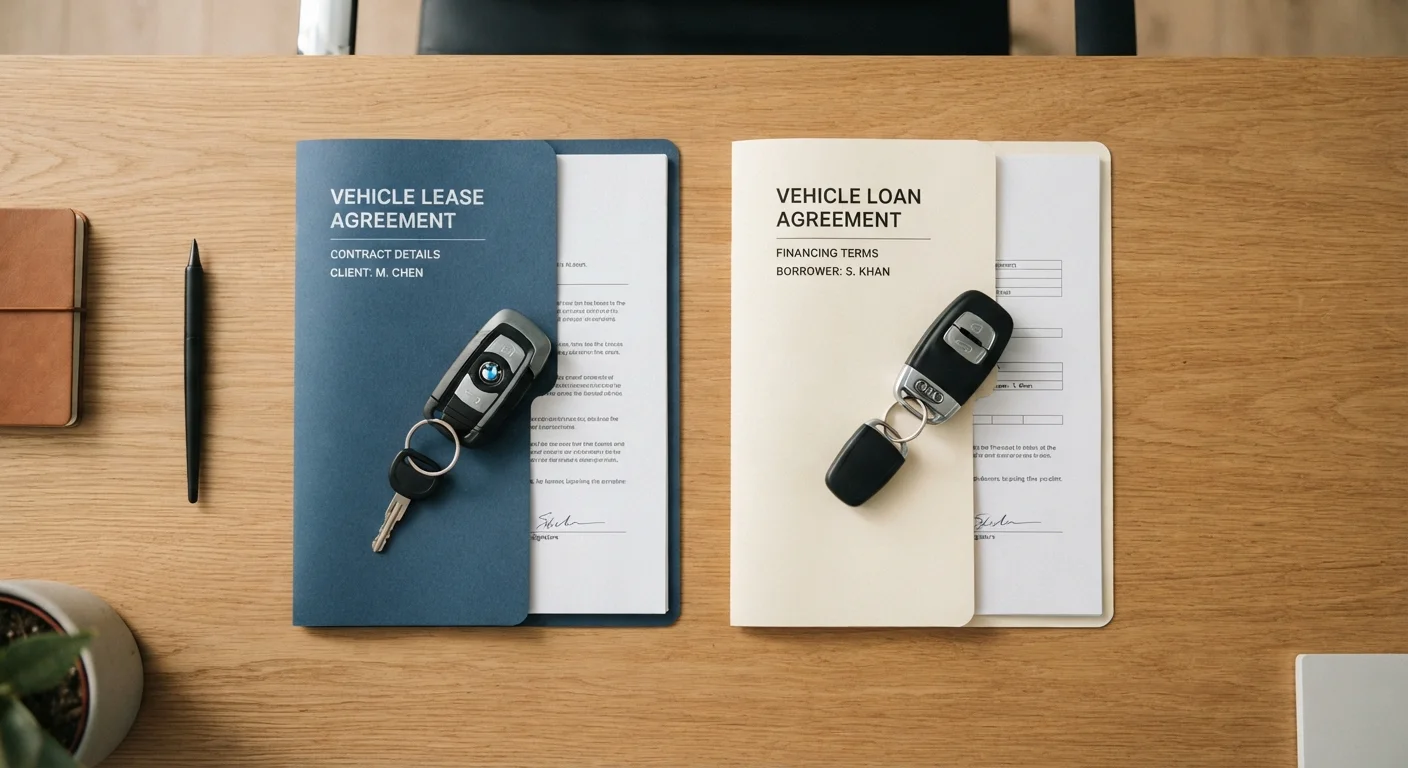
Photo credit: PrimeFaqs.com | Trending And Accurate Content
In this article
Leasing and financing feel similar on a monthly basis but work very differently. Here's what sets them apart and what each arrangement means long-term.
Key Takeaways
- Leasing means paying for a vehicle's depreciation during use - you return the car at the end.
- Financing means borrowing to purchase - you own the vehicle outright once the loan is paid off.
- Monthly lease payments are often lower, but financing builds equity over time.
- Leases typically include mileage limits and condition requirements; loans do not.
- Neither arrangement is universally better - your driving habits and financial goals determine fit.
What You're Actually Paying For
On the surface, leasing and financing look similar: you make monthly payments and drive a car. But what those payments represent is fundamentally different - and that distinction shapes everything from your total costs to what options you have at the end of the agreement.
When you lease, you are essentially renting the vehicle for a set term - typically 24 to 39 months. Your payments cover the portion of the car's value that depreciates during your lease period, plus a finance charge (called the money factor, the lease equivalent of an interest rate) and applicable fees. At the end, you return the car to the lessor. You never own it.
When you finance, you borrow money to purchase the vehicle outright. Each payment reduces your principal balance while also covering interest. Once the loan term ends - often 48 to 72 months - the title is yours, free and clear. To understand how those loan terms translate into real numbers on paper, see our guide to what the numbers in your loan agreement mean.
| Criterion | Leasing | Financing |
|---|---|---|
| What you own at the end | Nothing - car is returned | The vehicle, free and clear |
| Typical monthly payment | Lower (covers depreciation only) | Higher (covers full purchase price) |
| Mileage restrictions | Yes - typically 10,000-15,000/yr | None |
| Ability to sell or trade early | Limited; early exit fees apply | Yes, at any time |
| Vehicle customization | Generally not permitted | Permitted as owner |
| Long-term cost (10+ years) | Higher if leasing continuously | Lower once loan is paid off |
| Warranty coverage | Usually covered throughout term | Expires; owner bears repair costs |
The Practical Trade-Offs That Matter Day to Day
Beyond the ownership question, leasing and financing come with very different operational realities that affect how you use - and ultimately think about - your vehicle.
Mileage and Condition
Lease contracts set annual mileage limits, commonly between 10,000 and 15,000 miles. Exceed those limits and you'll pay per-mile overage fees at lease-end, which can add up quickly. Leases also hold you to reasonable-wear standards - damage beyond normal use may trigger charges when you return the vehicle.
A financed vehicle carries none of these restrictions. Drive as many miles as your schedule demands, and the only consequence is normal mechanical wear that you manage on your own schedule.
Monthly Payment and Total Cost
Because lease payments cover only the depreciation portion of a vehicle's value rather than the full purchase price, they are often lower month-to-month than loan payments on the same car. However, leasing indefinitely - moving from one lease to the next - typically costs more over a decade than financing and retaining a vehicle past its payoff date. Once a loan is retired, your only ongoing vehicle costs are maintenance and insurance.
The Depreciation Factor Explained
New vehicles can lose a significant portion of their value in the first few years of ownership - this is called depreciation. When you lease, the lessor assumes the vehicle's residual value risk and prices your payments around that depreciation curve. When you finance, you are borrowing the full purchase price, but you also retain any remaining market value when you eventually sell or trade. Understanding this dynamic is central to evaluating whether the lower monthly lease payment represents a genuine savings over time.
Flexibility and Exit Options
Financing gives you the ability to sell or trade the vehicle at any time. If your circumstances change - job relocation, family size, financial pressures - you can sell the car, pay off the remaining loan balance, and move on. Exiting a lease early is possible but usually costly, involving early termination fees set at contract signing. This is a meaningful consideration for anyone whose life circumstances may shift. Households weighing whether one vehicle can serve all their needs may also benefit from thinking through the trade-offs of single-car ownership.
Which Arrangement Makes Sense for You
There is no universally correct answer between leasing and financing - the right choice depends on how you use a vehicle and what you value financially.
Leasing tends to suit drivers who keep mileage manageable, prefer always having a vehicle under warranty, and value predictable costs within a defined timeframe. It can also be practical for those who need a vehicle now but anticipate their transportation needs changing in a few years.
Financing tends to suit drivers who put significant mileage on a car annually, plan to keep a vehicle for many years, or want to reach a point where they have no monthly vehicle payment at all. Ownership also provides flexibility that a lease contract cannot - including the ability to modify the vehicle or build trade-in value over time.
If you are considering your first vehicle purchase and want a fuller picture of what ownership entails beyond the financing decision, our overview of car ownership for first-timers covers registration, insurance, and ongoing responsibilities in plain terms.
Before signing either agreement, review all contract terms carefully - including the money factor or APR (APR), term length, fees, and any mileage or condition clauses. Consulting a licensed financial adviser can also help you evaluate how either option fits your broader financial picture.
This article is for general informational and educational purposes only and does not constitute financial, legal, or personalized advice. Consult a qualified financial professional before making vehicle financing decisions.

Author
Automotive Basics Editorial Team
Automotive Basics Editorial Team is the collective byline for our editorial team and contributor network. Articles published under this byline or an editorial pen name are researched, written, and reviewed according to our editorial standards for clarity, consistency, and independence before publication.
View all articles →